


Miss two workouts, forget your water goal for three days, and suddenly the habit feels broken. That is why the best habit tracking methods are not just about recording streaks. They are about making consistency easier when life gets busy, messy, or unpredictable.
For professionals, founders, creatives, and anyone juggling too many moving parts, habit tracking works best when it reduces decision fatigue instead of adding another layer of admin. The right method should support proven productivity, fit your schedule, and show progress clearly enough that you stay motivated without becoming obsessive. That balance matters even more if you are managing ADHD, shifting priorities, or a packed calendar.
What makes the best habit tracking methods actually work
A good tracking system does three things well. First, it makes the habit visible. Second, it makes completion easy to log. Third, it gives you enough feedback to adjust before you drift.
That sounds simple, but the trade-offs are real. A paper tracker can feel satisfying and distraction-free, yet it is easy to forget. A spreadsheet gives you control, but maintaining it can become its own task. An app can centralize everything, but only if it fits naturally into your day.
The strongest productivity systems share one trait: low friction. If your habit tracker takes too many taps, too much setup, or too much interpretation, you will eventually avoid it. The best method is the one you will still use on an ordinary Tuesday, not just during a motivation spike.
1. The daily checkbox method
This is the most straightforward option and still one of the best habit tracking methods for busy people. You define a habit, assign it to each day, and mark it complete when done.
Its strength is speed. There is almost no cognitive load. Did you do it or not? That simplicity supports effective daily task management systems methods 2025 2026 because it keeps your focus on action, not analysis.
The downside is that binary tracking can flatten nuance. A 10-minute walk and a 60-minute workout both count as complete unless you add more detail. For foundational habits like taking medication, reading 10 pages, or stretching, that is usually fine. For performance-driven habits, you may need more context.
2. The streak method
Streaks are powerful because they tap into momentum. Once you see five days in a row, day six feels easier. This is one reason streak-based design shows up so often in evidence-based productivity techniques and consumer apps.
But streaks are a double-edged tool. They can motivate consistency, or they can trigger all-or-nothing thinking. Miss one day and some users feel like they failed, which leads to abandoning the habit entirely.
If you use streaks, treat them as encouragement, not judgment. The more durable mindset is never miss twice. That framing protects momentum without making perfection the goal. For ADHD users and high-responsibility professionals, this is often the difference between a supportive system and a stressful one.
3. The tally or count method
Some habits are better measured by quantity than completion. Glasses of water, sales calls, deep work sessions, steps, or pages written all benefit from count-based tracking.
This method is useful when progress compounds through repetition. It is also strong for time optimization because it helps you spot whether the issue is inconsistency or under-volume. You may be doing the habit regularly, but not enough to produce results.
The risk is over-tracking. Once every action becomes a metric, the system can feel heavy. Use count tracking for behaviors where quantity truly matters. If the habit only needs to happen once, a simple checkbox is cleaner.
4. The habit scorecard method
A habit scorecard adds reflection. Instead of only asking whether you did the habit, it asks how well the habit supported your day. You might rate your focus block from 1 to 5, or score your sleep routine based on consistency, duration, and energy the next morning.
This is one of the more advanced best habit tracking methods because it connects behavior to outcomes. That makes it useful for people interested in evidence-based productivity methods, especially when the goal is not just completion but better performance.
Still, this method takes more thought. It works best for a small number of high-impact habits, not for everything. If you score ten behaviors every day, you will likely burn out. If you score two or three that directly affect your work and well-being, the insights can be sharp.
5. The weekly review method
Daily tracking keeps habits visible. Weekly review makes them sustainable.
In this method, you do not obsess over every single day. Instead, you review your week and ask: which habits happened, which slipped, and why? This is where daily task prioritization strategies become practical. You start seeing patterns between calendar overload, low energy, unclear triggers, and missed routines.
Weekly review is especially helpful for people with variable schedules. Entrepreneurs, project managers, and parents often cannot rely on identical days. A weekly lens gives more flexibility and still protects accountability.
This method works best when paired with a daily system. Track simply during the week, then use your review to adjust cues, timing, and targets. That is how systems productivity becomes real behavior change instead of just good intentions.
6. The trigger-based method
Some habits fail because they are scheduled at the wrong time. Trigger-based tracking solves that by attaching the habit to an event instead of a clock. After coffee, I review priorities. After lunch, I take a 10-minute walk. After I shut my laptop, I plan tomorrow.
This method is one of the most reliable forms of proven time management strategies because it removes the need to decide from scratch. The cue does part of the work for you.
Tracking here is less about the hour and more about whether the trigger happened and the habit followed. That makes it ideal for routines built around transitions. It also reduces friction for users who struggle with rigid scheduling.
The trade-off is that weak triggers produce weak habits. If the anchor is inconsistent, the behavior will be too. Choose triggers that already happen most days and are easy to notice.
7. The integrated planning method
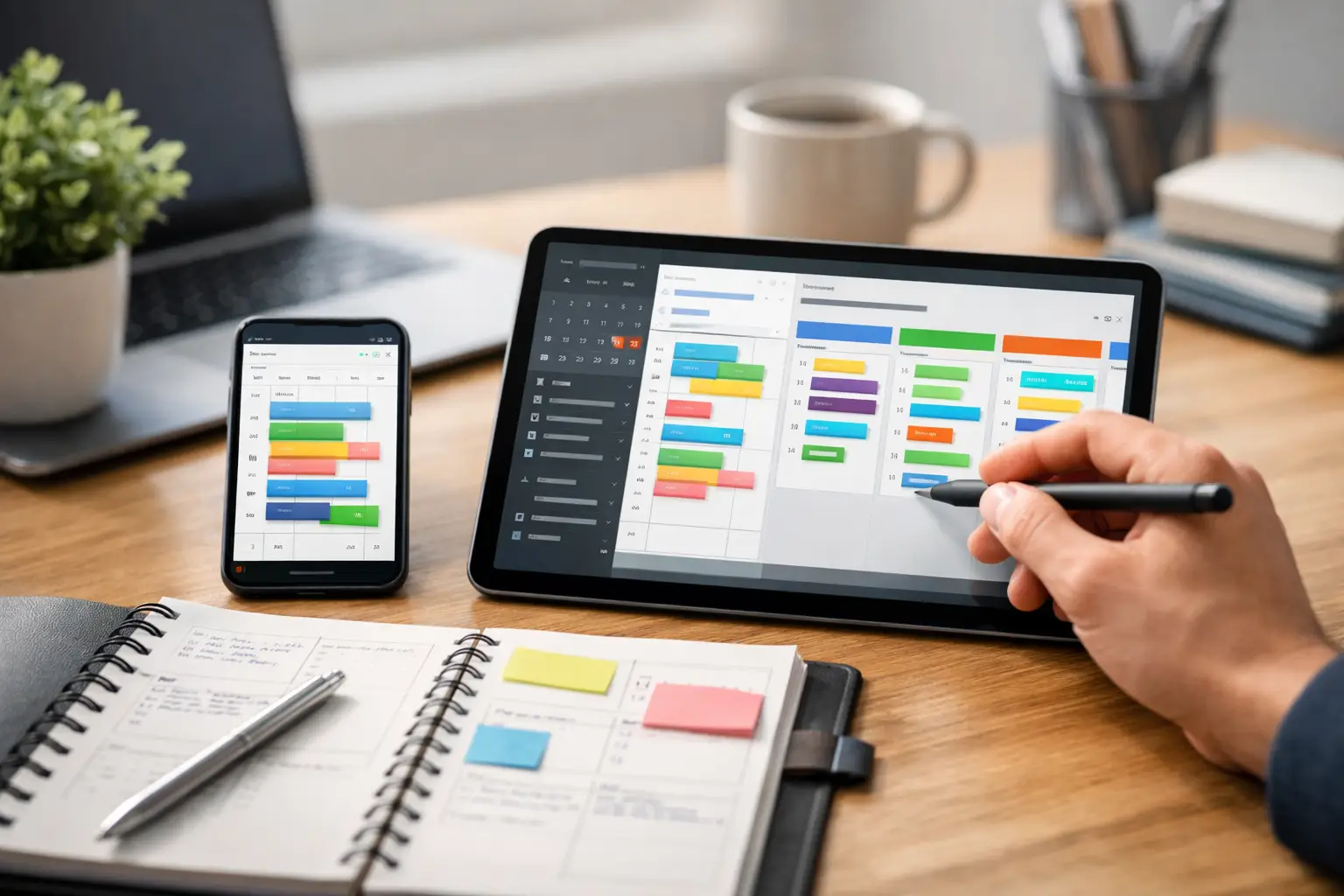
This is often the strongest option for people with complex days. Instead of tracking habits in isolation, you place them inside your broader productivity system alongside tasks, appointments, and priorities.
Why does this work so well? Because habits do not compete with reality. They live inside it. Your workout is not floating on a separate app. Your reading habit is not hidden in a notebook. Your shutdown routine sits next to your calendar, top tasks, and planning blocks where it can actually happen.
This approach supports smarter time because it closes the gap between intention and execution. It is also one of the leading systems for identifying productivity blockers. When a habit keeps slipping, you can see whether the problem is timing, overload, poor prioritization, or lack of clarity.
For many users, especially those balancing work and personal routines, an integrated system creates more control with less maintenance. That is a major reason all-in-one platforms are becoming central to modern productivity system design. Tools like Smarter.Day bring habit tracking, planning, prioritization, and day view scheduling into one place, which helps reduce clutter and keeps execution visible.
How to choose the right habit tracking method
The best method depends on the kind of habit you are building and the level of structure you need.
If your biggest challenge is remembering, use a daily checkbox or trigger-based tracker. If your challenge is maintaining motivation, streaks can help, as long as you do not treat them as a pass-fail score. If your goal is performance improvement, use counts or scorecards. If your schedule changes constantly, combine light daily tracking with a weekly review. And if your habits keep losing to meetings, tasks, and shifting priorities, move to an integrated planning method.
This is where many people get stuck. They look for one perfect system when what they really need is a system that matches their behavior. Evidence-based productivity strategies work best when they fit the environment you actually live in.
Common mistakes that make habit tracking fail
The first mistake is tracking too many habits at once. Ambition feels productive, but it often creates drag. Start with two or three habits that meaningfully improve your day.
The second is choosing a method that is more complex than the habit. If you need a dashboard to remember vitamins, the method is too heavy.
The third is treating missed days as failure instead of feedback. Habit tracking should help you adjust. It should not become another source of pressure.
The fourth is separating habits from the rest of your planning. When habits live outside your calendar, tasks, and priorities, they are easier to ignore. That disconnect is where good intentions go stale.
The strongest system is the one you can trust when your week gets crowded. Choose a method that gives you clarity fast, keeps friction low, and helps you return quickly after a miss. Consistency grows faster when your tracker feels like support, not surveillance.
You May Also Like
These Related Stories

What Is Task Batching and Does It Work?

How to Build Consistent Habits That Stick
No Comments Yet
Let us know what you think