

Daily Planning Workflow Example for Entrepreneurs

Most founders do not lose the day because they are lazy. They lose it at 9:17 a.m., when Slack is buzzing, two customer emails feel urgent, a half-finished proposal is still open, and they are making priority calls on the fly. A good daily planning workflow example for entrepreneurs fixes that exact moment. It removes guesswork, reduces decision fatigue, and gives you a practical way to run the day before the day runs you.
If you manage sales, product, admin, hiring, and your own energy at the same time, you do not need more motivation. You need a repeatable productivity system. The best daily workflows are not complicated. They are fast enough to use every day, structured enough to protect deep work, and flexible enough to handle the reality that entrepreneurship rarely goes according to plan.
A daily planning workflow example for entrepreneurs that holds up under pressure
Here is the core idea: capture everything, decide what matters, place it on the calendar, and review before the day gets away from you. That sounds simple because it is. The hard part is staying consistent when your attention is being pulled in six directions.
This is where proven productivity starts to matter more than hustle. Research-backed planning habits consistently point to the same pattern: people make better choices when they separate capture from prioritization and prioritization from execution. In plain English, you should not be deciding what matters while you are already reacting to incoming noise.
A practical workflow usually has five parts: a quick capture phase, a prioritization pass, a scheduling block, focused execution windows, and a short shutdown review. That sequence works because each step has one job. When one tool or one system supports all five, system productivity improves because your brain is not switching contexts just to manage the work.
Step 1: Start with a clean capture, not a messy to-do list
Begin the morning by collecting open loops into one place. That includes tasks from email, notes from yesterday, follow-ups, ideas, and anything you are mentally carrying. Keep this part fast. You are not organizing your whole business. You are clearing your head.
For entrepreneurs, inbox capture is one of the leading systems for identifying productivity blockers because it exposes hidden work. A quick thought like “send revised pricing” turns into a real task instead of a vague source of stress. This alone boosts clarity and lowers cognitive drag.
The trap here is over-capturing. If you spend 30 minutes rewriting every task, the workflow is already failing. Good effective daily task management systems methods 2025 2026 are built for speed. Short task names, easy edits, and frictionless entry matter more than perfect formatting.
Step 2: Use a time management prioritization framework for entrepreneurs with multiple commitments
Once everything is captured, sort the work by importance and urgency. This is where many founders get stuck because everything feels important when revenue, customers, and team issues all touch the same day.
A simple prioritization framework helps. The Eisenhower Matrix remains useful because it forces one uncomfortable but necessary decision: what is truly important versus what is simply loud. Revenue-driving work, client commitments, strategic product decisions, and critical team actions usually belong at the top. Administrative tasks, shallow follow-ups, and low-impact maintenance should not dominate your prime energy hours.
This is also where daily task prioritization strategies become practical instead of theoretical. Ask three questions. What moves the business forward today? What has a real deadline? What creates friction tomorrow if ignored today? If a task does not score well on any of those, it probably should not sit in your top tier.
A lot of time management research 2025 2026 continues to support this principle: prioritization quality often matters more than total hours worked. More time is not always better. Smarter time is better.
Step 3: Build the day around outcomes, not task volume
Now turn priorities into a schedule. This is where time optimization becomes real. Instead of making a long list and hoping it fits, assign the most important tasks to specific time blocks.
A founder day might look like this in practice. From 8:30 to 9:00, review the capture list and set top priorities. From 9:00 to 11:00, do deep work on a proposal, product strategy, or financial planning. From 11:00 to 12:00, handle communication and approvals. After lunch, use one block for meetings and another for operational tasks. Leave a buffer late in the day for spillover, decisions, and loose ends.
That structure works because it protects focus before reactivity takes over. It also reflects what is the meaning of time optimization in practical terms: placing the right work in the right window based on value and energy, not convenience.
The trade-off is that a tightly planned day can feel unrealistic if your business is highly reactive. If you run an agency, manage live customer support, or lead a small team without much coverage, your schedule needs more white space. Time optimization strategies are only useful if they survive contact with reality.
How to adapt this daily planning workflow example for entrepreneurs to your energy
Not every entrepreneur should run the same schedule. A solo founder building product needs a different rhythm than a founder who spends half the day selling. The workflow stays the same, but the ratio of deep work, meetings, and admin changes.
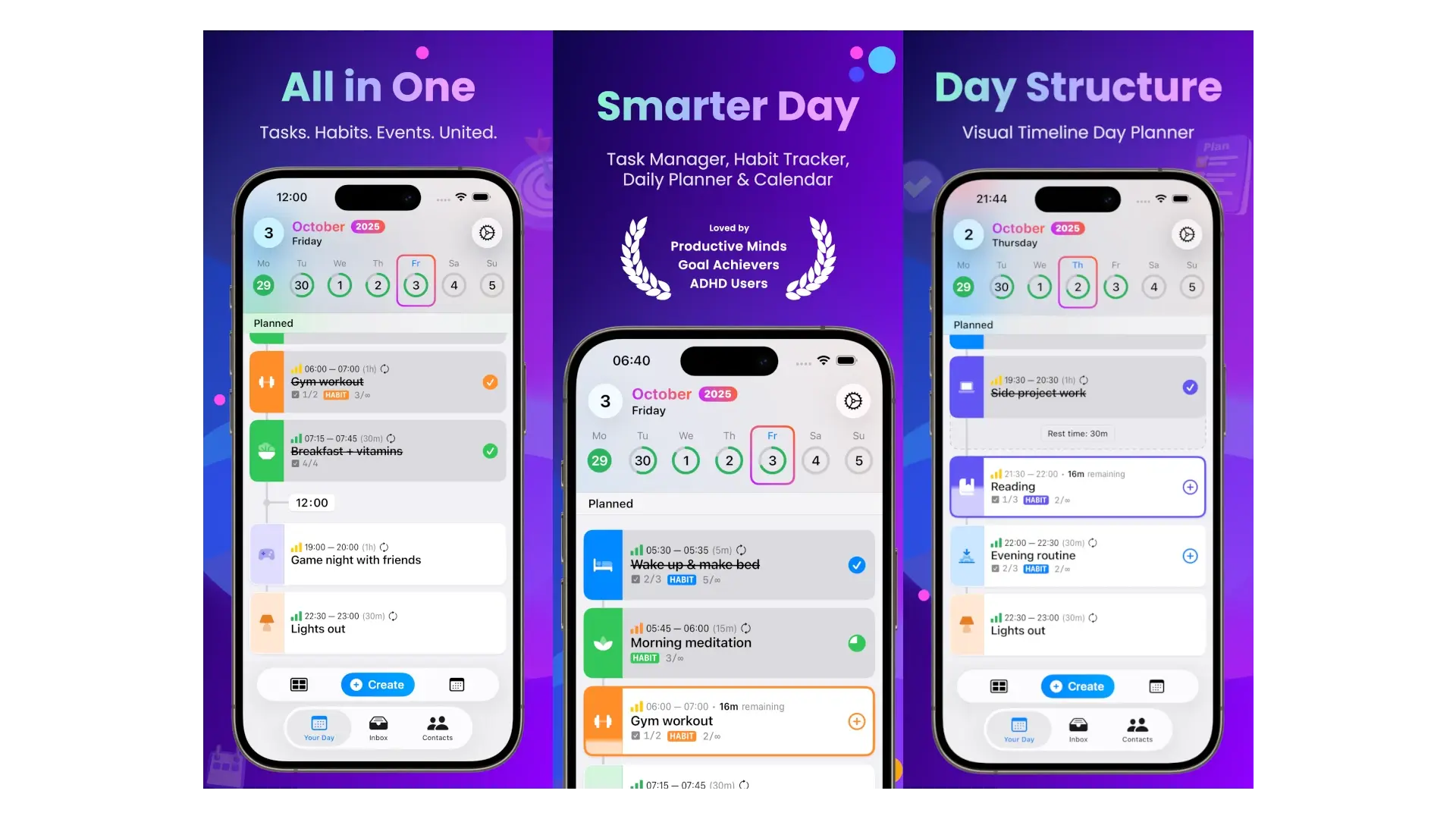
If your work is creative or strategic, protect your first high-energy block for complex thinking. If your role is heavily external, cluster communication and calls so they do not fracture the entire day. If you have ADHD, visual scheduling, drag-and-drop changes, and very short planning loops can be more effective than rigid, text-heavy systems.
This is one reason modern productivity systems are moving toward visual day views and simple prioritization cues. They reduce the friction of choosing what to do next. That matters because decision fatigue is not just annoying. It quietly destroys execution.
Step 4: Execute in focused sprints, then reset
A plan is only valuable if it helps you execute. During your work blocks, keep the rule simple: one block, one objective. You can use evidence-based productivity techniques like timed focus sessions, micro actions to overcome task resistance, or text expansion for repetitive communication.
This is where evidence-based productivity methods beat vague ambition. If a task feels heavy, reduce the activation energy. Write the first paragraph. Open the sales deck. Draft the outline. Small starts often create momentum faster than waiting to feel ready.
Then reset between blocks. A two-minute review is enough. Ask what was completed, what changed, and whether the next block still deserves its place. This small reset keeps your productivity system alive during a chaotic day.
Step 5: End with a shutdown review
The final step is short but powerful. Before you end work, review what was finished, what needs to roll over, and what must be captured for tomorrow. This habit supports proven time management strategies because it closes the loop while details are still fresh.
Without a shutdown review, unfinished tasks stay mentally active all evening. With one, you preserve momentum and start the next morning with more control. That is not just good organization. It is a practical form of time+optimization because tomorrow starts before tomorrow arrives.
Where entrepreneurs go wrong with daily planning
The most common mistake is making a list instead of building a workflow. Lists are passive. Workflows create movement.
Another mistake is prioritizing by anxiety. Founders often choose the easiest visible task or the most recent interruption. That feels productive but usually weakens business progress. Evidence-based productivity strategies suggest that visible planning, pre-commitment to time blocks, and reduced context switching lead to better results than reactive task chasing.
The third mistake is using too many disconnected tools. Calendar in one place, habits in another, tasks in another, notes in another, team updates somewhere else. That setup creates clutter fast. Systems productivity improves when planning, prioritization, scheduling, and tracking happen in one environment. If you want a smart day instead of a fragmented one, your system should make next actions obvious.
One well-designed app can support this without turning planning into a second job. Smarter.Day, for example, combines daily planning, habit tracking, prioritization, and scheduling in a single visual workflow, which helps entrepreneurs stay in control without rebuilding the day from scratch every hour.
What a strong entrepreneur workflow really gives you
A good workflow does more than organize tasks. It protects attention. It gives shape to your priorities. It helps you make fewer low-quality decisions when pressure rises.
That is the real value of a daily planning workflow example for entrepreneurs. Not a prettier checklist. Not productivity theater. A reliable system that helps you see what matters, act on it faster, and recover when the day shifts.
When your planning process is clear, you stop negotiating with every interruption. You know what deserves your best hours, what can wait, and what should leave your plate entirely. That is how entrepreneurs master their schedule without trying to control every minute.
You May Also Like
These Related Stories
Evidence-Backed Productivity Methods That Actually Work
Evidence-Backed Productivity Methods That Actually Work
No Comments Yet
Let us know what you think