


You do not need a longer to-do list. You need a cleaner way to decide what deserves your attention now, what can wait, and what should leave your plate entirely. That is where a guide to eisenhower matrix planning becomes useful - not as a productivity trend, but as a practical system for reducing decision fatigue and making better calls under pressure.
For busy professionals, founders, developers, marketers, and ADHD users juggling shifting priorities, the real challenge is rarely effort. It is sorting signal from noise. The Eisenhower Matrix gives you a visual, fast, and proven productivity framework for that job. When used well, it helps you protect focus, cut low-value work, and stay in control of your day.
What the Eisenhower Matrix actually does
The Eisenhower Matrix is a time management prioritization framework built around two questions: Is this urgent, and is this important? Those questions create four categories. Tasks that are urgent and important get done first. Tasks that are important but not urgent get scheduled. Tasks that are urgent but not important get delegated when possible. Tasks that are neither urgent nor important get deleted or deferred without guilt.
That sounds simple because it is. The value is not complexity. The value is clarity. Instead of treating every task like a five-alarm fire, you create separation between what feels loud and what truly moves work forward.
This matters because most people do not struggle with a lack of effort. They struggle with inconsistent daily task prioritization strategies. They respond to whoever pings first, whatever feels easiest, or whatever creates the quickest sense of relief. The matrix interrupts that pattern.
A practical guide to Eisenhower matrix planning
Start with a brain dump, not a perfectly organized plan. Get your tasks, requests, reminders, and loose obligations out of your head and into one place. Include work tasks, personal admin, follow-ups, habits, and decisions you have been mentally carrying. If it is taking up attention, capture it.
Then sort each item by urgency and importance. Urgency is about timing and consequences. Importance is about long-term value, goals, commitments, and meaningful outcomes. Those are not the same thing, and that distinction is where many productivity systems either help or fail.
A client deadline due at 3 p.m. is urgent and important. Strategic planning for next quarter may not feel urgent today, but it is important. A last-minute request that interrupts deep work might be urgent for someone else but not important for your role. Scrolling for “research” when you are really avoiding a hard task is neither urgent nor important.
Once tasks are sorted, act differently in each quadrant.
Quadrant 1: Urgent and important
This is your do-now zone. It includes crises, hard deadlines, and tasks with immediate consequences. Handle these quickly, but watch the pattern. If your entire week lives here, the issue is not motivation. It is planning.
A healthy system uses this quadrant as a response lane, not a permanent residence. Too much time here drives stress, reactivity, and the constant sense that your day is running you.
Quadrant 2: Important but not urgent
This is where real progress happens. Planning, skill building, relationship maintenance, habit tracking, strategy, and meaningful project work usually live here. These tasks rarely shout, which is exactly why they get postponed.
If you want evidence-based productivity methods that actually improve output over time, protect this quadrant. It is the engine behind smarter time, better decisions, and lower stress. Most proven time management strategies point in the same direction: schedule important work before urgent noise consumes the day.
Quadrant 3: Urgent but not important
This is the tricky quadrant because it feels productive. It includes interruptions, minor requests, status checks, and work that is time-sensitive but not central to your goals. Some of it can be delegated. Some of it can be batched. Some of it needs a firmer boundary.
For collaborative users, this quadrant often grows through unclear ownership. If everything is your problem, your focus disappears. Strong systems productivity depends on assigning work clearly and resisting the habit of instant response.
Quadrant 4: Neither urgent nor important
This is where distraction hides. Not every low-value task is bad. Recovery matters, and not every minute must be optimized. But if this quadrant starts eating prime hours, it is costing you more than time. It is draining momentum.
The goal is not to become rigid. The goal is to notice what repeatedly pulls you away from meaningful work and remove it with less drama.
The biggest mistake people make with matrix planning
They confuse urgency with importance. Email is the classic example. A crowded inbox feels urgent because it is visible, active, and socially loaded. But not every message deserves immediate action. The same goes for chat notifications, meeting invites, and “quick asks.”
A second mistake is overloading Quadrant 1 because it feels decisive. If every task becomes urgent and important, the matrix loses its value. Be honest. Some tasks are necessary but not strategic. Some are emotionally uncomfortable, which is not the same as urgent.
The third mistake is building the matrix once and never revisiting it. Priorities move. Good planning is not a one-time sort. It is a lightweight daily practice.
How to use the Eisenhower Matrix in real workdays
The best version of this system is fast enough to use under pressure. Give yourself 10 minutes in the morning or at the end of the previous workday. Review what is on your plate, sort it, and choose what must happen first.
For most professionals, the sweet spot is not filling every quadrant with equal care. It is identifying one to three priority moves in Quadrant 2, then making sure Quadrant 1 obligations are covered without letting them consume the entire day.
If you manage multiple commitments, use the matrix at two levels. First, sort projects. Then sort the tasks inside each project. This prevents a common failure point where everything inside a high-priority project gets treated as equally important. It is not.
Time blocking also helps. Once you identify important work, place it on the calendar. Otherwise, it stays theoretical. This is where effective daily task management systems methods 2025 2026 continue to point: captured tasks are helpful, but scheduled priorities are far more likely to get done.
Why this framework works well for ADHD brains and overloaded teams
The matrix is visual, which reduces cognitive load. Instead of holding dozens of competing tasks in working memory, you externalize them and sort them by decision type. That makes it easier to start, especially when procrastination comes from overwhelm rather than laziness.
It also supports faster re-entry after interruptions. If your day gets knocked off course, you do not have to rethink everything from scratch. You return to the grid and make the next best choice.
For teams, the matrix creates shared language. People can discuss whether work is actually important, not just loud. That cuts confusion and improves meeting time optimization because conversations shift from status noise to priority clarity.
Where digital tools make Eisenhower matrix planning better
Paper works. A whiteboard works. But digital planning is stronger when your task volume changes quickly or when personal and collaborative work overlap.
A well-designed app can combine inbox capture, drag-and-drop prioritization, scheduling, subtasks, habits, and team visibility in one place. That matters because prioritization falls apart when your tasks live across notes, chat, calendar, and memory. If your system creates friction, you will stop using it when work gets busy - exactly when you need it most.
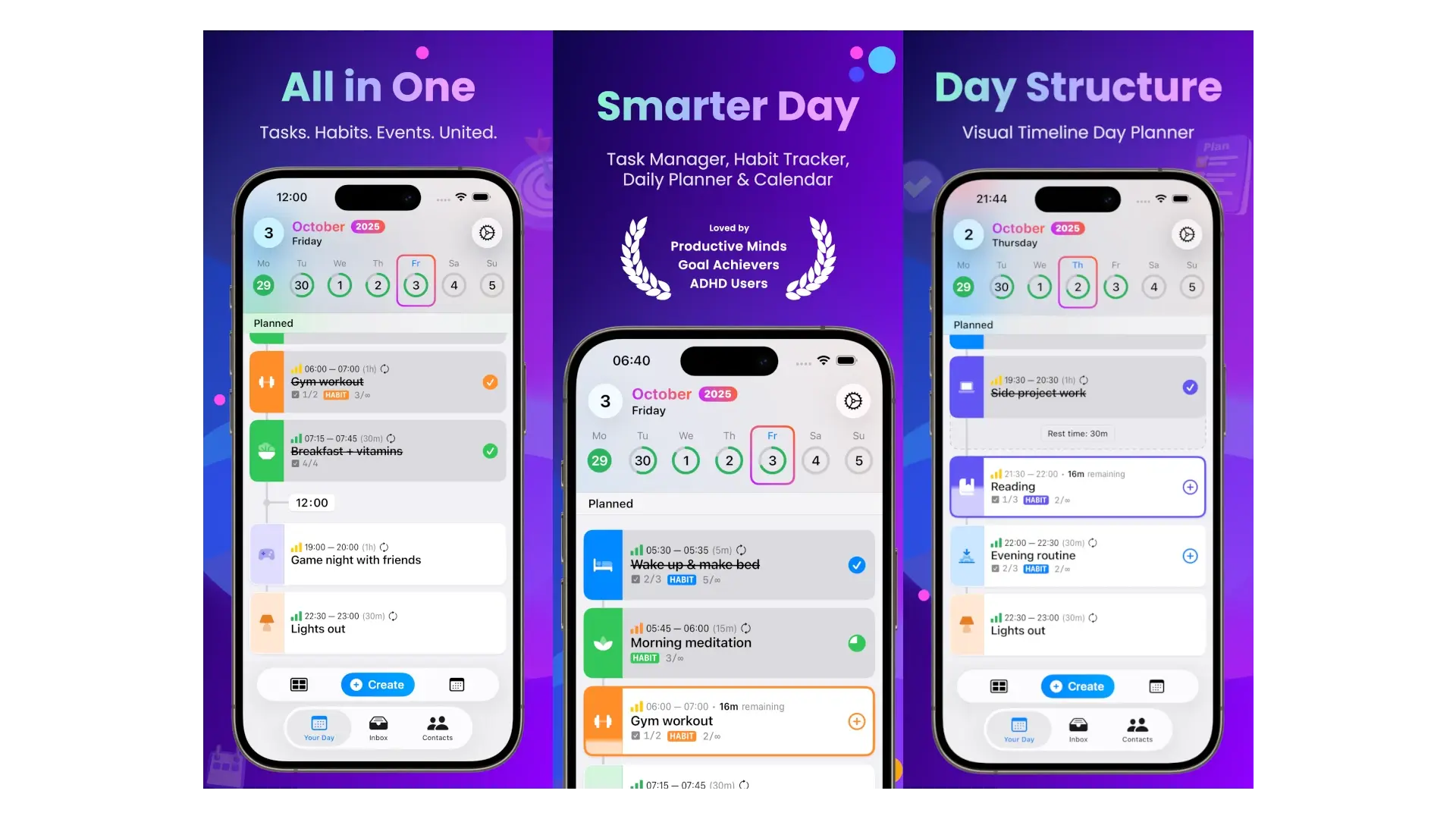
Used well, a smart day workflow turns the matrix from a concept into a repeatable operating system. Smarter.Day is built for that kind of execution, helping users sort priorities visually, reduce clutter, and act on what matters without wasting energy on constant re-deciding.
When the Eisenhower Matrix is not enough on its own
This framework is excellent for triage, but it does not estimate effort, energy, or task dependencies. A task can be important and scheduled, yet still fail because it needs two approvals, a high-focus block, or better preparation.
That is why strong productivity strategies for professionals usually combine methods. The matrix helps you decide what matters. Time blocking helps you protect time. Subtasks help you start. Habit tracking helps you stay consistent. AI scoring or review rituals can help when your judgment gets distorted by stress or overload.
It depends on the shape of your work. If your day is highly reactive, the matrix gives you control. If your work is strategic and complex, it gives you a filter - but you still need execution tools around it.
Build the habit, not just the chart
The real power of Eisenhower matrix planning comes from repetition. Use it daily, keep it honest, and resist the urge to label everything as critical. Over time, you will notice patterns. Certain requests always crowd your day. Certain important tasks keep getting delayed. Certain distractions show up when your energy drops.
That awareness is where time optimization meaning becomes practical instead of abstract. You are not squeezing more into every hour. You are making better decisions about what deserves your hours in the first place.
If your current planning system leaves you scattered, start smaller than you think. Capture everything. Sort it quickly. Protect one important task before the noise begins. That single shift can change the tone of your entire day.
You May Also Like
These Related Stories

ADHD Task Management That Actually Works

Mastering Focus: Stay Productive Amid Endless Distractions
No Comments Yet
Let us know what you think