
Time Mastery: Proven Systems to Prioritize and Focus

Time Mastery: Proven Systems to Prioritize and Focus
Introduction
Let’s face it—between endless notifications, shifting priorities, and the nagging feeling of not doing “the right thing,” productivity can feel like chasing a moving target. Have you ever noticed how a whole day disappears to email and quick chats, yet your most important work still waits? You’re not alone. The modern knowledge worker faces an overload of context-switching and decision fatigue that erodes focus and performance. The good news: with a few evidence-backed systems, you can regain clarity, reduce overwhelm, and optimize your time without burning out or working longer.
In this guide, we’ll break down practical, research-based tactics you can use today to transform your workflow. We’ll cover prioritization frameworks, time blocking, focus sprints, and energy management, along with habits, automation, and review rituals that compound results. Whether you’re leading a team or managing your own workload, you’ll get step-by-step methods, relatable examples, and references to expert research so you can build a reliable, sustainable productivity engine.
Prioritize with Precision: The Eisenhower Matrix and “The One Thing”
When everything seems urgent, nothing truly important gets done. Start with the Eisenhower Matrix: divide tasks into four quadrants—urgent/important, not urgent/important, urgent/not important, and not urgent/not important. Method one: schedule Quadrant II tasks (important but not urgent) first in your calendar. Method two: delegate or eliminate Quadrant III and IV tasks ruthlessly. As Stephen R. Covey popularized in “The 7 Habits of Highly Effective People,” prioritizing Quadrant II is where long-term success lives. For example, Maya, a product manager, began scheduling strategy work before emails; within two weeks, her roadmap quality and stakeholder alignment improved.
Layer in “The One Thing” approach by Gary Keller: ask, “What’s the one thing I can do such that by doing it, everything else becomes easier or unnecessary?” Method one: write your one thing for the day on a sticky note and keep it visible. Method two: block two uninterrupted hours to move it forward. This guardrails your attention and reduces decision fatigue. Maya used this to push a critical discovery sprint ahead of feature tweaks, which later saved weeks of rework and clarified priorities for her engineering team.
To avoid drift, implement a simple weekly priority review: list high-impact outcomes, map them to Quadrant II, and pick one “most meaningful outcome” (MMO). Research from Harvard Business Review on “goal clarity” shows teams that articulate clear priorities are more likely to hit milestones and minimize rework. Anchor your MMO with a calendar block and a checkpoint midweek. If your calendar fills up, treat your MMO block like a client meeting—non-negotiable, reschedulable, but never deletable.
Time Blocking and Theme Days for Predictable Progress
Time blocking converts intentions into protected time. Method one: assign blocks for deep work, admin, and recovery in your calendar; method two: pair blocks with location or device rules (e.g., deep work = laptop only, no phone). Cal Newport, author of “Deep Work,” cites blocking as a way to create intentional constraints that shape attention. Here’s the catch: it’s not just about blocks—it’s about boundaries. Jamal, a sales lead, shifted from reactive emailing to morning outreach blocks and afternoon follow-ups; his weekly pipeline grew 18% in a month.
Add theme days to reduce context switching: Monday for planning, Tuesday for creation, Wednesday for collaboration, etc. Method one: stack similar tasks on designated days; method two: align external meetings with collaboration days to protect deep work time. This mirrors how teams like Basecamp use “calm” schedules to prioritize large chunks of creation time. According to Microsoft’s Work Trend Index, fragmented calendars contribute to cognitive overload; consolidating themes reduces mental taxation and increases predictability.
Use a simple three-step block hygiene routine:
- Reserve first two hours daily for a high-impact block.
- Insert short transition rituals between blocks (stretch, log notes, reset tabs).
- Close the day by adjusting tomorrow’s blocks based on learning.
Parkinson’s Law warns that “work expands to fill the time available.” Time blocking counters this by capping tasks. Jamal set 45-minute caps for proposal drafting; quality stayed high, and he reclaimed an hour per day for prospecting.
Batch Work and Cut Context Switching
Multitasking feels productive but quietly drains performance. The American Psychological Association notes our brains pay a switching “toll” when jumping between tasks. Method one: batch similar tasks—emails at 11:30 and 4:30, messages twice daily; method two: use a capture list to park thoughts so you don’t derail a session. Research by Gloria Mark (UC Irvine) shows it can take about 23 minutes to reorient after interruptions. Priya, a customer success manager, batched support tickets and created macro templates; her response time improved while stress dropped.
Try single-task sprints: choose one task, full-screen it, and close all unrelated tabs. Method one: run a 30–50 minute sprint with a visible timer; method two: keep a “parking lot” doc for off-topic ideas. This is simple cognitive ergonomics—reduce inputs to reduce switching. Over a week, Priya measured 35% fewer tab switches using a browser session manager and noticed steadier concentration during peak hours.
Use context labels to batch fast: tag tasks by cognitive load (deep, light), location (office, home), and tools (phone, spreadsheet). At planning time, string together compatible tasks. HBR has highlighted that grouping by context lowers the mental setup cost. Priya grouped “light phone tasks” for commute windows and saved her focused hours for quarterly planning, leading to more strategic customer playbooks.
Focus Sprints: Pomodoro, 52/17, and Recovery
The Pomodoro Technique by Francesco Cirillo is a classic for good reason. Method one: work 25 minutes, break 5, repeat four times, then take a longer break; method two: adjust intervals to your cognitive rhythm. According to DeskTime’s analysis of top 10% performers, a 52/17 work/rest rhythm was associated with strong output—proof that recovery fuels performance. Ethan, a data analyst, adopted 45/10 cycles and used breaks for quick walks; his afternoon output improved and he stopped dragging tasks into evenings.
Use active recovery during breaks: stand, stretch, hydrate, or step outside. Method one: micro-movements to reset posture; method two: “visual reset” by looking at distant horizons to relax eye muscles—advice supported by ergonomics research from Cornell. These short resets reduce eye strain and help your brain consolidate progress. Ethan added a two-minute note-taking wrap-up after each sprint so the next session had a crisp starting point.
To prevent momentum loss, try sprint scaffolding:
- Define “success criteria” per sprint (e.g., outline three bullet points).
- Preload resources before you start (tabs, files, dataset).
- End with a mini-summary and next action.
The ritualization lowers cognitive friction. As cognitive psychologists often note, clear starting cues and simple end caps reduce task-switch anxiety, making re-entry fast and focused.
Deep Work Zones and Digital Boundaries
“Deep Work,” as articulated by Cal Newport, is the ability to focus without distraction on cognitively demanding tasks. Method one: set digital guardrails—block distracting sites, silence notifications, and use full-screen apps; method two: create time-bound “focus contracts” with yourself or a teammate to reinforce commitment. Lena, a UX designer, carved two 90-minute deep work zones each morning; within three weeks, she doubled her throughput on design iterations without longer hours.
Balance deep work with distraction-proof environments. Method one: keep a “distraction ledger”—track, quantify, and neutralize your top three distractors; method two: place your phone in another room, a tactic supported by research showing the mere presence of a smartphone can reduce available cognitive capacity. Nir Eyal’s “Indistractable” emphasizes tactics like pre-commitments and effortful access to reduce unplanned dives into apps.
Use structured closures to protect attention:
- “One tab” rule for deep work blocks.
- A five-minute log at the end: what worked, what didn’t, what to try next.
- A small reward after completing a deep block.
These boundaries create a performance container. Lena’s team saw fewer Slack pings during protected hours after agreeing on “green hours” (focus) and “blue hours” (collab). The shared norm reduced interruptions and increased output without extra meetings.
Energy Management, Chronotypes, and Ultradian Rhythms
Productivity isn’t just time management—it’s energy management. Method one: map your chronotype (morning lark, night owl) and schedule deep work when alertness peaks; method two: align routine tasks to energy dips. Daniel Pink’s “When” and research on daily rhythms suggest decision quality and creativity fluctuate across the day. Marco, a developer and late chronotype, shifted code reviews to late morning and complex problem-solving to late afternoon, matching his natural energy curve.
Work with ultradian rhythms—90-minute cycles of heightened focus followed by recovery, a concept popularized by sleep researcher Nathaniel Kleitman. Method one: plan 90-minute focus + 15-minute restoration; method two: use light movement, hydration, and sunlight exposure to reset. Neuroscientist Andrew Huberman often highlights the performance benefits of light, breathwork, and deliberate breaks to maintain alertness. Marco used a sunlight walk and a protein snack between cycles; his cognitive stamina held steady across long sprint days.
Respect diminishing returns. Stanford economist John Pencavel found productivity per hour drops sharply beyond ~50–55 hours weekly. Build sustainable intensity instead: two deep blocks + two admin blocks + one collaboration block on heavy days. Add sleep fidelity (consistent schedule), and protect your “anchor tasks” early to bank wins. Marco’s team standardized two deep-focus windows across time zones, which reduced late-night firefighting and improved code quality metrics.
Habit Stacking and Friction Design
Small, consistent habits beat occasional heroic efforts. BJ Fogg’s Tiny Habits suggests pairing micro-actions with existing routines. Method one: “After I brew coffee, I’ll outline three priorities”; method two: “After I end a meeting, I’ll capture next actions.” James Clear’s “Atomic Habits” underscores habit stacking and environment design to reduce friction. Sara, a marketing lead, stacked her daily planning onto her commute arrival; within a month, her days started with clarity and fewer ad-hoc detours.
Design friction smartly. Method one: lower friction for good behaviors (open your doc at start-up, pin key dashboards); method two: raise friction for distractors (remove social apps from your phone, add site blockers). As Clear notes, “Make it obvious, make it attractive, make it easy, make it satisfying.” Sara created a “focus tray” desktop—only essential apps appear during deep blocks—and moved news apps to her TV, cutting daytime doomscrolling.
Add habit scorecards and tiny rewards:
- Score habits daily (1 = done, 0 = missed) to visualize streaks.
- Pair completion with a micro-reward (tea, a short walk).
- Run a weekly “habit retro” to tune anchors and remove stale steps.
Behavioral science shows visible progress drives motivation. The quick feedback loop kept Sara consistent through busy launches, and her team began adopting similar stacks, lifting collective execution quality.
Meeting Minimalism and Communication Hygiene
Meetings balloon because default rules favor convenience over outcomes. Start with purpose-first agendas. Method one: require a one-page pre-read (Amazon’s “two-pizza rule” champions small, prepared groups); method two: define decisions needed and owners beforehand. HBR has documented that unstructured meetings drain productivity and morale. Owen, an operations manager, cut 30% of his recurring meetings by replacing status updates with async dashboards; project velocity improved noticeably.
Enforce communication hygiene. Method one: use subject-line tags ([Decision], [FYI], [Blocker]) and channel norms (Slack for quick asks, docs for context); method two: batch responses during designated windows. Atlassian’s data shows workers spend significant time just switching tools—clear norms reduce churn. Owen added “No-Meeting Wednesdays” and set a two-tier response SLA: urgent within 2 hours, everything else by day’s end.
Try meeting alternatives:
- Loom or short video updates for demos.
- Shared agendas with tracked decisions and deadlines.
- 15-minute standups with hard stops and rotating facilitators.
MIT Sloan research highlights that trimming low-value meetings boosts knowledge worker performance and well-being. Owen’s team moved brainstorms to 45-minute workshops with pre-work, leading to better ideas and fewer follow-ups.
Automation, Templates, and AI Co‑Pilots
Automate the repeatable to free capacity for the meaningful. McKinsey estimates that up to 60–70% of time spent on data processing and repetitive tasks can be automated with current tools. Method one: use workflows (Zapier/Make) to auto-log leads, file invoices, or update spreadsheets; method two: create templates for emails, briefs, and reports. Nadia, a freelancer, automated proposal generation and invoicing; she recovered five hours weekly for creative work.
Adopt AI co-pilots wisely. Method one: use AI to summarize meetings, extract tasks, and draft first-pass content; method two: build prompt libraries for consistent outputs. Forrester and Gartner have both reported significant productivity gains when AI is used for drafting, summarization, and research acceleration. Nadia used AI to build outline drafts and a human pass for nuance; delivery times dropped while quality remained high.
Institute automation audits monthly:
- List top five repetitive tasks.
- Identify trigger → action chains.
- Pilot one automation per week and measure saved time.
Track reclaimed hours and reinvest them in high-impact priorities. Nadia’s audit revealed duplicated manual steps in client onboarding; automating them reduced cognitive load and improved client satisfaction scores.
Weekly Reviews and the Progress Principle
Without a feedback loop, even the best systems drift. Conduct a Weekly Review inspired by David Allen’s “Getting Things Done.” Method one: clear inboxes (email, notes, downloads), then review calendar and projects; method two: set next actions for each priority and block them. Teresa Amabile’s “Progress Principle” shows that small wins fuel motivation. Leo, a team lead, added a Friday “wins and lessons” note; his team began each Monday with momentum, not confusion.
Add metrics and reflection. Method one: track “lead measures” (deep work hours, sprints completed, automation runs) instead of just outcomes; method two: conduct a “stop/keep/start” review to prune low-value commitments. HBR has emphasized the power of learning reviews for sustained performance improvement. Leo’s dashboard visualized deep work hours versus rework; after two weeks, they shifted standups earlier and saw fewer bottlenecks.
Close each week with a plan-preview ritual:
- Define three outcomes for next week.
- Pre-block deep work sessions.
- Send a short priorities summary to stakeholders.
This upfront clarity reduces “Monday scramble.” Leo noticed stakeholders asked fewer ad-hoc questions, and deadlines were met with less last-minute pressure.
Conclusion
We’ve covered a full stack of strategies—from prioritization frameworks and time blocking to focus sprints, energy management, and review rituals—all designed to reduce overwhelm and elevate performance. The throughline is simple: protect what matters, batch the rest, and let systems do the heavy lifting. Small, consistent improvements compound into remarkable gains over time.
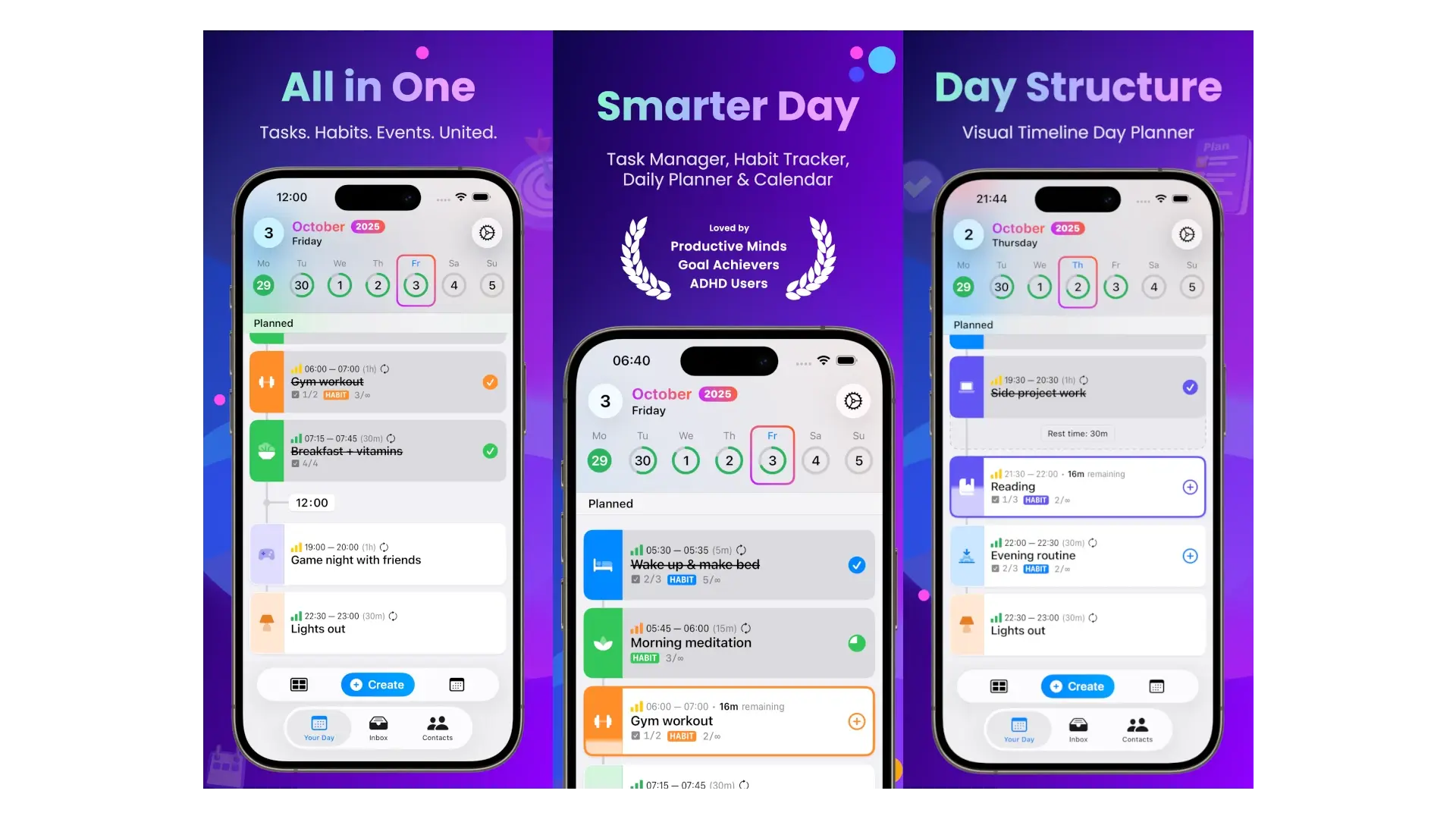
If you’re ready to operationalize these tactics with less friction, try the productivity app at Smarter.Day. It can help you schedule deep work, automate routine steps, and run weekly reviews with data-driven insights so your priorities stay visible—and doable.
You May Also Like
These Related Stories
Time Mastery: Proven Systems to Prioritize and Focus
12 Proven Ways to Boost Focus and Productivity Today
No Comments Yet
Let us know what you think