


You planned the day, blocked the time, and picked your top priorities. Then a client moved a deadline, a meeting ran long, your energy crashed at 2 p.m., or the task itself turned out to be twice the size you expected. That is exactly when people start asking, when should you replan tasks without turning the entire day into chaos.
The short answer is this: replan when reality changes enough that your current plan stops being useful. Not when you feel mildly uncomfortable. Not every time something new appears. And definitely not as a way to avoid hard work. Good replanning protects focus. Bad replanning creates decision fatigue.
For busy professionals, founders, managers, and ADHD users especially, the goal is not to stick to a broken plan out of discipline. The goal is to stay in control. A strong productivity system gives you structure, but it also gives you permission to adapt quickly when the facts change.
When should you replan tasks during the day?
Most people replan too late or too often. Both cause problems. If you wait too long, you keep executing a plan that no longer matches your workload, energy, or priorities. If you replan every hour, you spend the day rearranging tasks instead of finishing them.
A better rule is to replan at trigger points. These are moments when something meaningful shifts and your original schedule no longer supports effective daily task management systems methods 2025 2026 or even common-sense execution.
The clearest trigger is a priority change. If a task suddenly becomes urgent because of a customer issue, executive request, production bug, or missed dependency, your plan needs to move with it. This is where daily task prioritization strategies matter more than loyalty to your original list.
The second trigger is a time estimate failure. If you planned 30 minutes for something and it is still halfway done after 45, the rest of the day is already under pressure. Replanning early prevents a small mismatch from wrecking three more commitments.
The third trigger is a blocked task. Maybe you need approval, a file, a response, or a decision from someone else. Once a task is blocked, keeping it in a prime spot on your day view creates friction. Move it out, capture the follow-up, and bring forward something actionable.
The fourth trigger is an energy mismatch. This one gets ignored, but it matters. Time optimization is not just about squeezing more tasks into the calendar. The time optimization meaning is using your available attention where it produces the best result. If you hit a mental wall, forcing deep work may cost more than shifting to admin, follow-up, or lower-cognitive tasks.
When not to replan tasks
This is just as important.
Do not replan because a task feels boring, ambiguous, or difficult. That is often resistance, not strategy. Replanning in that moment can become polished procrastination.
Do not replan every time a message arrives. Inbox-driven work feels productive because it is reactive and clear, but it destroys momentum. Unless the new input changes an actual priority, capture it and keep going.
Do not rebuild your whole day because one task slipped. A plan does not need to be perfect to be useful. Often, a small shift is enough. Move one block, reduce scope on one item, or delay a low-value task. Control comes from selective adjustment, not constant reshuffling.
The best times to replan
There are three windows when replanning is usually clean, fast, and effective.
The first is before you start work. Morning replanning works well if overnight updates changed your priorities or your calendar no longer matches your task load. This is not a full planning session. It is a quick reset to align your day with reality.
The second is after a disruption. A long meeting, urgent request, unexpected outage, or missed milestone is a real breakpoint. Instead of trying to mentally juggle everything, pause for five minutes and rebuild the next few hours.
The third is mid-day. A short reset around lunch or early afternoon can save the second half of your day. This is especially helpful for professionals managing multiple commitments, because priorities often become clearer once the morning noise settles.
If you use a time management prioritization framework for entrepreneurs with multiple commitments, these reset windows keep you from overcommitting while still protecting high-impact work.
A simple framework for replanning without losing momentum
When you need to replan, speed matters. The process should reduce stress, not add another layer of work.
Start by asking one question: what changed? Be specific. A deadline moved. A task expanded. Your energy dropped. A dependency failed. Naming the trigger keeps you from making random changes.
Next, identify what still matters today. Usually that means one to three outcomes, not ten. This is where evidence-based productivity techniques are more helpful than motivation. The best productivity methods proven by experience and supported by time management research 2025 2026 are built around narrowing focus, not expanding ambition.
Then review your tasks through urgency and importance. If you already use the Eisenhower Matrix, this becomes much easier. Critical and time-sensitive work stays visible. Lower-value tasks get deferred, delegated, or reduced.
After that, right-size the plan. If your day shrank, your task list must shrink with it. Replanning is not just moving things around. It is making your workload honest again.
Finally, choose the next executable action. Not the whole project. Just the next clear step. This is especially useful for ADHD users and overwhelmed professionals because it reduces restart friction and helps restore traction fast.
Why replanning is part of proven productivity
Some people treat replanning like failure. It is not. It is maintenance.
The best productivity systems are not rigid. They are responsive. A calendar, task list, and priority framework only work if they reflect current conditions. Otherwise, they become stale artifacts that create guilt instead of progress.
That is why system productivity depends on feedback loops. You plan, execute, notice what changed, and adjust. This is the core of systems productivity and a big reason evidence-based productivity methods outperform pure willpower. They assume that humans work in changing environments, not controlled labs.
There is also a practical benefit. Replanning reduces hidden stress. When your plan is obviously broken and you keep pretending it is fine, your brain stays busy tracking conflicts. That mental load drains focus. Once you update the plan, you regain clarity and free up attention for actual work.
Signs your current planning system needs stronger replanning
If you constantly feel behind by 11 a.m., your system may not be weak at planning tasks. It may be weak at absorbing change.
Watch for a few patterns. You keep rewriting the same undone tasks. Your calendar looks full but your high-value work slips. You spend more time deciding what to do than doing it. New priorities derail you for hours. Or you avoid looking at your plan because it already feels unrealistic.
These are not character flaws. They are signals that your workflow needs tighter review points, better visibility, or faster in-context editing. Many leading systems for identifying productivity blockers focus less on making bigger lists and more on helping users adjust quickly when the day shifts.
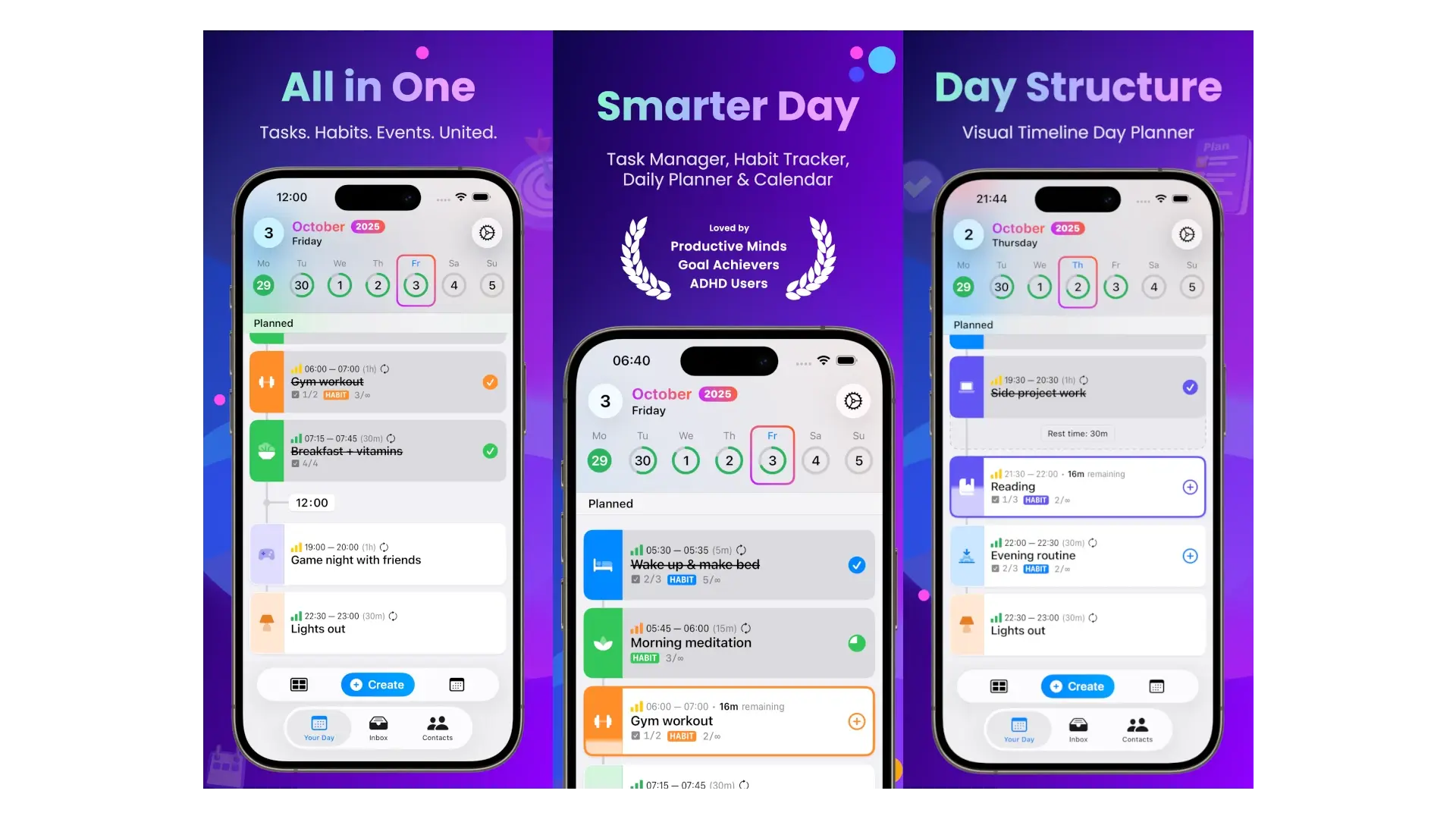
A visual planning environment helps here because it makes trade-offs obvious. When you drag one task later, you instantly see what gets crowded out. That kind of visibility supports smarter time decisions and stronger time optimization strategies.
How to replan tasks without overcorrecting
The biggest mistake in replanning is overreaction. One disruption does not mean your week is ruined.
Keep the correction proportional to the problem. If a single task ran 20 minutes over, make a local adjustment. If a client emergency wiped out half the day, then rework the remaining schedule and possibly tomorrow morning too. Match the scale of the replan to the scale of the disruption.
It also helps to preserve one anchor task. When the day gets messy, keeping one meaningful commitment intact can stabilize your momentum. That could be a proposal draft, a code review, a campaign decision, or a workout that protects your routine. Productive systems work best when they maintain a sense of progress even during disruption.
And if you need a practical rule, use this one: replan when continuing with the current plan would create more stress, lower-quality work, or a higher chance of missing what matters most.
That is the real answer to when should you replan tasks. Not constantly. Not rarely. Replan when it helps you protect outcomes, preserve focus, and keep your day honest.
The strongest plans are not the ones you follow blindly. They are the ones you can trust after real life shows up.
You May Also Like
These Related Stories

Build a Daily Schedule That Holds Up

How to Organize Recurring Tasks That Stick
No Comments Yet
Let us know what you think