
12 Evidence-Backed Ways to Boost Daily Focus Fast

12 Evidence-Backed Ways to Boost Daily Focus Fast
It’s easy to feel productive yet make little progress—tabs multiply, notifications ping, and the day slips by. Have you ever noticed that when you finally get “in the zone,” something breaks the spell? Here’s the catch: attention is a finite resource, but it’s trainable. In this guide, we’ll unpack practical strategies to reduce overwhelm, tame distraction, and improve focus so you can do your best work consistently and finish earlier.
You’ll get actionable methods rooted in research—no fluff. We’ll cover time optimization, workflow improvement, and focus routines used by top performers. Expect simple, repeatable steps, relatable examples, and expert-backed insights you can implement today. By the end, you’ll have a repeatable playbook for deep work, peak performance, and sustainable energy.
1) Build a Focus-First Schedule with Time Blocking
Start with time blocking: assign specific blocks for high-impact tasks and protect them like meetings. Combine this with task batching—group similar tasks (emails, approvals, data pulls) to reduce switching costs. Keep blocks realistic: 60–90 minutes for deep work and 15–30 minutes for shallow tasks. As Cal Newport notes in “Deep Work,” guarding uninterrupted time is one of the fastest paths to meaningful output and higher cognitive performance.
A simple method: schedule your most demanding task in the first two hours of your day when willpower is strongest. Add a 10-minute buffer between blocks to reset. If you struggle to start, write a one-line “next step” at the bottom of your notes to cue the next session. These small constraints prevent drift and keep your workflow improvement loop tight.
Real-life example: A product manager blocked 8:30–10:00 a.m. for roadmap planning, then batched all stakeholder responses from 4:00–4:30 p.m. Within two weeks, cross-team delays dropped because priorities were clear. Key lesson: when you design your day on purpose, you win back attention before others claim it.
References: Cal Newport, Deep Work (2016); Cyril Northcote Parkinson, Parkinson’s Law (1955).
2) Eliminate Context Switching with Single-Task Rules
Context switching kills focus. Research by Rubinstein, Meyer, and Evans shows task-switching can reduce efficiency by up to 40%. Sophie Leroy’s attention residue work reveals that part of our mind stays stuck on the last task, blunting performance on the next. The fix: adopt single-tasking rules and “one window, one objective” constraints. Use app limiters like Focus, Freedom, or built-in Do Not Disturb to reduce toggling.
Two simple methods:
- Use a Two-Tab Rule—one for the doc you’re editing, one for a necessary reference.
- Practice the Finish Line Technique—always end by noting the next specific step to re-entry faster later. You’ll reduce the ramp-up time each session and preserve cognitive bandwidth.
Example: A designer cut Slack to scheduled check-ins at 11:30 a.m. and 3:30 p.m., kept only Figma and one research tab open, and finished a sprint ahead of time. She reported feeling calmer and “twice as fast” because there were fewer micro-decisions. That is time optimization realized.
References: Sophie Leroy (2009), “Why Is It So Hard to Do My Work?”; J. E. Rubinstein, D. E. Meyer, J. E. Evans (2001).
3) Work the 90/20 Rhythm and Smart Breaks
Human energy runs in ultradian rhythms—natural cycles of about 90 minutes. Nathaniel Kleitman’s research and Anders Ericsson’s work on elite performers show that high-intensity focus followed by deliberate rest sustains top performance. Try a 90/20 cadence: 90 minutes of deep work, 20 minutes of recovery. If 90 feels long, use 50/10 and build up. Treat breaks as strategic, not indulgent.
Two methods:
- Physiological reset: hydrate, stand up, look at distant objects to relax eye muscles, and breathe slowly (box breathing 4-4-4-4).
- Active rest: five-minute walk or light stretching. Movement improves blood flow and clears mental cobwebs.
Example: A financial analyst adopted 50/10 cycles with a short walk and water refill each hour. Afternoon errors fell, and spreadsheet audits took 20% less time. Outcome: better performance with fewer revisions—exactly what workflow improvement looks like.
References: Nathaniel Kleitman (ultradian rhythms); K. Anders Ericsson et al. (1993), “The role of deliberate practice.”
4) Turn Intent into Action with If–Then Plans
When motivation dips, structure wins. Psychologist Peter Gollwitzer’s work on implementation intentions shows that if–then plans (“If it’s 8 a.m., then I open my draft and write 100 words”) dramatically increase follow-through. Pair them with precommitment—remove friction in advance so starting is automatic. For instance, open the file, cue the workspace, and set your timer before bed.
Two methods:
- Write 3 if–then cues for your hardest task: time, place, and trigger.
- Use temptation bundling—pair a routine task with a reward (podcast only during filing). This creates a conditioned pull toward action.
Example: A freelance writer used “If it’s 7:30 a.m., then I write the first paragraph before email.” She repeated it daily and doubled her output in four weeks. The cue removed debate, and progress created momentum. That’s habit-linked focus in action.
References: Peter M. Gollwitzer (1999), “Implementation intentions”; Katy Milkman, “How to Change” (2021).
5) Design a Distraction-Resistant Workspace
Environment beats willpower. A study by Adrian Ward (UT Austin, 2017) found that just having your phone visible reduces available cognitive capacity—even when it’s off. Solution: enforce a phone out of sight rule. Put it in another room or a drawer during deep work. Add notification triage—batch alerts to specific hours and disable badges for nonessential apps.
Two methods:
- Noise management: use pink noise, brown noise, or instrumental tracks; or noise-canceling headphones.
- Visual minimalism: clear your desk of all but the essential tool(s). Fewer cues, fewer detours.
Example: A marketing manager kept her phone in the kitchen from 9–11 a.m., used brown noise, and taped a sticky note that read “One Tab, One Task.” Email response time didn’t suffer, but campaign strategy quality soared. The simplified workspace design preserved her best attention for the hardest thinking.
References: Adrian F. Ward et al. (2017), Journal of the Association for Consumer Research; Nir Eyal, “Indistractable” (2019).
6) Prioritize with the 1–3–5 Rule and the Eisenhower Matrix
Let’s face it: not everything deserves today. Use the Eisenhower Matrix to separate urgent from important, then commit to the 1–3–5 rule: 1 big task, 3 medium tasks, 5 small tasks. This caps your work-in-progress, reduces decision fatigue, and channels focus to what moves the needle. Gary Keller, in “The ONE Thing,” argues that extraordinary results come from narrowing your focus to the vital few.
Two methods:
- Start each morning by picking your “ONE Thing”—the task that makes other tasks easier or unnecessary.
- Schedule your 1–3–5 list into blocks; if it doesn’t fit, it doesn’t ship today.
Example: A startup founder used the matrix to delegate most “urgent-not-important” pings and dedicated mornings to the “important-not-urgent” build. Within a month, runway projections improved because core milestones advanced. Prioritization clarity is productivity’s engine.
References: Dwight D. Eisenhower (decision matrix); Gary Keller & Jay Papasan, “The ONE Thing” (2013); Baumeister et al. on decision fatigue.
7) Use Checklists and SOPs to Speed Repeated Work
Repetition invites errors. Atul Gawande’s “The Checklist Manifesto” shows how checklists reduce mistakes in complex environments—from surgery to aviation. In knowledge work, SOPs (Standard Operating Procedures) create a repeatable path that frees attention for the intelligent parts of the job. You’ll gain speed, consistency, and lower stress because you’re not reinventing steps.
Two methods:
- Build a pre-flight checklist for recurring tasks (publishing, onboarding, reporting).
- Create a template with prompts for quality checks and handoffs. Add links to examples and assets to remove hunting time.
Example: A content team adopted a publishing SOP: outline → SEO review → draft → fact-check → final QA. Turnaround time dropped by 30%, and error rates plummeted. The team reported more creative energy because the basics were automatic—classic workflow improvement.
References: Atul Gawande, “The Checklist Manifesto” (2009); Steven Spear, “The High-Velocity Edge” (2010).
8) Protect Your Brain: Sleep, Fuel, and Micro-Movement
Peak focus requires a healthy brain. Matthew Walker’s “Why We Sleep” makes it clear: less than 7 hours impairs attention, memory, and decision-making. Treat sleep as your top productivity tool. Time caffeine strategically—wait 60–90 minutes after waking to avoid an afternoon crash. Add micro-movements: a Stanford study found walking boosts creative output by up to 60%.
Two methods:
- Sleep anchors: consistent bedtime/wake time and a wind-down routine (dim lights, reading, no screens 60 minutes before bed).
- Movement snacks: 2–5 minute walks or mobility drills every hour to refresh blood flow and attention.
Example: An engineer started a 10:30 p.m. lights-out rule, delayed coffee until 9 a.m., and walked outside after lunch. Afternoon fog cleared, and code review time shortened by 25%. Sustainable performance starts with biology.
References: Matthew Walker, “Why We Sleep” (2017); Oppezzo & Schwartz (2014), Journal of Experimental Psychology: Learning, Memory, and Cognition; Harvard Health Publishing on sleep hygiene.
9) Think Better with Progressive Summarization and Retrieval
Information overload kills focus. Tiago Forte’s progressive summarization helps you distill notes in layers: highlight, bold key lines, then add executive summaries. Pair it with retrieval practice—actively recalling ideas rather than re-reading. Research by Roediger and Karpicke shows retrieval strengthens memory and understanding, which speeds future sessions and reduces rework.
Two methods:
- Organize notes with a PARA system (Projects, Areas, Resources, Archives) to find what you need fast.
- Create quick “cheat sheets” for recurring topics, then test yourself before starting work to prime context.
Example: A researcher summarized key sources weekly, bolding “takeaways” and tagging them by project. When drafting a literature review, she pulled pre-digested insights in minutes. The result: faster thinking and cleaner arguments—pure time optimization.
References: Tiago Forte, “Building a Second Brain” (2022); Roediger & Karpicke (2006), Psychological Science.
10) Close the Loop with Weekly Reviews and Simple Metrics
Productivity compounds when you reflect. Teresa Amabile’s Progress Principle shows that seeing small wins boosts motivation and momentum. A weekly review lets you capture wins, identify blockers, and plan next moves. Borrow from Deming’s PDCA (Plan-Do-Check-Act): review the last cycle, adjust tactics, and iterate. Small course corrections prevent drift.
Two methods:
- Every Friday, journal: What moved the needle? What didn’t? What will I do differently?
- Track leading indicators: deep work hours, tasks completed in the 1–3–5 list, and start times. If it’s visible, it improves.
Example: A freelancer logged deep work hours and adjusted start times to 8:30 a.m. After three weeks, billable output rose by 18%. The review turned feelings into facts and choices—actionable workflow improvement.
References: Teresa Amabile & Steven Kramer, “The Progress Principle” (2011); W. Edwards Deming (PDCA cycle).
Conclusion
You don’t need more hours—you need better use of the ones you already have. By scheduling time-blocked deep work, reducing attention residue, riding your 90/20 rhythm, and tightening repeatable processes, you’ll amplify focus, speed, and satisfaction. Layer in sleep, movement, and smart note systems, and you’ll protect the engine behind all performance: your brain.
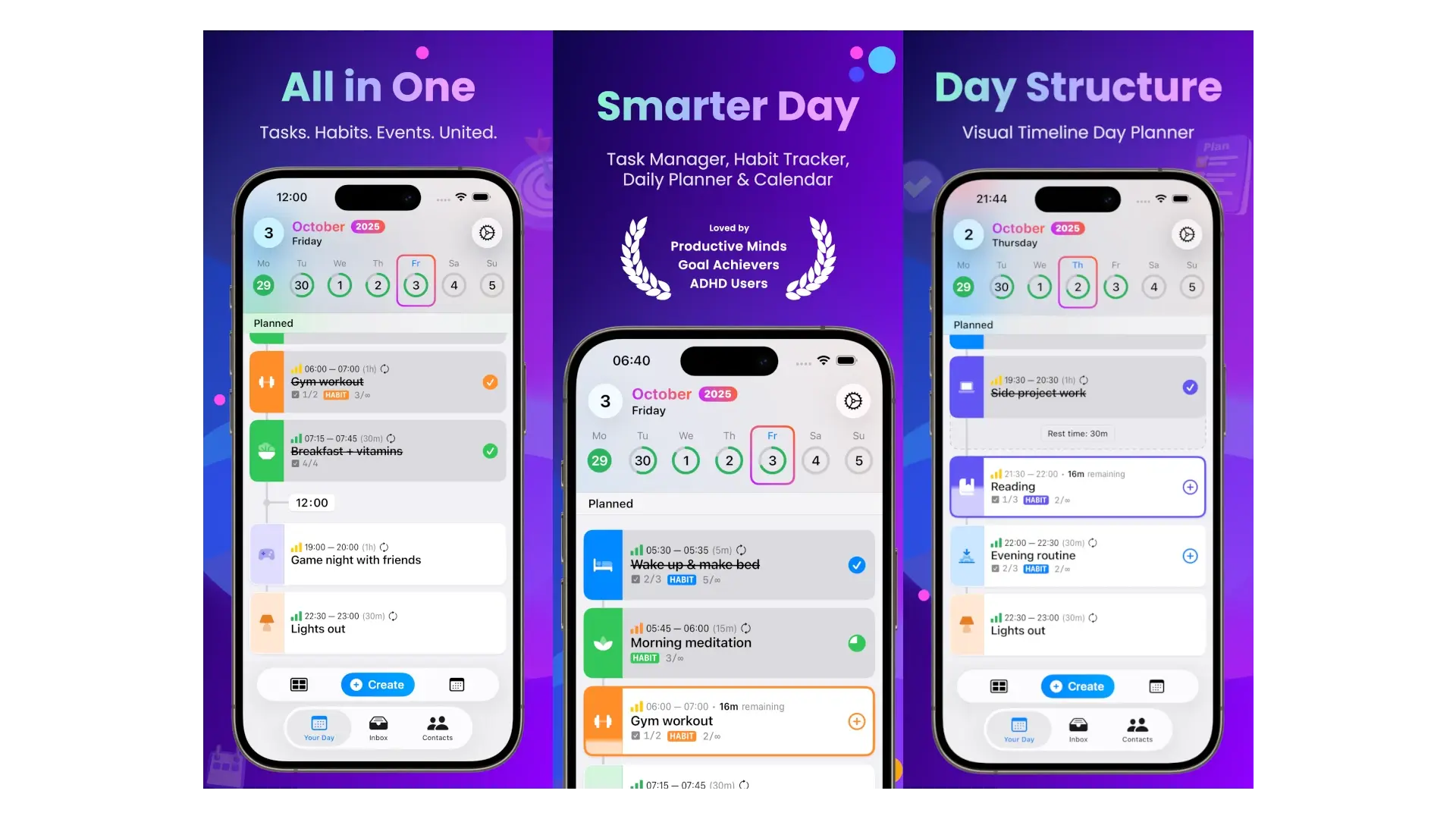
To make these strategies effortless, try the productivity app at Smarter.Day. Use it to block time, batch tasks, and run weekly reviews—all in one place—so your habits stick and your attention works for you.
You May Also Like
These Related Stories
12 Evidence-Backed Ways to Boost Daily Focus Fast
12 Evidence-Backed Ways to Boost Daily Focus Fast
No Comments Yet
Let us know what you think