
Advanced Time Management: 12 Proven Productivity Tactics

Style: Conversational and evidence-driven
Category: Time Management & Prioritization
Title: Advanced Time Management: 12 Proven Productivity Tactics
Description: Boost focus and beat procrastination with 12 research-backed tactics for time optimization, deep work, and workflow improvement today.
H1: 12 Research-Backed Strategies to Optimize Your Productivity
Introduction
Let’s face it—most days start with good intentions and end in a swirl of tabs, pings, and unfinished tasks. You’re not alone. Knowledge workers lose hours to interruptions, context switching, and decision fatigue. The result? Overwhelm, procrastination, and a constant feeling of being behind. Here’s the catch: sustainable productivity isn’t about doing more; it’s about doing what matters with less friction. In this guide, we’ll unpack practical, research-supported methods that make time optimization feel realistic—and even energizing.
Our goal is simple: show you how to streamline your workflow, reduce mental clutter, and protect your focus. Across 12 sections, you’ll find actionable strategies for deep work, better planning, and smarter tools—grounded in studies and expert insights. Whether you lead a team or work solo, you’ll get step-by-step approaches and relatable examples that you can apply today to improve performance and workflow improvement without burning out.
H2: Time Blocking and Task Batching for Clearer Days
When our calendars become catch-alls, focus vanishes. Time blocking gives your day structure by allocating specific windows for defined work, while task batching groups similar tasks to reduce context switching. Cal Newport’s “Deep Work” illustrates how protected blocks create the conditions for peak performance. A practical combination is to block 90-minute deep work windows in the morning and batch administrative tasks in one afternoon slot. The key is to defend the blocks with calendar visibility and clear “do not disturb” rules.
Try two methods. First, design a “model week” where recurring time blocks repeat for predictability. Second, create theme days (e.g., Tuesday for planning, Thursday for creative work) to reduce micro-decisions. A marketing manager I coached shifted all reporting to a single Thursday batch. By eliminating daily report-checking, she reclaimed 5 hours weekly and improved quality because she finally had uninterrupted analysis time.
Research shows context switching can cost up to 20–40% of effective time. Newport’s work and Gloria Mark’s attention research underscore that sustained attention windows outperform multitasking. For balance, leave “white space” between blocks for transitions. When a block is disrupted, apply a quick re-block: move the task to the next available slot so momentum isn’t lost. Over time, your calendar becomes a decision-saving system, not a stressor.
H2: Inbox Triage and Asynchronous Communication
Email and chat aren’t just tools—they’re attention traps. Implement inbox triage with three labels: Respond Today, Read Later, Delegate. Merlin Mann’s Inbox Zero isn’t about an empty inbox; it’s about fast decision-making. Second, encourage asynchronous communication for non-urgent updates. Teams that switch low-stakes chats to async status updates reduce interruptions dramatically. Gloria Mark’s studies show workers check email and chat every few minutes; batching email three times daily can significantly reduce stress and improve focus.
Apply two habits. First, schedule email windows (e.g., 10:30 a.m., 1:30 p.m., 4:30 p.m.) and keep them to 15–20 minutes using a timer. Second, convert repetitive replies into templates and use a text expander. A product lead I worked with created six canned responses covering 80% of inquiries. He dropped reply time by 40% and preserved cognitive energy for roadmapping.
To reinforce async norms, set response SLAs with your team (e.g., 24 hours for email, 4 hours for project tool comments). Cite senders to project tools instead of chat. This aligns with Basecamp and Cal Newport’s advocacy for “slow productivity,” minimizing synchronous pings. Over time, your inbox becomes a structured queue, not a chaotic to-do list.
H2: Beat Procrastination with Implementation Intentions
Procrastination thrives on ambiguity. Implementation intentions—if-then plans—cut through it. Psychologist Peter Gollwitzer’s research shows that specifying when and where you’ll act significantly increases follow-through. Combine this with the 10-minute rule: commit to just 10 minutes of a hard task. Once started, momentum kicks in. As Piers Steel outlined in “The Procrastination Equation,” we delay tasks with low expectancy and high delay. Raising clarity and immediacy crushes the urge to postpone.
Two tactics. First, pre-plan the very first visible step the day before (e.g., “Open the deck and outline three bullets in slide 2”). Second, set a temptation bundling reward—finish a sprint, then enjoy your favorite coffee. A client in consulting struggled with writing reports. Switching to “At 9:00 a.m., open the template and complete the summary first” led to consistent starts and faster finishes.
Layer in environmental cues: place the file on your desktop, pre-open apps, and silence social media. Research by Timothy Pychyl emphasizes that solving the emotional discomfort behind avoidance—by shrinking the task and committing to a start—matters more than “motivation.” Keep a visible “Start Log” where you record start times. Seeing a streak forms identity-based motivation.
H2: Focus Sprints, Pomodoro, and Single-Tasking
The Pomodoro Technique—25 minutes focused, 5 minutes break—popularized by Francesco Cirillo, is a reliable on-ramp to deep work. Pair it with single-tasking: one task per sprint, no exceptions. Stanford’s Clifford Nass found heavy multitaskers are worse at filtering irrelevant information. Use Pomodoro to anchor attention and use breaks as reset rituals. For high-cognitive tasks, extend to 50/10 or 75/15 cycles to match your attention span.
Two methods to strengthen sprints. First, set a focus intention: “For the next 25 minutes, I will draft the intro and skip formatting.” Second, activate device Focus modes with app limits and whitelisted contacts. An engineer I coached used four 50-minute sprints each morning. Within two weeks, code output rose, and bug rates fell because context stayed intact.
Cal Newport’s deep work principles align with these sprints: prioritize intensity and protect from interruption. Keep a notepad for distraction capture, jotting down urges without acting on them. You’ll train your brain to trust you won’t forget. Over time, extend sprint length selectively for flow states, borrowing from Mihaly Csikszentmihalyi’s Flow work: clear goals, immediate feedback, and balanced challenge.
H2: MITs and Weekly Reviews (GTD for Real Life)
David Allen’s Getting Things Done (GTD) underscores capturing everything and reviewing regularly. Pair GTD’s clarity with daily MITs (Most Important Tasks)—one to three outcomes that truly move the needle. Teresa Amabile’s “The Progress Principle” shows that making meaningful progress is the biggest motivator. Start your day by defining MITs, then block the first 90 minutes for them.
Two methods. First, run a Weekly Review: clear inboxes, update next actions, plan your top outcomes for the week. Second, convert projects into visible checklists and define “done.” A freelancer I worked with moved from a never-ending to-do list to a weekly board with three success metrics. Anxiety dropped, delivery consistency improved, and client satisfaction rose.
Use project verbs and outcomes—“Draft Q1 proposal (first pass)”—and place MITs above everything else on your plan. Allen emphasizes an external brain to reduce psychic RAM. Keep a “Someday/Maybe” list to park ideas without derailing the week. This combination delivers time optimization while protecting creative bandwidth.
H2: Energy Management, Breaks, and Ultradian Cycles
Productivity isn’t linear; it’s biological. We work best in ultradian rhythms—90-minute cycles of high energy followed by recovery, a concept explored by Nathaniel Kleitman. Structure intense work during peak windows and insert active breaks: a quick walk, hydration, or breathing exercises. Research from the University of Illinois (Ariga & Lleras) shows that brief diversions can restore focus and prevent vigilance decrements.
Two practical moves. First, map your peak hours for the next week; schedule demanding tasks there. Second, use microbreaks every 60–90 minutes—stand, stretch, look outside for a minute to reset attention. A designer I coached added three five-minute walking breaks and saw fewer afternoon headaches and faster iterations by late day.
Anders Ericsson’s work on deliberate practice highlights the necessity of recovery for high performance. Consider a mid-afternoon “recovery ritual”: protein snack, sunlight, and a short reset. Use a visible “energy log” noting what fuels or drains you. Over time, you’ll design a rhythm that protects deep work without requiring heroic willpower.
H2: Decision Fatigue, Defaults, and Checklists
As the day wears on, choices get harder. Decision fatigue drains executive function, leading to procrastination and poor prioritization. Combat it with defaults and checklists. Atul Gawande’s “The Checklist Manifesto” shows that simple lists prevent errors in complex environments. Set defaults for recurring decisions: morning workout clothes ready, standard lunch, standard meeting durations.
Two methods. First, create starter routines: a fixed five-step morning setup (water, plan MITs, block calendar, focus mode, first sprint). Second, build process checklists for common workflows—proposal writing, bug triage, handoffs. Sheena Iyengar and Mark Lepper’s research shows too many choices reduce satisfaction and action; constraints help you move.
A sales lead I advised created a proposal checklist with 12 items. Proposals went out a day earlier on average, with fewer revisions. He also set a default 25-minute meeting length, which saved three hours weekly. By front-loading decisions and using checklists, you free precious attention for creative, high-impact work.
H2: Meetings That Don’t Waste Your Time
Meetings are often where focus goes to die. Apply two simple rules: a clear agenda with desired outcomes and a no-agenda, no-meeting policy. Keep sessions short—15-minute stand-ups, 25-minute huddles. Steven G. Rogelberg’s “The Surprising Science of Meetings” highlights that shorter, purpose-driven meetings increase engagement and reduce fatigue. Use pre-reads so meeting time is for decisions, not updates.
Two methods. First, assign a decision owner for each agenda item and a time box. Second, shift status updates to asynchronous dashboards. A product team I coached replaced a 60-minute weekly status call with a 10-minute stand-up plus a living doc. They reclaimed 40 minutes per person per week and made decisions faster because prep improved.
Protect no-meeting blocks for deep work. Research in Harvard Business Review by Leslie Perlow shows “quiet time” policies can meaningfully improve productivity and satisfaction. Add a meeting “audit” monthly: which meetings to cut, shorten, or convert to async? Over time, you’ll embed a culture that values attention as a shared asset.
H2: Build a Second Brain and Remember What Matters
Ideas leak without a system. Tiago Forte’s PARA method (Projects, Areas, Resources, Archives) and the concept of a second brain create an external memory for better workflow improvement. Pair this with spaced repetition to defeat the forgetting curve documented by Hermann Ebbinghaus. Capture highlights, tag them by outcome, and review on a schedule to retain insights and apply them when needed.
Two implementation steps. First, keep a daily capture habit: drop notes, links, and ideas into a single inbox (notes app or doc). Second, run a weekly distillation: rename, tag, and file items into PARA folders. A startup founder I coached began summarizing one key article per week and linking it to active projects. When pitching, he could instantly reference sources and avoid duplication.
Use “progressive summarization” (Forte) to bold key lines, then a concise summary in your own words. Add a spaced repetition tool or calendar reminder for critical facts, frameworks, or code snippets. This way, you build compound knowledge that directly accelerates performance when you need it most.
H2: Automation, Templates, and Text Expansion
Every repetitive click taxes your brain. Start with templates for proposals, onboarding, and reports. Then add automation and text expansion. Deloitte’s reports on robotic process automation suggest significant time savings for rule-based workflows. Use no-code tools to connect apps (e.g., form submission creates a task, sends a confirmation, updates a spreadsheet). Text expanders fill in boilerplate with a short trigger, saving minutes that add up.
Two methods. First, list your top ten repetitive tasks; template or automate the top three this week. Second, create snippets for frequent replies, intros, and instructions. A support manager I helped implemented a triage automation that tagged tickets and suggested canned responses. First-response time improved by 30%, and training new agents became easier.
Audit automations quarterly to avoid “automation debt.” Keep humans in the loop for edge cases. Document every workflow in a shared playbook so knowledge persists. The result is time optimization that compounds—more time for thinking, less for clicking.
H2: Environment Design for Distraction-Proof Work
Your environment nudges your behavior more than willpower does. Cue design—placing triggers for desired actions and removing friction for focus—comes from BJ Fogg’s behavior model and is echoed by James Clear in “Atomic Habits.” Put work tools within reach and distractions out of sight. Use a dedicated workstation for deep work. Research by Kim and de Dear on open offices shows noise and interruptions harm performance; noise-canceling headphones and visual signals help.
Two methods. First, create a focus cockpit: clean desk, single monitor view, water, and a notepad for ideas. Second, remove app icons from your dock/mobile home screen and log out of attention traps. A copywriter I coached moved her phone to another room and pre-opened only the document she needed. Draft quality rose, and time-to-first-paragraph dropped.
Layer in context cues: a specific playlist for deep work, a lamp switched on only during focus, and a closing ritual. Over time, these cues become neural shortcuts to the right state, reducing activation energy and increasing consistency.
H2: Rapid Learning: Just-in-Time and Deliberate Practice
When you must learn quickly, combine just-in-time learning with deliberate practice. Anders Ericsson’s research shows that targeted practice with feedback drives expertise. Learn only what you need for the next deliverable; skip encyclopedic dives. Then practice in short loops with immediate review. Barbara Oakley’s work on learning underscores alternating focused and diffuse modes; step back briefly to consolidate insight.
Two methods. First, define a learning sprint: one hour to absorb a framework, then immediately apply it to a real task. Second, use feedback loops—ask for a quick review within 24 hours. A data analyst I coached watched a 30-minute tutorial on a new visualization, built a draft, and got feedback before the day ended. The skill stuck, and the project shipped faster.
Use spaced repetition for key formulas or commands, pairing with Ebbinghaus’s spacing intervals. Keep a “what I learned” log with concrete examples. The aim is performance, not trivia—apply fast, refine faster.
H2: Leverage Constraints: Parkinson’s Law and Pre-Commitment
Work expands to fill the time available—Parkinson’s Law. Counter it with short, sharp deadlines and pre-commitments. Behavioral economists Dan Ariely and Klaus Wertenbroch found that self-imposed deadlines, when binding, improve outcomes compared to no deadlines at all. Define a tighter time box with clear deliverable quality, then publicly commit to peers or clients to raise accountability.
Two methods. First, set design-to-time constraints: “Ship a two-page brief by 4:00 p.m., version 1 only.” Second, use commitment devices: schedule a review meeting or use a shared tracker. A startup CTO I advised moved code reviews to 3:30 p.m. daily. Developers naturally scoped work to the window and avoided gold-plating.
Avoid false urgency by distinguishing prototypes from finals. Constraints unlock creativity by forcing smart trade-offs and faster iteration. Over time, you’ll calibrate estimates more accurately and deliver more predictably.
H2: Progress Tracking and Momentum Loops
What gets measured gets managed—and repeated. Use leading indicators (focus hours, sprints completed) alongside lagging results (deliverables shipped). Teresa Amabile’s research shows that small wins fuel motivation disproportionately. Track daily progress in a simple tally: deep work blocks, tasks finished, and one key win. The visual momentum keeps you engaged even when projects are long.
Two methods. First, run a daily shutdown ritual: log wins, plan tomorrow’s MITs, and close the loop. Second, use a two-minute retrospective each Friday: what worked, what to try next. A customer success team I coached started tracking “proactive outreach attempts” as a leading metric. Churn decreased because they focused on what they could control.
Keep the dashboard lightweight—if it takes more than a few minutes, it’s too much. Over time, your momentum compounding replaces motivation chasing. You’ll see patterns in energy, timing, and techniques that let you personalize your productivity system.
Conclusion
We’ve covered a full stack of time management, focus strategies, and workflow improvement—from time blocking and async norms to deliberate practice and smart constraints. The common thread is clarity: define what matters, protect your attention, and create systems that reduce friction. You don’t need to overhaul everything at once; pick two strategies, apply them this week, and build from there.
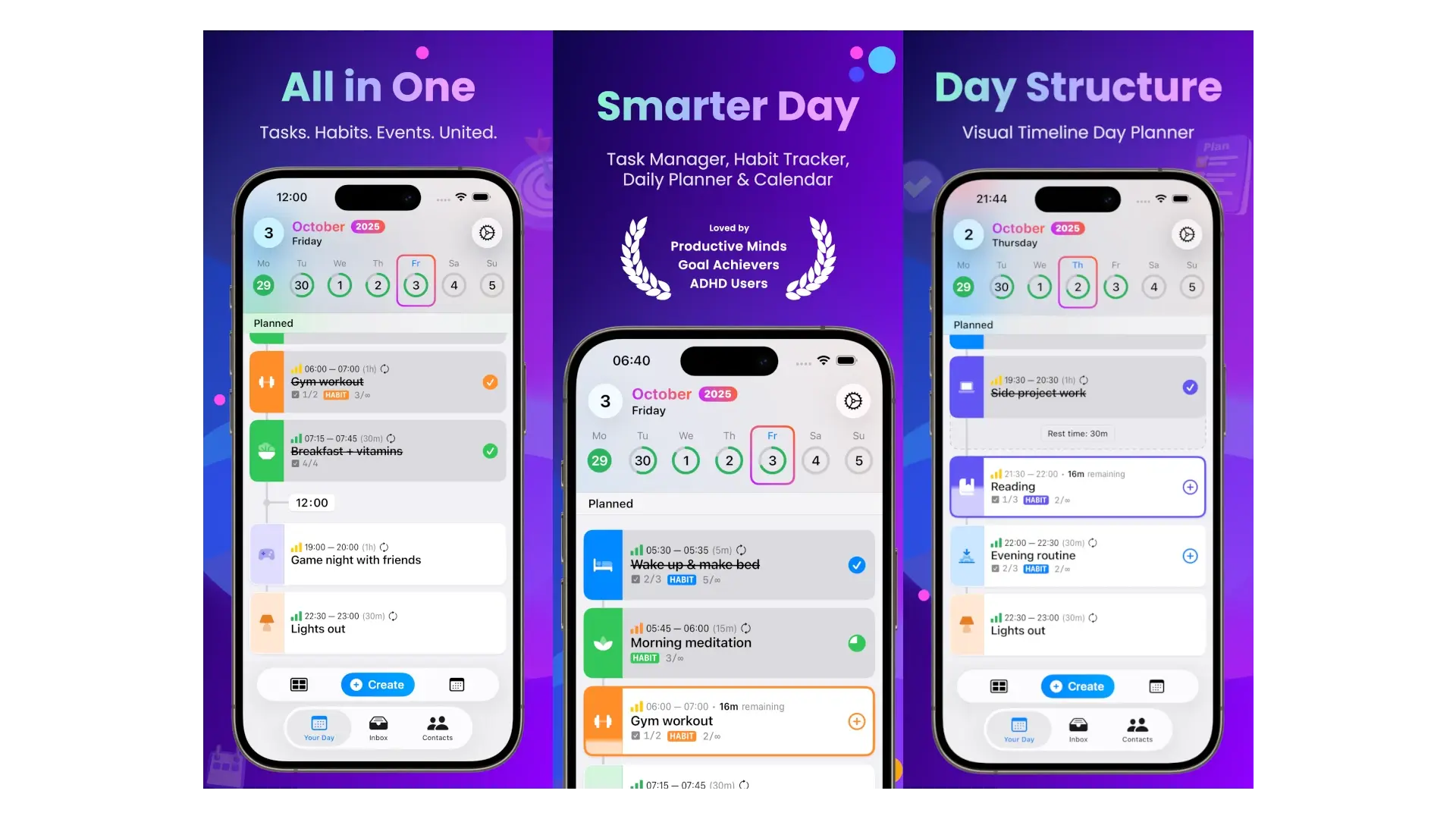
If you want a single place to plan MITs, protect deep work, and track progress, try the productivity app at Smarter.Day. It’s a natural fit for time optimization habits like sprints, weekly reviews, and momentum tracking—without adding complexity.
You May Also Like
These Related Stories
Advanced Time Management: 12 Proven Productivity Tactics
Master Time Optimization: 12 Proven Productivity Tactics
No Comments Yet
Let us know what you think