

Your day usually goes off track before lunch for one reason: too many decisions, not enough structure. The best apps for daily planning do more than hold a to-do list. They reduce friction, surface priorities, and help you move from scattered intention to clear execution.
That distinction matters if you are managing client work, meetings, personal goals, recurring habits, and the constant drip of incoming tasks. A planning app should not just store everything. It should help you decide what deserves your attention now, what can wait, and what should never have made today’s list in the first place.
What makes the best apps for daily planning actually useful
A lot of apps look polished until you try to run a real week inside them. The difference between a decent tool and a daily driver usually comes down to how well it supports proven productivity, not just how many features it can display on a screen.
The strongest daily planning tools tend to share a few qualities. They make inbox capture fast, so you can get tasks out of your head without breaking focus. They give you a visual day view, so your schedule and workload make sense at a glance. They support daily task prioritization strategies, whether that means simple flags, due dates, or a more structured time management prioritization framework for entrepreneurs with multiple commitments.
Good planning apps also respect trade-offs. If an app is extremely flexible, it may take longer to set up. If it is very opinionated, it may feel restrictive for advanced users. The right choice depends on whether you need speed, customization, collaboration, or a tighter productivity system that keeps you from overplanning.
10 best apps for daily planning
1. Smarter.Day
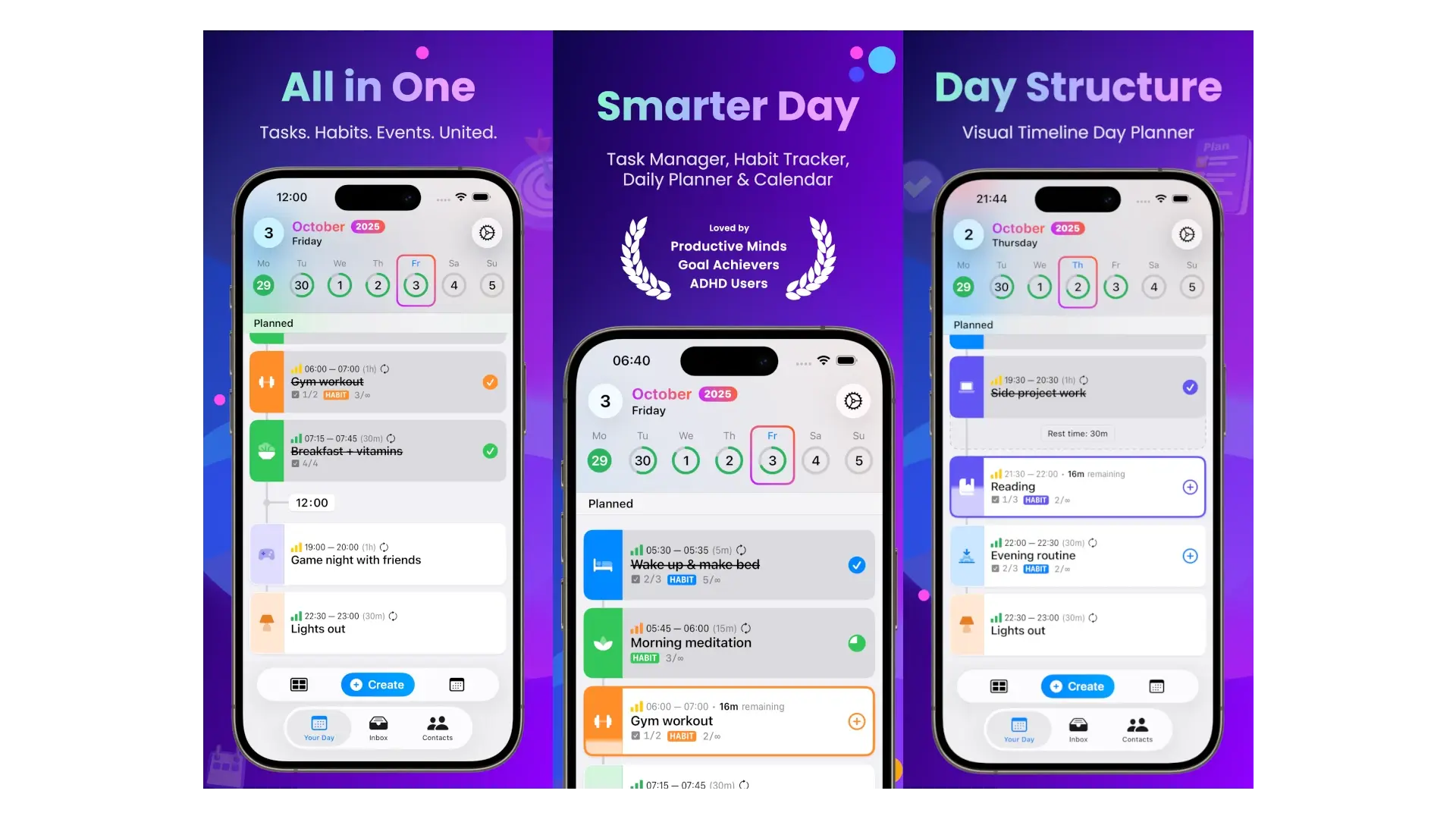
If your biggest problem is juggling tasks, habits, events, and priorities across too many tools, Smarter.Day stands out. It brings daily planning into one structured environment, which is exactly what many busy professionals need when decision fatigue starts to pile up.
What makes it compelling is the combination of visual scheduling, habit tracking, inbox capture, subtasks, and prioritization tools like the Eisenhower Matrix. That creates a more complete system productivity experience than a basic task manager. Instead of bouncing between calendar, notes, reminders, and habit apps, you can organize the day in one place and act faster.
It is especially strong for users who want smarter time management without a heavy setup process. The trade-off is that people who only need a bare-bones checklist may find the feature set deeper than necessary. But if you want clarity, prioritization, and momentum, this is a strong fit.
2. Todoist
Todoist remains popular because it is fast, clean, and easy to trust. It works well for people who want effective daily task management systems methods 2025 2026 style users still care about most: quick capture, recurring tasks, labels, filters, and reliable organization.
Its strength is simplicity with just enough depth. You can build personal workflows without spending hours configuring dashboards. The downside is that daily planning can feel task-centric rather than truly time-based unless you pair it with another calendar habit.
3. TickTick
TickTick is one of the strongest all-around options for users who want planning plus execution support. It combines tasks, calendar views, habits, reminders, and focus features in a practical package.
For many users, that balance is the appeal. You get a lighter version of all-in-one planning without the complexity of a full project platform. It is a strong choice for people who care about evidence-based productivity techniques like time blocking and focus sessions, but do not want enterprise-level software.
4. Sunsama
Sunsama is built around intentional day planning. It encourages you to pull tasks into your day, estimate effort, and create a realistic plan instead of an aspirational one.
That makes it especially useful for professionals who consistently overload themselves. The app supports time optimization by forcing a better relationship between available hours and planned work. The trade-off is price and pace. It is thoughtful, but not the fastest tool for quick task capture on the fly.
5. Motion
Motion leans heavily into AI-powered scheduling. It automatically organizes tasks on your calendar based on deadlines and workload, which can feel like relief if manual planning drains your energy.
This approach works best for users who want the app to make more decisions for them. If you prefer hands-on control, it may feel too prescriptive. Still, for people seeking time optimization strategies with minimal planning overhead, Motion is worth considering.
6. Notion
Notion can become almost anything, including a daily planner. That is both its strength and its problem. If you enjoy building your own productivity systems, you can create dashboards, task databases, notes, and planning templates that match your workflow closely.
But flexibility is not the same as focus. Many users spend more time refining their setup than running their day. Notion is best for people who like customization and already know what their system should look like.
7. Microsoft To Do
Microsoft To Do is straightforward and accessible. The My Day feature is useful for pulling a few priorities forward each morning, and it fits naturally for users already working inside the Microsoft ecosystem.
Its limitation is depth. It handles basic planning well, but it is less effective if you want advanced daily task prioritization strategies, habit tracking, or a fuller productivity system.
8. Any.do
Any.do focuses on simple planning with calendar integration and reminders. It is approachable, mobile-friendly, and easy to maintain, which matters if you tend to abandon overly complicated apps.
It works best for personal organization and light work planning. For more demanding workflows, especially collaborative ones, it may feel too shallow.
9. Trello
Trello is excellent if you think visually and like moving tasks through stages. Boards can make projects feel clearer, especially for marketers, developers, and small teams tracking progress.
For daily planning, though, Trello can be less natural unless you build a dedicated workflow around it. It shines more as a project organizer than as a true day command center.
10. Google Calendar
Google Calendar is not a planning app in the traditional sense, but many professionals still use it as one. If your day is heavily meeting-driven, it offers the clearest view of time commitments and available focus blocks.
The challenge is that calendar alone does not manage task complexity very well. It helps you see when work might happen, but not always what matters most. That is why many people eventually pair it with a stronger task and prioritization tool.
How to choose the best app for your planning style
The right app depends less on popularity and more on how your brain handles workload. If you struggle with procrastination because everything feels equally urgent, look for built-in prioritization. If you miss routines, habit tracking matters. If you constantly switch between apps, an all-in-one setup can remove friction and support more consistent execution.
For ADHD users, this becomes even more practical. The best experience is usually visual, fast, and low-friction. Too many menus, too much setup, or unclear next actions can create resistance. A cleaner structure with quick capture and visible priorities tends to work better than a highly customizable tool that asks you to design your own system from scratch.
It also helps to think in terms of evidence-based productivity methods. Time management research 2025 2026 continues to reinforce a simple truth: people make better progress when tasks are specific, priorities are visible, and planning happens close to execution. That means your app should support action, not just organization.
Features that matter more than hype
A lot of planning software competes on novelty. The better question is whether it helps you run a calmer, more focused day. Features that consistently matter include quick task capture, recurring planning, calendar visibility, flexible prioritization, and easy rescheduling when the day changes.
This is where many users start thinking beyond top 10 productivity apps 2025 style rankings and focus on fit. The app that wins is often the one you actually open at 8:30 a.m., trust at 2:00 p.m., and still rely on when the week gets messy.
If you want a stronger planning habit, choose a tool that reduces micro-decisions. Fewer places to check. Clearer next steps. Better visibility into what matters now. That is the real meaning of smarter time.
The best app is the one that gives you enough structure to stay in control without creating a second job. Pick the system that helps you see your day clearly, protect your energy, and follow through when it counts.
You May Also Like
These Related Stories
10 Proven Time Management Tactics That Actually Work
10 Proven Time Management Tactics That Actually Work
No Comments Yet
Let us know what you think