
10 Proven Time Management Tactics That Actually Work

10 Proven Time Management Tactics That Actually Work
We’ve all stared at a packed calendar, wondering how to squeeze one more task into a day already bursting at the seams. Procrastination, constant pings, and shifting priorities erode our focus and momentum. Here’s the catch: productivity isn’t about cramming in more—it’s about better timing, smarter prioritization, and purposeful energy. In this guide, you’ll learn evidence-backed tactics you can put into play today to reduce cognitive overload, streamline workflow, and maintain consistent performance without burning out.
You’ll find practical systems you can adopt in minutes, not months—think time optimization, priority frameworks, deep work, and automation that actually sticks. We blend strategies from top researchers and practitioners with relatable examples and step-by-step methods. Whether you’re managing complex projects or juggling personal goals, these workflow improvement techniques will help you reclaim time, protect focus, and get meaningful work done—consistently.
Time Blocking and Energy Mapping for Peak Output
One of the fastest ways to boost performance is pairing time blocking with energy mapping. First, reserve 90–120-minute blocks for deep work when your mental energy peaks. Then schedule admin, email, or meetings in lower-energy windows. Research on circadian rhythms shows most people hit their analytical high in the morning and their creative or social stride later in the day. As Cal Newport argues in “Deep Work,” protecting long, uninterrupted stretches is a force multiplier for quality and speed. Use simple calendar colors to visualize your day: green for focus, yellow for collaboration, and gray for recovery.
Two practical moves: 1) Create a recurring morning focus block with do-not-disturb enabled, and 2) stack routine tasks—like approvals and check-ins—just before lunch or day’s end. Add a 5-minute pre-brief at the start of each block to define the outcome, and a 5-minute debrief to capture learnings. Daniel Pink’s “When” highlights how timing shapes decision quality; match tasks to your chronotype (lark, third bird, owl) for better accuracy and speed.
Real-life example: Priya, a product marketer, set two daily green blocks (9:00–10:30 and 2:00–3:30). She used them for strategy briefs and campaign messaging. Admin tasks moved to 4:00–5:00. Within two weeks, she cut revision cycles by 30% because her high-focus blocks produced tighter drafts. “Structure creates clarity,” she says, and the color-coded calendar made sure nothing important got buried in the noise.
Prioritization That Speaks: Eisenhower Matrix + Ivy Lee
When everything is important, nothing is. The Eisenhower Matrix helps you split tasks by urgent vs. important, so you can spend more time on strategic work. Start each day by categorizing tasks into four quadrants, then act: Do (urgent-important), Schedule (important-not urgent), Delegate (urgent-not important), Delete (neither). Pair this with the Ivy Lee Method: every evening, list your top six tasks in order of importance; attack number one first the next day and don’t move on until it’s done. Greg McKeown’s “Essentialism” underscores this: “If you don’t prioritize your life, someone else will.”
Two practical methods to try this week: 1) Reduce your daily list to a Top 3—this prevents dilution of effort. 2) Use a 15-minute morning matrix ritual to classify and schedule your tasks. Keep “Delete” ruthless; most clutter is disguised as urgency. The Pareto Principle (Vilfredo Pareto) suggests 20% of efforts drive 80% of outcomes—your Top 3 should live in that 20%.
Example: Amir, a sales lead, used to juggle 20 open tasks daily. After adopting the matrix and Ivy Lee, he trimmed to six nightly priorities and a morning matrix pass. Result: he consistently scheduled strategic outreach (important-not urgent) and delegated low-value follow-ups. Over a quarter, pipeline quality improved while burnout decreased. Reference the Dwight Eisenhower framework to keep your eye on what truly moves the needle.
Single-Tasking Beats Multitasking: Guard Your Attention
Let’s face it: multitasking feels efficient but costs you time and accuracy. Studies by the American Psychological Association highlight switching costs; shifting attention adds friction that slows total completion time. Research by Gloria Mark (University of California, Irvine) shows frequent interruptions shorten attention bursts and raise stress. The antidote is single-tasking—one priority, one context. Build attention management rules: disable nonessential notifications, batch email twice daily, and keep only one work window visible during focus sessions.
Two practical methods: 1) Use the full-screen rule—work in one full-screen app; if you must check a reference, capture it in a note to review later. 2) Create batch windows for communication (e.g., 11:30 and 4:30) to reclaim mental bandwidth. Stanford research from Clifford Nass’s lab found heavy multitaskers perform worse on cognitive control tasks, reinforcing why we should reduce task switching.
Example: Lina, a project manager, shifted from constant chat monitoring to two dedicated check-in slots. She also used a “Focus Mode” scene on her phone to filter calls to VIPs only. Within a month, her task completion time for specifications dropped by 25%. “I finish in fewer passes,” she noted—a direct result of minimizing cognitive residue from toggling.
Pomodoro Sprints and the Science of Breaks
The Pomodoro Technique—25 minutes of focus followed by a 5-minute break—trains you to work with urgency and rest deliberately. Francesco Cirillo, its creator, emphasizes short, intense sprints to beat procrastination. Many teams also swear by the 52/17 rhythm (52 minutes work/17 minutes rest) identified in productivity analyses, which aligns with ultradian rhythms—natural 90–120-minute cycles of alertness. The goal: sprint, recover, repeat, and protect your deep work capacity over longer horizons.
Two practical methods: 1) Start with three Pomodoros on your highest-leverage task before touching messages. 2) Use breaks for active recovery: walk, stretch, hydrate, or breathe—avoid dopamine-heavy feeds. Mihaly Csikszentmihalyi’s work on flow shows that challenge-skill balance and clear goals enable intense focus; Pomodoro sprints help you structure that balance.
Example: Jorge, a data analyst, uses a 50/10 timer. He opens with a “what success looks like” note at minute zero, then sprints. In breaks, he does desk stretches and a quick water refill. Over six weeks, he reported fewer late-night crunches because he achieved earlier “mini finishes.” “Short sprints lower my startup friction,” he said—and they create a cadence that compounds.
Break It Down: Next Actions and the Two-Minute Rule
Big tasks overwhelm because they’re vague. David Allen’s “Getting Things Done” popularized the Next Action: define the next visible, physical step. “Draft proposal” becomes “Outline three bullets for scope.” Pair this with the Two-Minute Rule: if it takes under two minutes, do it now. The Zeigarnik effect suggests unfinished tasks occupy mental space; crushing small actions frees attention and builds momentum.
Two practical methods: 1) Decompose deliverables into 15-minute chunks; if any chunk is bigger, split again. 2) Use an entry checklist when starting a session—open the doc, title it, write a one-sentence target, list three micro-steps. These moves transform inertia into motion by lowering the activation energy.
Example: Sara, a content lead, dreaded writing whitepapers. She adopted a three-step start: create doc, add working title and outline, draft the intro. She also tackled <2-minute tasks on sight (link insertion, quick approvals). Result: her average time to first draft dropped from 5 days to 3. “I don’t wait for inspiration,” she shared, “I create traction.” GTD’s core insight—clarity reduces friction—proved true yet again.
Weekly Review and Daily Intentions: Planning That Sticks
Planning isn’t bureaucracy—it’s time optimization. A short weekly review keeps projects aligned and surfaces risks early. On Fridays, scan all commitments, clean your inbox, and update your project lists. Define three strategic outcomes for next week, then pre-block focus time. Daily, set intentions by picking your Top 3 and linking them to calendar blocks. Teresa Amabile’s “progress principle” shows that recognizing small wins fuels motivation and sustained effort.
Two practical methods: 1) Run a calendar audit: identify time drains, then consolidate or eliminate them. 2) End each day with a shutdown ritual—log accomplishments, capture open loops, and schedule tomorrow’s priorities. As Peter Drucker famously noted, “What gets measured gets managed”—your review is the measurement that drives better decisions.
Example: Ken, a nonprofit director, sets aside 45 minutes every Friday to review grants, events, and partnerships. He scores next week’s priorities by impact and effort, then protects two 90-minute blocks for strategic writing. Within a quarter, deadlines were hit with less scramble, and staff meetings shortened because everyone knew the plan before Monday.
Email and Messages: Tame the Flood
Communication is essential—constant communication is not. McKinsey analysis has long highlighted that knowledge workers can spend a large chunk of time on email. Cal Newport’s “A World Without Email” argues for asynchronous workflows that reduce unscheduled collaboration. Adopt triage systems: the 4Ds—Delete, Delegate, Defer, Do—and use templates for recurring replies. Two batched windows daily for email and chat let you reclaim long-form focus for real work.
Two practical methods: 1) Create filters and rules that auto-label newsletters and CCs; review them weekly. 2) Maintain a team response SLA (e.g., 24 hours on email) to end the expectation of instant replies. The American Psychological Association warns that frequent interruptions erode focus; slowing the ping cycle helps restore cognitive control.
Example: Maya, a software engineer, set inbox checks at 11:45 and 4:30. She built canned responses for bug triage and status updates. Her median response time stayed under the team’s 24-hour SLA, yet she reclaimed mornings for code. “I ship with fewer regressions,” she said—proof that fewer interruptions equal higher quality output.
Automation, Templates, and Batching: Tools That Do the Work
If a process repeats, template it. If steps are predictable, automate them. Use text expanders for common responses, project templates for recurring launches, and workflow tools (e.g., rules, scripts, integrations) to eliminate manual handoffs. James Clear’s “Atomic Habits” underscores the power of environment design—make the desired behavior the path of least resistance. In productivity, that means one-click starts and autopilot routines.
Two practical methods: 1) Build a launch toolkit: brief template, checklist, timeline, and stakeholder map. 2) Batch similar tasks—record all videos in a single session, reconcile expenses in one block, schedule social posts weekly. Automation platforms like Zapier or native rules in your apps can move files, tag tasks, and notify stakeholders without touching a keyboard.
Example: Theo, a fractional CMO, templatized client onboarding with a 12-step checklist and automated email sequences. He also batched content creation into a single Wednesday block. Client ramp-up time dropped by 40%, and Thursdays reopened for strategy. “Templates remove decision drag,” he said—and his calendar finally reflected that.
Meeting Hygiene and Faster Decisions
Meetings aren’t the enemy—bad meetings are. Require an agenda, owner, and desired outcome for every session. Default to 25- or 50-minute slots to protect transition time. Consider the Amazon-style narrative memo for complex topics; reading silently for the first 10 minutes levels understanding. For decisions, clarify RACI roles and capture a decision log to avoid re-litigating choices. Harvard Business Review frequently highlights that clear norms dramatically cut meeting bloat.
Two practical methods: 1) Declare no-meeting focus blocks for your team, such as 9:00–12:00 Tuesday/Thursday. 2) Use async first: pre-reads and comments replace status meetings; live sessions handle only debate or commitment. Keep attendee lists lean—each invitee should contribute unique insight or accountability.
Example: Dana, an engineering manager, removed two weekly status meetings in favor of a shared doc with comments due by EOD Monday. She kept a short Wednesday decision huddle with RACI clarity. Cycle times improved and she reclaimed six hours a week. “We still talk,” she laughed, “just when it changes the plan.” That’s workflow improvement in action.
Buffer, Boundaries, and Parkinson’s Law
Work expands to fill the time available—Parkinson’s Law. Beat it with tight scopes, short deadlines, and buffers for the unexpected. Timebox tasks—“ship draft by 3 p.m.” rather than “work on draft.” Add 15–20% calendar buffer around critical handoffs to absorb variance. This protects your schedule from cascading delays and reduces stress. Aim for constraint-driven creativity: short sprints, crisp outcomes, and pre-defined stopping points.
Two practical methods: 1) Use reverse scheduling—start from the deadline and work backward to set mini-milestones. 2) Cap the number of concurrent work-in-progress items to 3–5 to maintain throughput. Daniel Kahneman’s work reminds us that optimism bias leads to underestimated timelines; buffers make your plan realistic.
Example: Noor, a UX designer, timeboxed usability test synthesis to two 45-minute sessions with a 15-minute buffer. She shipped insights the same day, which accelerated iteration. “Short windows force clarity,” she said. The result wasn’t rushed—it was right-sized and on time, a practical defense against schedule creep.
Health Is a Productivity Strategy: Sleep, Fuel, Movement
Have you ever noticed your best ideas arrive after a walk or a good night’s sleep? That’s not luck; it’s biology. Sleep stabilizes memory and attention, which directly lifts cognitive performance. Matthew Walker’s “Why We Sleep” details how even modest sleep loss impairs decision-making. Build movement micro-breaks into your day (every 60–90 minutes) to reset attention and reduce fatigue. Hydration and protein-rich meals stabilize energy, while brief breathing drills calm your nervous system before high-stakes work.
Two practical methods: 1) Set a consistent sleep window and a tech-free wind-down 30–60 minutes before bed. 2) Install movement triggers—stand after calls, walk during 1:1s, stretch during breaks. Gloria Mark’s research connects breaks with regained focus capacity; treat recovery as an input, not a luxury.
Example: Evan, a founder, capped late-night screens and added a 10-minute pre-sleep routine. He also did two walking meetings daily. Within a month, he felt sharper in morning strategy blocks and stopped dragging by 3 p.m. “Rest isn’t time off,” he realized, “it’s the fuel for deep work.” Performance followed.
Make Friction Visible: Kanban, WIP Limits, and Flow
Visualizing work exposes bottlenecks. A simple Kanban board (To Do/Doing/Done) clarifies flow and reveals overload. Add WIP limits so you finish before starting more. Measure lead time (start to finish) and remove friction where tasks stall—waiting for approvals, unclear requirements, or resource gaps. Studies on flow states suggest we do our best work when challenge and capacity align; a balanced board helps maintain that alignment.
Two practical methods: 1) Hold a 10-minute daily flow check: What’s blocked? What’s nearly done? Focus on finishing. 2) Create Definition of Ready checklists to reduce rework (e.g., “goal, owner, assets attached”). McKinsey has reported significant productivity gains when teams reduce context switching and visualize work-in-progress to manage throughput.
Example: Alicia, a marketing ops lead, set a WIP limit of three per person. She also introduced a Ready checklist for campaign requests. Turnaround times dropped and urgent “fire drills” declined because most surprises were caught at intake. “We finish more because we start less,” she said—a powerful mindset shift.
Conclusion: Your Next Step to Sustainable Focus
We’ve covered a blueprint for time optimization: match work to energy, prioritize with intent, single-task, sprint smart, decompose tasks, plan weekly, tame messages, automate repeatables, fix meetings, protect your health, and visualize flow. You don’t need all of it today. Pick two strategies, apply them this week, and watch how your workflow improvement compounds.
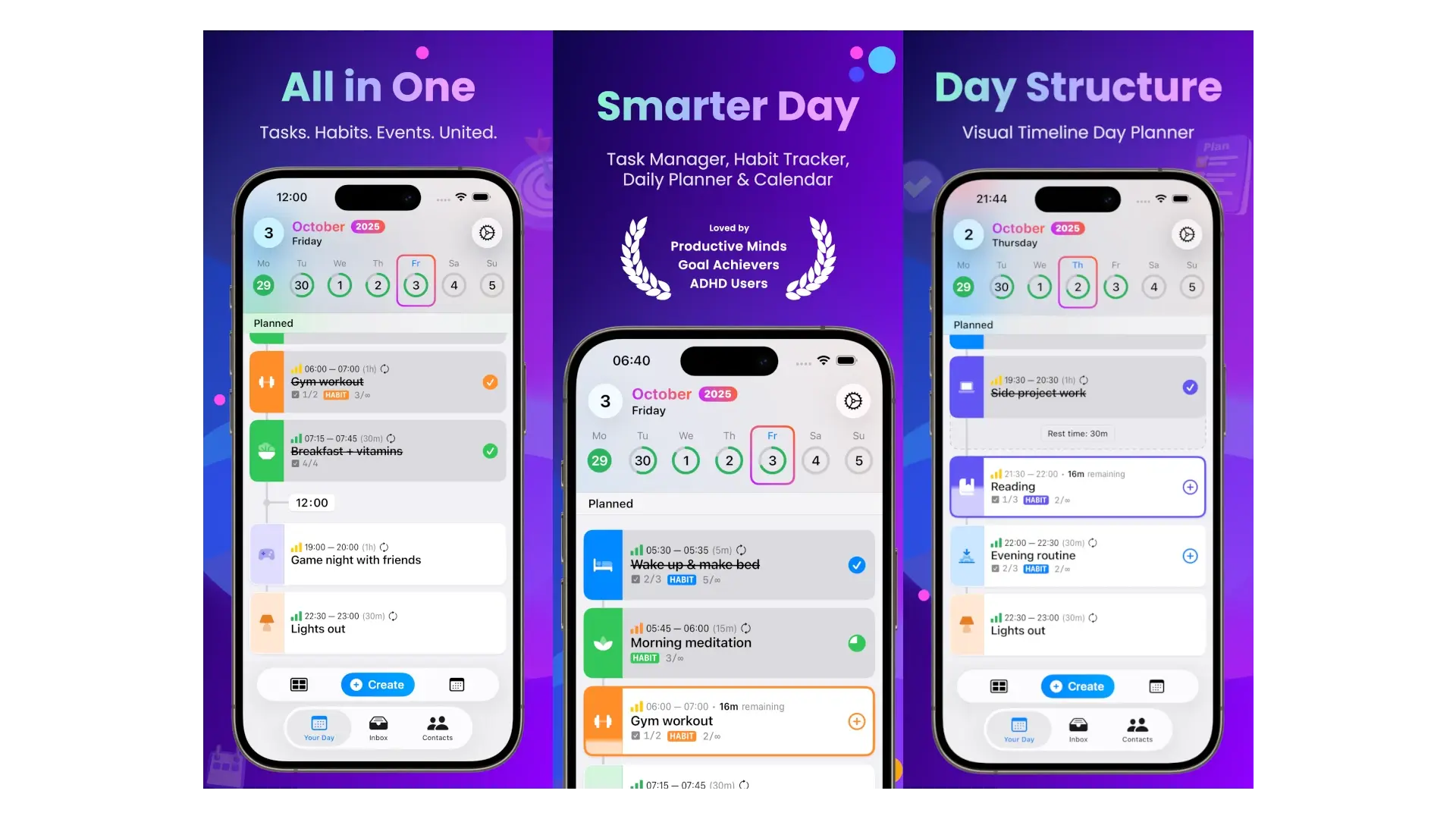
If you want a simple way to put these tactics in one place—focus blocks, Top 3, weekly reviews, templates, and automation—try the productivity app at Smarter.Day. It’s built to reduce decision drag, protect deep work, and make planning effortless, so your best work becomes your default.
Ready to turn these ideas into daily wins? Explore Smarter.Day to set up focus blocks, weekly reviews, and smart automations that keep you moving forward.
You May Also Like
These Related Stories
10 Proven Time Management Tactics That Actually Work
10 Proven Time Management Tactics That Actually Work
No Comments Yet
Let us know what you think