


You open your task list for the day and everything feels like it needs attention now. Slack is active. Email is stacking up. A client wants an answer. A deadline is creeping closer. Meanwhile, the work that would actually move your projects forward keeps getting pushed to later. That is where most productivity systems break down - not at planning, but at deciding.
If you want to learn how to prioritize urgent vs important tasks, start with one uncomfortable truth: urgency is loud, but importance creates results. The problem is that your brain does not always reward the right thing. It reacts to pressure, novelty, and visible demand. That is why you can spend a full day being busy and still feel behind.
The fix is not working harder. It is using a clearer filter.
How to prioritize urgent vs important tasks without guessing
Urgent tasks need attention soon. Important tasks meaningfully affect your goals, responsibilities, or long-term progress. Sometimes a task is both. Often, it is only one.
That distinction matters more than most people realize. Urgent work tends to be reactive. It is driven by deadlines, interruptions, and other people’s expectations. Important work is proactive. It includes planning, strategy, deep work, relationship-building, health habits, and the projects that create real momentum over time.
When you confuse the two, your day gets hijacked. You start treating every incoming request like a fire. You answer messages quickly, clear small tasks fast, and feel productive because you are moving. But motion is not the same as progress.
A useful question is this: if I delay this task by a day, what happens? If the consequence is immediate and meaningful, it is probably urgent. If the consequence grows slowly but affects something bigger, it is probably important. If nothing substantial happens, it may be neither.
The simplest framework: four task types
The Eisenhower Matrix remains one of the best ways to separate signal from noise because it forces a decision instead of letting everything live on one giant to-do list.
1. Urgent and important
These are tasks with real deadlines, real consequences, and real value. Think production issues, client deliverables due today, a doctor appointment you cannot miss, or a critical project milestone. These deserve direct attention first.
The trap is allowing too many tasks into this category. If your whole list is urgent and important, your system is broken upstream. Usually that means weak planning, delayed decisions, or too much intake.
2. Important but not urgent
This is where growth lives. Strategic planning, skill development, focused project work, habit building, budgeting, exercise, and relationship maintenance usually land here. They do not scream for attention, which is exactly why they get neglected.
For most professionals, this category should get protected time every day. If it does not, your future keeps getting traded for today’s noise.
3. Urgent but not important
These tasks feel demanding but do not require your best attention. Routine check-ins, low-value messages, minor approvals, and administrative follow-ups often belong here. Some still need to be handled, but they should not dominate your best hours.
This category is where delegation, automation, templates, and boundaries create immediate relief.
4. Neither urgent nor important
These are distractions disguised as activity. Aimless scrolling, unnecessary meetings, duplicate tracking, and busywork tend to collect here. They fill space, not priorities.
You do not need a better way to organize these. You need to remove them.
Why urgent tasks keep winning
Even when you know the framework, urgency still has an edge. It creates a fast feedback loop. You answer the message, close the tab, check the box, and get a small hit of relief. Important work often pays off later, which makes it harder to choose in the moment.
This is especially true for people managing ADHD, high-context roles, or fast-moving teams. If your environment keeps feeding you incoming requests, your attention can get trapped in response mode. That does not mean you lack discipline. It means your system is rewarding interruption.
The answer is not to ignore urgent work completely. It is to stop letting urgency make every decision for you.
A practical method for choosing what to do next
If your list is overloaded, do not rank all 37 tasks at once. That creates friction and drains focus. Instead, work through a short sequence.
First, identify true deadlines. Not preferred timing, not vague pressure - actual deadlines with consequences. Circle only the items that must happen soon.
Next, ask which tasks connect directly to your top goals, commitments, or responsibilities. These are your important items. Be selective. If a task does not clearly support a meaningful outcome, it should not compete with your best work.
Then estimate effort. Two tasks may both be important, but one might require 90 minutes of focused energy while the other takes 10 minutes. That does not mean the smaller task should always go first. It means you need to match the task to the time and attention you actually have.
Finally, decide your next move using this order: do, schedule, delegate, delete. If it is urgent and important, do it. If it is important but not urgent, schedule it on your calendar instead of leaving it floating on a list. If it is urgent but not important, delegate or contain it. If it is neither, delete it.
That last step matters. Productivity is not only about choosing what to act on. It is also about choosing what stops getting space.
How to protect important work before it becomes urgent
The easiest way to lose control of your week is to treat important work as something you will get to after everything else. You usually will not.
Important tasks need a home on your schedule. Put them in a specific time block, ideally during your highest-energy window. If your best thinking happens from 9 to 11 a.m., that is not when email should be running your day.
It also helps to define what progress looks like before you start. “Work on strategy” is too vague. “Draft the Q2 campaign brief” is actionable. Clear tasks reduce resistance and make it easier to begin.
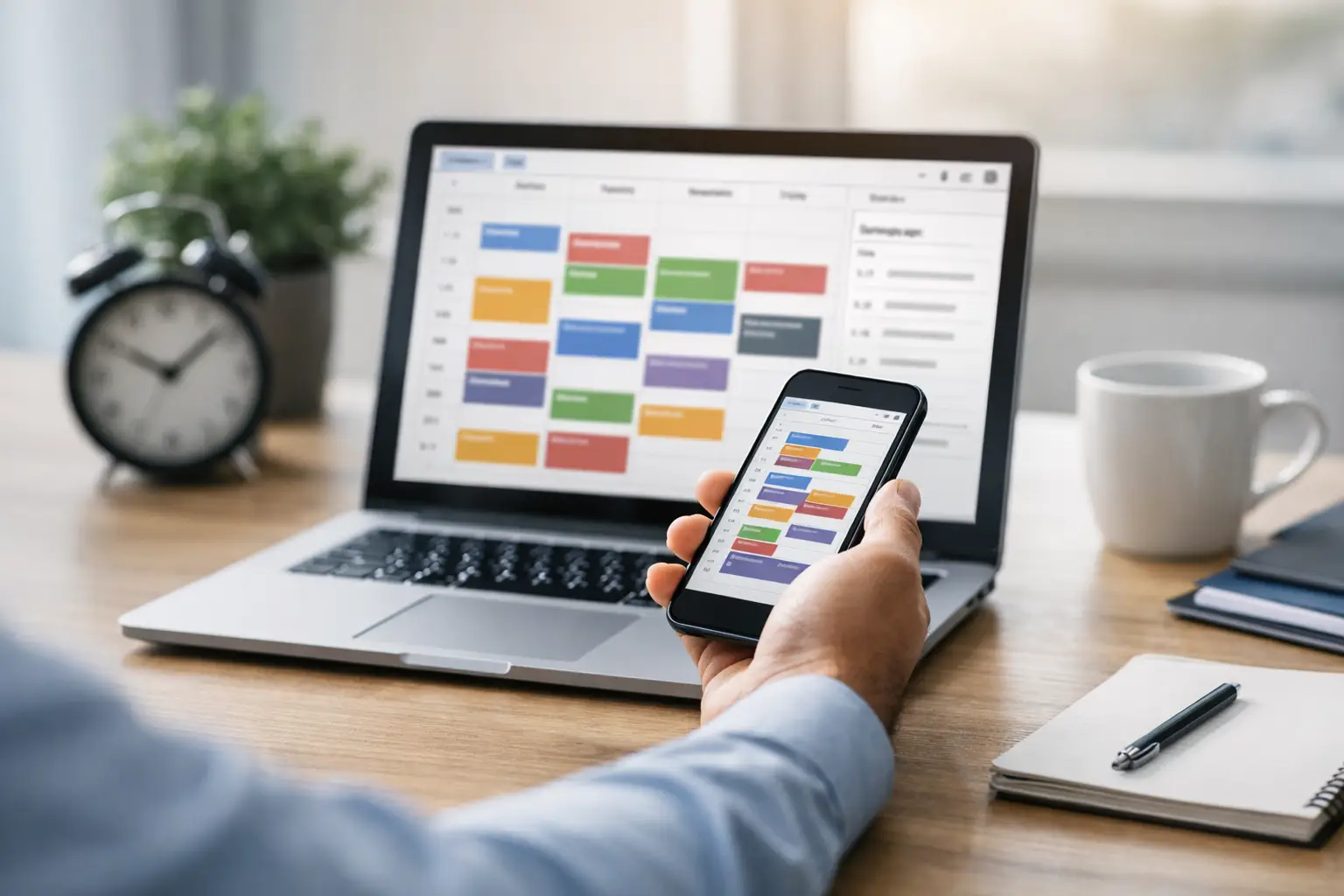
A visual planning system can make this much easier because it reduces the mental work of re-deciding. In Smarter.Day, for example, seeing tasks by priority, schedule, and matrix view in one place helps you sort what needs attention now versus what deserves protected focus later. That kind of visibility cuts decision fatigue fast.
When it depends
Real life does not always fit neatly into four boxes. A few trade-offs are worth calling out.
Sometimes a task is important but emotionally heavy, so you keep relabeling urgent tasks as higher priority because they feel easier. That is avoidance, not prioritization.
Sometimes an urgent request from your manager or biggest client is also important because of the relationship, even if the task itself is small. Context matters.
And sometimes your season of work changes the balance. During launches, incidents, or family emergencies, urgent work will naturally expand. The goal is not to eliminate that reality. The goal is to return to intentional prioritization as soon as the pressure drops.
Signs your priorities are off
You do not need a formal audit to notice the pattern. If you are checking off a lot of tasks but your major goals keep slipping, that is a signal. If every week feels reactive, that is another. If planning feels detailed but execution still feels chaotic, your list may be overfilled with urgent-looking tasks that do not create meaningful progress.
A healthy system gives you two things at once: responsiveness and direction. You handle what truly needs attention, and you still move your bigger work forward.
A better question than “What’s most urgent?”
When your day gets crowded, asking only what is most urgent will lead you toward maintenance mode. A stronger question is: what deserves my best attention right now?
That shift changes everything. It puts consequence, value, and timing in the same frame. It helps you protect deep work without ignoring real deadlines. It gives you a calmer, sharper way to decide.
The next time your list feels equally loud, pause before you react. Some tasks need speed. Others deserve space. Knowing the difference is how you stay in control of your day instead of spending it in recovery mode.
You May Also Like
These Related Stories

Build a Daily Schedule That Holds Up

Structured Scheduling for Deep Work That Sticks
No Comments Yet
Let us know what you think