
Master Deep Focus: 12 Tactics for Peak Productivity

Deep Focus in a Distracted World: A Practical Playbook
We live in a moment when your attention can be hijacked in seconds. One ping becomes three; three become thirty. Before you know it, your day disappears into tabs, meetings, and messages. Here’s the catch: focus isn’t just willpower, it’s a system. In this playbook, you’ll learn how to turn scattered hours into deliberate blocks of progress, apply workflow improvement tactics, and build habits that defend your attention. The aim is simple: help you achieve more of what actually matters—without working longer.
This guide gives you actionable strategies grounded in research and real-world examples. You’ll see how time optimization, deep work, and smarter cognitive performance routines outperform brute force effort. We’ll use frameworks like the Eisenhower Matrix, timeboxing, task batching, and mindfulness resets to reduce overwhelm, avoid context switching, and ship meaningful work. Ready to beat distraction and sharpen your edge? Let’s dive in.
1) Set a Daily One Essential Outcome (OEO)
The most productive days start with clarity. Pick one One Essential Outcome (OEO)—the result that, if completed, makes the day successful. Method one: write your OEO as a SMART statement to limit ambiguity (Specific, Measurable, Achievable, Relevant, Time-bound). Method two: align your OEO with a weekly OKR (Objective and Key Results) so each day compounds into visible progress. “What one result moves the needle?” is the question.
Cal Newport argues in Deep Work that depth beats busyness. To apply this, schedule your OEO during your peak energy window and protect it with a do-not-disturb status. Sara, a product manager, sets “Draft PRD v1 with 3 user stories by 11:30 AM” as her OEO. She completes it before noon and then handles messages. Her stress drops while output rises.
To prevent drift, add two guardrails. First, use an implementation intention: “If it’s 9:00 AM, then I open the PRD doc first.” Second, create a finish line: a simple checkpoint—share the draft for feedback—so you celebrate the “progress principle,” a concept supported by Teresa Amabile’s research showing that small wins boost motivation and momentum.
2) Timeboxing and Calendar Blocking that Actually Works
Blocking time is powerful if you block outcomes, not just hours. Method one: timebox projects into 60–90-minute focus blocks with a clear deliverable (“Write section 2”). Method two: add buffer blocks between deep work to handle email or walk breaks, reducing attention residue. Aim for two deep blocks before lunch; keep afternoons for lighter tasks and collaboration.
Parkinson’s Law says work expands to fill the time available. Timeboxing flips that. Give yourself a shorter window—and a single scope—to force prioritization. David, a freelance designer, sets a 75-minute block to create three hero image drafts. He finishes in 70 minutes because the countdown reduces perfectionism and context switching.
If your calendar gets overrun, use defensive calendaring. Color-code deep work blocks in a different color and mark them as “Busy” or “Focus” with a recurring label. A 2023 Microsoft Work Trend Index notes rising “digital debt”; clear blocks act as an antidote. Add a 15-minute daily scheduling ritual to re-plan blocks based on reality, not wishful thinking.
3) Attention Management: Pomodoro Meets Flowtime
The Pomodoro Technique (25 minutes on, 5 off) by Francesco Cirillo is famous for a reason: it creates momentum. Method one: start with two Pomodoros to break friction, then lengthen sessions to 45–60 minutes as you enter flow. Method two: try Flowtime—work until your concentration dips, then rest proportionally—to avoid breaking deep immersion prematurely.
Gloria Mark’s research (Attention Span, 2023) shows average screen focus lasts about 47 seconds. To fight that, design your session: silence notifications, close chat apps, and keep a single window visible. Priya, a startup founder, pairs noise-canceling headphones with a playlist and a 50/10 cadence. Her rule: no multitasking during the timer—only one task on screen. Results improved after a week.
Use a start ritual to cue your brain. Simple steps—fill water, open doc, full-screen the editor—become a consistent signal. Track session outcomes in a quick log (e.g., “Wrote 750 words, clarity 7/10”). As Anders Ericsson’s deliberate practice research showed, structure + feedback = faster skill growth and sustained performance.
4) Reduce Cognitive Load with Batching and Single-Tasking
Context switching erodes output. Sophie Leroy’s “attention residue” research shows that unfinished tasks linger in your mind, impairing performance on the next. Method one: batch similar tasks—email, invoices, approvals—into one or two windows daily. Method two: single-task the hardest creative work with all other tabs closed. “Windows are policies,” not suggestions.
Miguel, a marketing lead, moved Slack responses to 11:30 AM and 4:30 PM and batched analytics reviews into a Tuesday block. The result? Fewer partial starts, more finished work. A Stanford study (Ophir, Nass, Wagner, 2009) found heavy multitaskers perform worse on task-switching and filtering. Single-tasking turns scattered attention into focused throughput.
Create pre-flight checklists for each batch: what inputs, templates, and decision criteria you need. This reduces cognitive load and speeds up execution. Add a capture tool (notes or voice memo) for mid-task ideas. Instead of switching apps, jot it down and return to the main work. You’ll feel less mental friction and more sustained clarity.
5) Meeting Hygiene: Fewer, Shorter, Better
Bad meetings steal creative time. Method one: implement a no-agenda, no-meeting policy—if the invite lacks purpose, desired outcomes, and pre-reads, decline or ask for clarity. Method two: default to 25- or 50-minute slots to create natural buffers. Use asynchronous briefs or voice notes when live debate isn’t required.
Steven Rogelberg’s research (The Surprising Science of Meetings) shows that well-designed meetings are rare but powerful. Lila, an engineering manager, added “decision owner” and “two alternatives” to every agenda. Meetings shrank by 30%, and decisions accelerated. She also stands for daily check-ins to keep them under 10 minutes. It works because constraints sharpen focus.
Add roles: facilitator, timekeeper, and scribe. Close with explicit next actions and owners. Record decisions in a shared doc to prevent rehashing. For creative work, consider office hours instead of ad-hoc pings; people get access, and you retain deep work blocks. You’ll protect attention while improving collaboration and workflow improvement.
6) Email and Messaging: Control the Queue, Don’t Live in It
Email isn’t work; it’s a work queue. Method one: check email at set times (e.g., 11:30 AM and 4:30 PM) and turn off push notifications. The University of British Columbia study (Kushlev & Dunn, 2015) showed limiting email checks reduces stress. Method two: apply the 2-minute rule—if a reply takes less than two minutes, do it; otherwise, snooze or schedule.
Alicia, a consultant, added templates/snippets for FAQs and tagged threads with three labels: Reply Today, Waiting, Archive. She saved 30 minutes daily. For chat apps, status messages like “Heads down 9–11 AM” and channel-specific notification settings cut noise without hurting responsiveness. Your brain will thank you.
Use batch processing with a mini-kanban: To Read, To Reply, To Decide. Reserve “To Decide” for complex responses; draft offline to avoid reactive sending. Keep messages under five sentences when possible. You’ll build a reputation for clarity and reduce back-and-forth. Small changes here compound into serious time optimization and peace of mind.
7) Energy Management: Sleep, Ultraradian Cycles, and Movement
You can’t out-plan low energy. Method one: protect 7–9 hours of sleep, consistent bedtime, and morning light exposure to anchor circadian rhythms. Matthew Walker (Why We Sleep) underscores sleep’s impact on memory, creativity, and decision-making. Method two: ride ultradian rhythms—work in 90-minute cycles, then rest 10–20 minutes to refuel.
Have you ever noticed your brain fog around mid-afternoon? Jamal, a data analyst, added a 10-minute walk and protein-rich snack at 3 PM. His late-day work improved. According to Andrew Huberman’s discussions on circadian biology, early daylight and movement elevate alertness; caffeine timing matters too—wait 60–90 minutes after waking to avoid a crash.
Integrate micro-movements: stand up between blocks, stretch, or do five air squats. Keep a water bottle visible. Use a “shutdown ritual” to reduce late-night rumination, protect sleep, and prevent burnout. Energy is the foundation of cognitive performance; optimize it and your time management tactics start working twice as well.
8) Mindfulness Resets and Breathing for Faster Recovery
Focus isn’t just intensity; it’s recovery. Method one: practice a 1–3 minute breathing reset between tasks—box breathing (4-4-4-4) or physiological sighs (two short inhales, one long exhale)—to lower stress quickly. Method two: use mindfulness micro-practices: feel your feet on the floor, name three sounds, or do a 60-second body scan.
Barbara Fredrickson’s broaden-and-build theory suggests positive emotions widen cognition, aiding problem-solving. Nina, a customer success lead, bookends deep work with 2-minute breathwork and a gratitude note. She reports lower reactivity and clearer thinking. You don’t need long sessions—just consistent, tiny resets.
Keep a reset menu at your desk:
- 60 seconds of eyes-closed breathing
- 2-minute stretch
- 90 seconds of mindful walking
- Write one sentence: “What is the next best step?”
Even brief practices reduce cognitive load, improve attention, and minimize attention residue before the next focus block.
9) Environment Design: Digital Minimalism and Noise Control
Design beats discipline. Method one: adopt digital minimalism—uninstall distracting apps from your phone’s home screen, disable non-critical notifications, and use site blockers during deep work. Cal Newport’s Digital Minimalism explains how auditing optional technologies restores attention. Method two: curate your soundscape—white noise, brown noise, or 70 dB ambient sounds.
Ravi, a developer, uses a dedicated “focus desktop” with only one browser profile, no social media, and an editor in full-screen. He also created a “messaging quarantine” folder for non-urgent notifications. Harvard research (Bernstein & Turban, 2018) shows open offices can reduce face-to-face interaction and increase messaging; headphones can signal “do not disturb.”
Experiment with context cues: a specific mug, lighting, or background playlist only during deep work. Try the coffee-shop effect (Mehta et al., 2012) if moderate noise boosts creativity for you. Keep your desk tidy: visible clutter competes for attention. Your environment should say, “Do one thing now.” That’s how workflow improvement becomes automatic.
10) Automation, Templates, and AI as a Force Multiplier
Let machines handle the repetitive. Method one: introduce automation (Zapier, Make, native integrations) for file routing, reports, and notifications. Method two: build templates—email replies, project briefs, sprint plans, agendas—to standardize quality and speed. AI tools can draft, summarize, and transcribe, but you should guide and verify.
Lydia, a solo marketer, automated lead capture → CRM → welcome email, saving 2 hours weekly. She also uses AI to draft first-pass copy and a checklist to ensure brand voice and facts. The result: faster cycles and fewer errors. Think of AI as a junior assistant: great at first drafts, never your final judgment.
Create a snippet library for repeated phrases and a decision tree for common requests. Track time saved; reinvest it into deep work. According to McKinsey estimates, knowledge workers can automate 20–30% of routine tasks. That’s not just efficiency—it’s time optimization that unlocks creative, high-leverage effort.
11) Weekly Review: Metrics, Reflection, and Course Correction
Productivity compounds when you review. Method one: run a 45-minute weekly review—clear inboxes, update projects, and select next week’s top three outcomes. Method two: track simple metrics: deep hours, completed OEOs, and “focus quality” (1–10). What we measure improves. James Clear reminds us that habits grow from visible cues and easy wins.
Diego, a sales lead, noticed his best weeks had 8–10 deep hours and early OEO completion. He moved proposals to mornings and calls to afternoons. Results improved within two weeks. Teresa Amabile’s “progress principle” suggests that seeing movement boosts motivation; reviews show you the movement and reveal bottlenecks.
Add after-action reviews for big tasks:
- What worked?
- What didn’t?
- What will I change next time?
Pair this with a short note to your future self: “If X happens, I’ll do Y.” These implementation intentions make your plan resilient and keep you from drifting into reactive work.
12) Delegation, SOPs, and the Leverage Mindset
Working harder caps your output; leverage expands it. Method one: document SOPs (standard operating procedures) for recurring tasks using checklists and short loom-style videos. Method two: apply the RACI model (Responsible, Accountable, Consulted, Informed) to clarify ownership and reduce back-and-forth.
Aisha, an ops lead, delegated onboarding by recording a 10-minute walkthrough and a step-by-step checklist. Errors dropped, and she reclaimed three hours weekly. Amy Edmondson’s work on team learning shows that clarity and psychological safety boost performance; SOPs create clarity and reduce decision fatigue.
Delegate for outcomes, not tasks. Define success criteria, constraints, and decision rights. Start small—offload a 20-minute recurring task. Build a review cadence (e.g., weekly) to refine. Over time, you’ll move from doer to designer of systems. That’s the productivity mindset shift that sustains growth without burning out.
13) The Eisenhower Matrix and the Two-Speed Day
Not all urgent is important. Method one: use the Eisenhower Matrix to sort tasks into Do (urgent-important), Schedule (important-not-urgent), Delegate (urgent-not-important), and Delete (neither). Method two: run a two-speed day: mornings for “Important,” afternoons for “Urgent.” This ensures strategic work isn’t perpetually postponed.
Kara, a nonprofit director, blocked 9–11 AM for “important, not urgent” grants. She scheduled urgent admin after lunch. Within a month, she submitted two major proposals early. Dwight Eisenhower famously noted, “What is important is seldom urgent.” This matrix is a practical filter to protect long-term results.
Add a “delete pass” every Friday—ruthlessly remove tasks that don’t advance key outcomes. Pair with a parking lot list to capture ideas without derailing focus. This combo reduces overwhelm, improves prioritization, and makes your time management system trustworthy and calm.
14) Build Tiny Habits That Stick
Big changes start small. Method one: apply Tiny Habits (BJ Fogg)—anchor a micro-behavior to an existing routine: “After I sit, I open my calendar.” Method two: set identity-based habits (James Clear): “I am the kind of person who protects 90 minutes for deep work.” Identity makes behaviors durable.
Ben, a new manager, started with “After I open my laptop, I write my OEO.” It took 20 seconds and rewired his mornings in two weeks. He celebrated each completion with a quick “Yes!”—small rewards matter. Over time, he stacked habits: OEO → 50-minute deep block → 2-minute review.
Use habit contracts with a colleague or team—share your weekly deep hours target and post results. Add temptation bundling (playlist only during focused work). These practical methods keep motivation steady, increase focus, and elevate cognitive performance without relying on willpower alone.
Conclusion
Focus is a system, not a mood. When you define a clear OEO, block time, guard your attention, and rebuild energy, you turn chaos into consistent performance. Layer in batching, meeting hygiene, and thoughtful automation, and your workflow improvement becomes sustainable. Start small—one OEO tomorrow morning—and build from there.
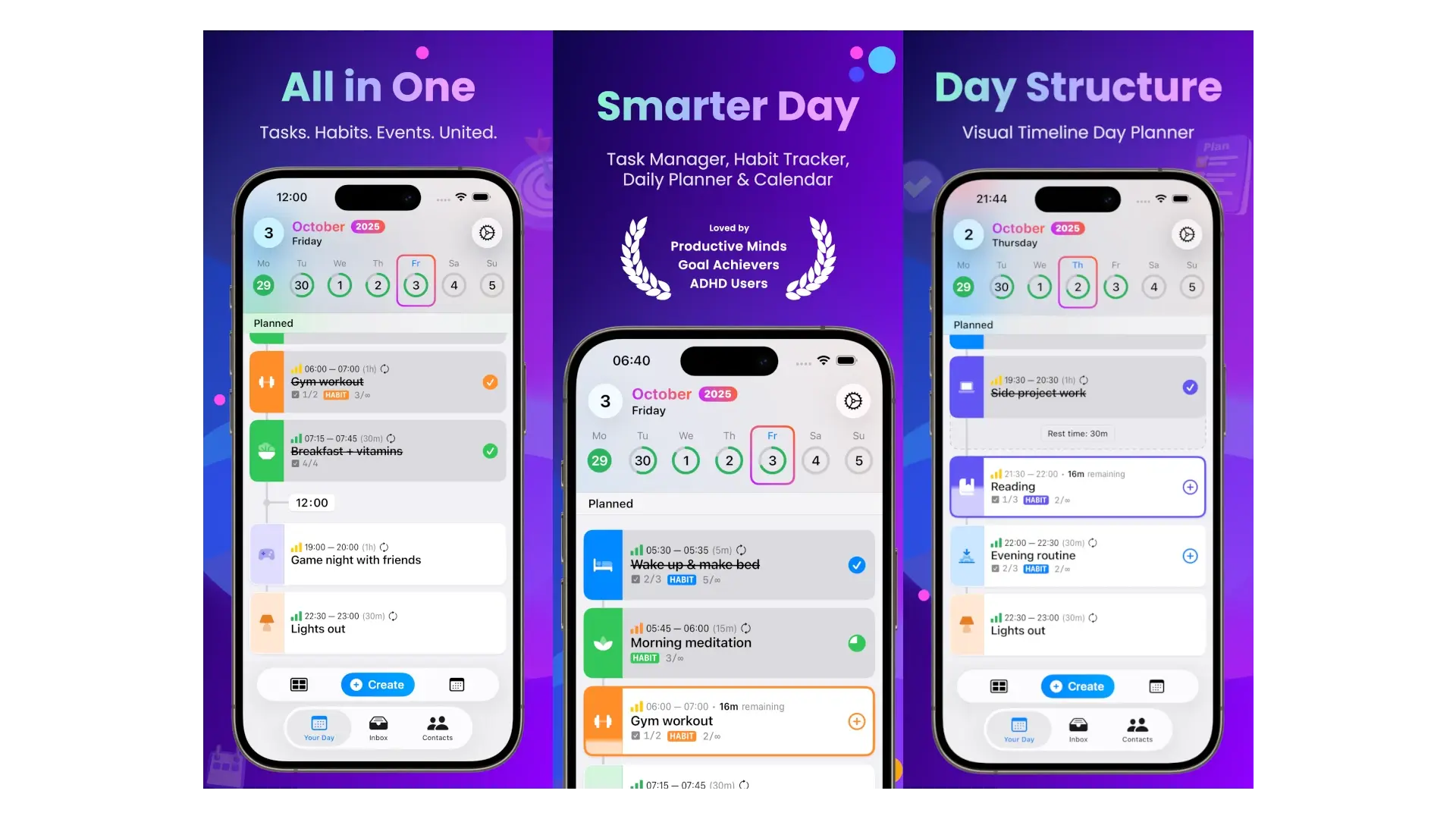
If you want these strategies packaged into a simple, friendly tool, the productivity app at Smarter.Day can help. Use it to set daily outcomes, timebox deep work, track focus metrics, and automate reviews—so your best work becomes your default.
You May Also Like
These Related Stories
Master Deep Focus: 12 Tactics for Peak Productivity
Master Deep Focus: 12 Tactics for Peak Productivity
No Comments Yet
Let us know what you think