

Your calendar says you have a client call at 2:00. Your task app says the proposal is still half done. Your habit tracker reminds you to work out, journal, and review goals. None of those tools know what the others are doing, and that is exactly where the day starts to slip.
Most productivity problems are not really about motivation. They are about fragmentation. When events, tasks, and habits live in separate places, you spend more energy deciding what matters than actually doing it. For busy professionals, founders, developers, marketers, and anyone managing a full schedule, that split creates friction all day long.
If you are looking for events tasks and habits in one app, you are not asking for a nicer interface. You are asking for a system that helps you stay in control when priorities compete.
Why events, tasks, and habits belong together
An event is time-specific. A task is outcome-specific. A habit is repetition-specific. On paper, those sound like different categories. In real life, they constantly affect each other.
A late meeting can wipe out your deep work block. A missed task can create stress that makes your evening routine harder to keep. A strong habit, like planning tomorrow before logging off, can prevent urgent tasks from piling up in the first place. The categories are different, but the day is shared.
That is why separate tools often create a false sense of organization. You may have a clean calendar, an ambitious task list, and a perfect habit streak, but still feel behind. The problem is not a lack of data. The problem is that you cannot see how everything fits together in the moment you need to make a decision.
A unified app changes that. Instead of switching between tools and mentally stitching the day together, you get one visual system for what is scheduled, what needs progress, and what should happen consistently.
What to look for in events tasks and habits in one app
Not every all-in-one productivity app is actually helpful. Some simply place features next to each other without connecting them in a useful way. The real test is whether the app helps you act faster and think less.
A strong system should let you see your day at a glance. That means events need to sit naturally beside tasks, not in a separate corner of the product. Habits should also appear in the same daily view, because routines compete for the same time and attention as everything else.
It should also help you answer one practical question quickly: what should I do next?
That is where prioritization matters. A long task list is not clarity. If an app supports frameworks like the Eisenhower Matrix, priority scoring, or easy drag-and-drop planning, it becomes more than storage. It becomes a decision tool.
Speed matters too. If capturing an idea, editing a task, or rescheduling work takes too many taps, you will avoid using the system when you are busy. The best app for this kind of workflow reduces resistance. You should be able to get thoughts out of your head and into a clear structure fast.
The real productivity benefit is reduced switching cost
People usually talk about all-in-one apps as a convenience. That undersells the value.
The bigger win is reduced switching cost. Every time you jump from your calendar to your to-do list to your habit tracker, you lose a little context. You have to remember what matters, reassess capacity, and rebuild focus. Those transitions feel small, but they add up.
When everything is in one place, you can make better calls in real time. If your afternoon fills up with meetings, you can immediately see which tasks are still realistic and which habits need a lighter version today. If a high-priority item lands in your inbox, you can place it into the right spot without breaking your planning flow.
That kind of visibility is especially useful for people with ADHD or anyone who struggles with overwhelm. A scattered system creates too many decision points. A unified system lowers the mental load. You do not have to remember where to look. You just have to look once.
One daily view beats three separate systems
The strongest case for keeping events, tasks, and habits in one app is the daily view.
Most people do not need more productivity theory. They need a clear picture of today. What is fixed? What is flexible? What needs to happen no matter what? What can move?
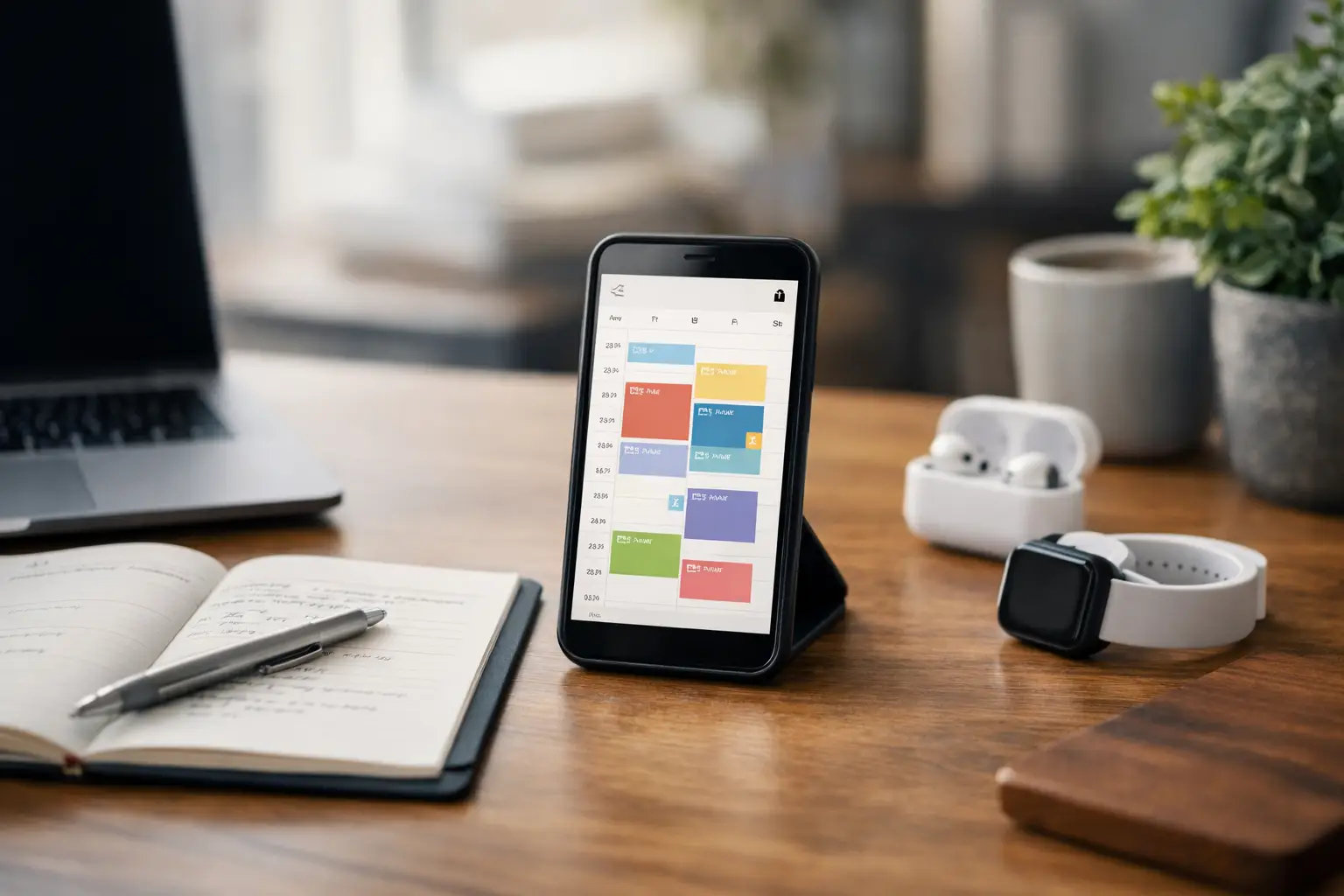
A strong day view answers those questions visually. You can see hard commitments, important tasks, and recurring routines together. That makes trade-offs easier. You stop pretending you can fit six hours of focused work into a day already packed with calls.
This is where structured scheduling helps. Instead of keeping tasks in a separate backlog and hoping you will find time later, you can place work where it belongs. Habits stop being abstract intentions and become part of the day you are actually living.
That shift sounds simple, but it changes behavior. People follow through more consistently when the plan feels real.
Prioritization matters more than feature count
There is a trap in this category. Some apps try to be everything, so they become crowded and hard to trust. More features do not automatically create more control.
What matters is whether the app helps you prioritize with confidence. If everything looks equally urgent, the system is not doing enough work for you.
That is why methods like the Eisenhower Matrix still matter. They help separate what is urgent from what is important, and that distinction is where better days begin. AI-based scoring can also help, especially when your list gets long, but it should support judgment, not replace it. Good productivity software should guide your attention without making you feel boxed in.
The sweet spot is a system that gives structure while staying flexible. Some days are tightly scheduled. Some days need quick adjustments. A useful app can handle both.
Habits should support your goals, not compete with them
Habit tracking often becomes disconnected from real work. People track water, reading, exercise, meditation, and planning, but none of it connects to the outcomes they are trying to produce.
That is why habits belong in the same system as tasks and events. You can finally see whether your routines are helping your goals or crowding them out.
For example, a morning planning habit becomes more valuable when it opens directly into your task and event view. An end-of-day review becomes easier when you can check completed work and reschedule unfinished items in context. Habits stop being isolated checkboxes and start becoming operating procedures for a better day.
That is a big difference for professionals who want consistency without rigidity. The goal is not to build the most impressive routine on paper. The goal is to create repeatable behaviors that help you execute.
Collaboration changes the equation
If you work with a team, the value of an all-in-one system grows even more.
Personal productivity and shared execution are usually treated as separate worlds. One app is for your habits and planning. Another is for team tasks. A calendar sits somewhere else. That setup creates blind spots fast.
When shared tasks, personal priorities, and scheduled events are visible in one environment, coordination gets easier. You can see what is due, what is blocked, and what your day can realistically support. That leads to better planning and fewer missed handoffs.
For lightweight collaboration, this matters a lot. You do not always need a heavy project management platform. Sometimes you just need a clear, structured place where work and time can live together.
Why this approach works better over time
The best productivity system is not the one that looks smart in week one. It is the one you still trust in month three.
That is where an integrated app has a real edge. It creates continuity. Your events shape your tasks. Your tasks influence your habits. Your habits improve how you handle future events. Over time, that loop gets stronger because everything is visible in the same system.
You start spotting patterns sooner. You notice which routines protect your focus. You see which types of meetings create task spillover. You get better at estimating your capacity. That kind of awareness boosts your productivity more than any single hack.
Smarter.Day is built around that reality. It combines planning, prioritization, habits, and scheduling into one clear workflow so you can stop managing scattered tools and start managing your day.
If you want more control over your schedule, fewer open loops, and a clearer next step, one app is not just cleaner. It is a better way to think. And once your events, tasks, and habits finally work together, the day feels a lot less like recovery and a lot more like momentum.
You May Also Like
These Related Stories

One Priority at a Time, Done Right
10 Best Apps for Daily Planning

No Comments Yet
Let us know what you think