
Peak Productivity: Science-Backed Focus Strategies

Peak Productivity: Science-Backed Focus Strategies
We’ve all sat down to work only to be hijacked by pings, open tabs, and a to-do list that multiplies. Here’s the catch: most of us try to fight overwhelm with more effort instead of smarter systems. If procrastination, distraction, and context switching are draining your energy, you’re not alone. Research shows that fragmented attention kills performance and mood. In this guide, we’ll tackle the root causes of productivity drag with science-backed focus strategies that improve time optimization and workflow improvement immediately.
Our goal is simple: equip you with actionable, field-tested methods you can use today. We’ll lean on credible sources—from Cal Newport and James Clear to studies in Harvard Business Review, UC Irvine, and APA—to help you design a schedule, environment, and mindset that supports high performance. You’ll find specific techniques, relatable examples, and realistic routines to get more done with less stress. Ready to build focus that lasts? Let’s dive in.
1) Time Blocking for Deep Work That Sticks
When your day is a blur of tasks, time blocking turns intentions into commitments. Block 60–120 minutes for Deep Work and 15–30 minutes for admin, then protect those blocks like meetings. Method 1: Create a fixed-schedule productivity window—say, 9–11 a.m.—reserved for cognitively demanding work. Method 2: Pair each block with a single, clearly defined output. As Cal Newport argues in “Deep Work,” intensity beats hours: concentrated attention converts effort into results.
Consider Sara, a marketing manager constantly reactive to chat notifications. She carved out two morning blocks for strategy and creative briefs, with afternoon slots for meetings. After two weeks, her campaign cycle time dropped by 25%. The shift wasn’t magic—just the consistent discipline of showing up for the most valuable work. Use a visible calendar, and add buffer blocks to absorb inevitable spillover without wrecking the day.
To keep it sustainable, add startup and shutdown routines. Start by reviewing your top objective, then close with a written log of what moved forward and what’s next. This avoids the mental residue that carries into the evening. A 2021 HBR piece on “time blocking 2.0” highlights that planning the full calendar—meetings, breaks, deep work—reduces the cognitive load of decision-making throughout the day. You plan once; you execute many times.
2) Focus Sprints Aligned to Ultradian Rhythms
Our brains run in ultradian cycles of roughly 90 minutes. Method 1: Work in focus sprints of 50–90 minutes, followed by 10–20 minutes of true recovery (no email, ideally a short walk). Method 2: Use a “warm-up minute” to outline next steps before the sprint begins. Performance research from K. Anders Ericsson on deliberate practice suggests structured intervals with full attention build skills faster than marathon sessions.
A copywriter I coached adopted two 75-minute sprints before lunch. During breaks she stretched, drank water, and avoided screens. Within a month, her deliverables per day rose by 30%, and her error rate dropped. The secret? Full rest during breaks. “Active rest” (like switching to social media) keeps your attentional system revved, blurring recovery.
Start small: two sprints before lunch, one after. Protect sprint time with a full-screen app and Do Not Disturb. If you’re prone to drift, try a Pomodoro 2.0: 3 x 25-minute blocks with micro breaks, then a 15-minute walk. Ericsson’s work shows performance improves as you approach, not exceed, your cognitive edge. Sprint hard, recover fully, repeat.
3) Prioritization: Eisenhower Matrix + The One Thing
Facing a packed list, we confuse urgent with important. Method 1: Use the Eisenhower Matrix daily—do first (urgent/important), schedule (important/not urgent), delegate (urgent/not important), delete (neither). Method 2: Pick your Most Important Task (MIT)—the single deliverable that moves the needle. As Stephen Covey noted, placing “big rocks” first ensures priorities don’t get squeezed out by noise.
A product lead I worked with opened each day by tagging tasks into the matrix, then selecting one MIT aligned with quarterly outcomes. Within six weeks, she shipped two key features without working late. The shift wasn’t about speed; it was about clarity. Gary Keller’s “The One Thing” echoes this: define the one task that makes everything else easier or unnecessary.
For added control, tie your MIT to a time block and write a one-sentence Definition of Done. Example: “Draft v1 of onboarding email with two CTA variants.” This trims vagueness—half of the battle. HBR reports that simple planning rituals reduce decision fatigue and improve throughput, especially under uncertainty. Important beats urgent. Every time.
4) Habit Loops: Tiny Steps, Big Output
Sustainable productivity is a habit system, not a motivational burst. Method 1: Build Tiny Habits (BJ Fogg): anchor a 30-second action to an existing routine (“After I pour coffee, I open my focus doc”). Method 2: Practice Identity-Based Habits (James Clear): tell yourself “I’m the kind of person who closes the loop on one important task before noon.” Small wins compound into reliable performance.
A developer who struggled to start tough tickets adopted a 60-second kickoff rule: write the test name and pseudocode immediately after standup. That tiny action lowered friction and turned starts into momentum. Within a quarter, his cycle time dropped by 18%. Fogg’s research shows that emotion-driven celebration—a quick internal “nice!”—helps cement habits faster than willpower alone.
Use a habit scorecard for two weeks, marking only “did” or “didn’t.” No judgment—just data. Stack routines: “After lunch, I do a 10-minute planning pass; then I run one 50-minute sprint.” As Clear writes in “Atomic Habits,” “You do not rise to the level of your goals. You fall to the level of your systems.” Build systems that are too small to fail and too consistent to ignore.
5) Energy Management: Sleep, Light, and Movement
Focus isn’t just mental; it’s biological. Method 1: Protect sleep by keeping consistent wake times, limiting late blue light, and finishing caffeine by early afternoon. Matthew Walker (“Why We Sleep”) shows even mild deprivation impairs attention and working memory. Method 2: Leverage morning light exposure and brief movement snacks to stabilize circadian rhythms and energy.
Consider Mia, an analyst who felt foggy by 2 p.m. She started a 15-minute morning walk in natural light and set a caffeine cutoff at 1 p.m. She also added two movement breaks—five pushups and a stretch. Result: afternoon focus returned, and her rework rate dropped. Better energy equals better decisions.
Don’t forget nutrition timing. Heavy lunches can spike sleepiness; try a lighter meal with protein and fiber. A 5–10 minute non-sleep deep rest (NSDR) break can quickly restore alertness, as emerging research suggests brief relaxation enhances cognitive performance. Track what improves your time-on-task—not just how you feel.
6) Cognitive Load: Single-Tasking and an External Brain
Working memory is limited—often to about four chunks (Cowan, 2001). Method 1: Single-task your high-value work; multitasking is switching in disguise and kills throughput. Method 2: Use an external brain—capture tasks, decisions, and notes so your mind can focus on reasoning, not storage. John Sweller’s Cognitive Load Theory supports offloading extraneous load to boost learning and performance.
A customer success lead used to juggle five dashboards while answering email. We cut it to one single-task queue and a living decision log in a doc. She felt calmer, and churn analyses improved because she wasn’t splitting attention. As the APA notes, multitasking can reduce productivity by as much as 40% in some contexts—focus preserves accuracy.
Build a simple stack:
- Capture: Inbox Zero-lite—dump tasks into one list.
- Clarify: Add a verb and “Definition of Done.”
- Calendar: Time block real work.
- Cache: Keep a scratchpad open for fleeting thoughts so they don’t derail you.
When your brain trusts your system, it releases mental bandwidth for the work that matters.
7) Communication Hygiene: Tame Email and Chat
Email and chat are productivity quicksand. Method 1: Batch communication two to four times a day, disabling notifications outside those windows. Method 2: Use templates and snippets for common replies to reduce typing and decision energy. McKinsey estimates knowledge workers spend 28% of their week on email; curbing it is instant workflow improvement.
A sales ops pro I coached moved to three email batches (10:30, 2:30, 4:30) and set status messages indicating response times. He also created five canned responses for FAQs. Within two weeks, his calendar gained 6–8 hours of creation time. The Microsoft Work Trend Index repeatedly shows uncontrolled chat fragments deep work and increases stress.
Set team norms:
- Subject prefixes like [FYI], [ACTION], [DECISION] to clarify intent.
- A 5-minute pre-meeting summary to cut back on “clarifying” threads.
- A weekly digest instead of daily drips.
As Basecamp’s Jason Fried often argues, async defaults reduce interruptions while keeping teams aligned. Fewer pings, clearer messages, better outcomes.
8) Environmental Design: Digital Minimalism and Cue Control
Your environment should make focus the path of least resistance. Method 1: Design a distraction-proof workspace—fullscreen apps, one-tab rule during sprints, and Do Not Disturb with an allowlist for true emergencies. Method 2: Apply Digital Minimalism (Cal Newport): uninstall nonessential apps from your phone and remove attention traps from your dock and home screen.
A designer I advised created a “focus desktop” with only her design tool and a notes app visible. She also set her phone to grayscale and parked it in another room during sprints. After a month, she reported shorter ramp-up time and deeper creative flow. UC Irvine research by Gloria Mark finds that it can take 20+ minutes to recover from interruptions—prevention beats recovery.
Anchor focus with physical cues:
- Noise-canceling headphones for deep work.
- A desk light that turns on during focus blocks.
- A “quiet hours” sign (helpful in shared spaces).
Small cues reduce friction and signal your brain: now we focus. Consistency here compounds like interest.
9) Planning and Review: Weekly Reset, Daily Shutdown
Great weeks don’t happen by accident. Method 1: Do a Weekly Review (David Allen, GTD): clear inboxes, review projects, and plan 3–5 outcomes for the week. Method 2: Implement a Daily Shutdown ritual: log progress, park your top three for tomorrow, and close your laptop with intention. This protects evenings and boosts next-day momentum.
An engineering manager introduced a Friday 30-minute reset: she checked roadmaps, updated blockers, and scheduled two deep work blocks for Monday. She also wrote a one-paragraph “what moved” note for her team. Result: fewer Monday scrambles, smoother handoffs, and clearer priorities. GTD’s central idea—“mind like water”—starts with trusted lists and regular reviews.
Keep it simple:
- Weekly: What did I finish? What did I learn? What’s next?
- Daily: What’s my MIT tomorrow? What one thing can I prep now?
HBR reports that progress visibility is a top motivator (Amabile & Kramer, “The Progress Principle”). When you can see movement, you want to make more.
10) Meetings That Create, Not Consume, Momentum
Meetings often dilute attention. Method 1: Require a clear agenda with owner and desired decision before accepting. If missing, request it or decline. Method 2: Use decision notes and a 2-minute closeout recap: who does what by when. Amazon’s two-pizza rule and narrative memos demonstrate that structure speeds clarity and reduces follow-up chaos.
A data team I worked with converted status meetings into async updates and reserved live sessions for decisions only. They cut meeting time by 35% and improved delivery accuracy. A 2022 HBR analysis noted that even a 10% reduction in low-value meetings increased reported productivity by 71% and reduced stress.
Adopt meeting heuristics:
- 25- or 50-minute default durations to protect transition time.
- “Parking lot” list to capture off-topic items.
- Rotate a facilitator to keep pace and neutrality.
With fewer, better meetings, you reclaim focus time and raise team performance.
11) Flow Triggers: Calibrate Challenge and Feedback
Sustained focus thrives in flow, the state where challenge meets skill. Method 1: Set tasks at the edge of ability—not too easy, not too hard—and define a clear target. Method 2: Add immediate feedback—track progress, use checklists, and compare against examples. Mihaly Csikszentmihalyi’s research shows that clarity and balance are prerequisites for flow.
A junior analyst felt stuck in repetitive reports. We reframed her task as a skill ladder: each week, add one new technique (e.g., a visualization or SQL optimization) and review with a mentor. The work became engaging, and her turnaround time dropped 20%. Flow isn’t luck; it’s designed constraints plus visible progress.
Try a pre-performance routine: 60 seconds to visualize starting, confirm your Definition of Done, and remove the top distraction. Then, after 25–50 minutes, capture a one-line insight. These small rituals prime your brain. As Csikszentmihalyi wrote, “The best moments usually occur when a person’s body or mind is stretched to its limits in a voluntary effort.”
12) Automation and Shortcuts: Remove Friction, Add Leverage
Your output scales when you automate routine steps. Method 1: Use text expanders and keyboard shortcuts for repeated phrases, links, and formatted notes. Method 2: Set up simple automation chains (e.g., form → spreadsheet → notification) with tools like Zapier or native integrations. Duhigg’s “The Power of Habit” reminds us that cues and routines can be engineered—automation is a durable routine.
An operations lead reduced onboarding time by 40% by creating a template pack: email sequences, checklists, and a pre-filled project board. She added a shortcut launcher for daily documents. The impact wasn’t just speed; it was consistency, which cut rework. HBR and Gartner have noted that low-code automations can reclaim hours weekly for knowledge workers.
Start with a friction audit:
- What do I type repeatedly?
- What files do I open daily?
- What steps repeat across projects?
Automate one item per week. In a quarter, you’ll have a personal system that quietly multiplies your performance without extra effort.
Conclusion
You don’t need heroic willpower to beat distractions. You need a set of repeatable systems—time blocks, focus sprints, habit loops, energy safeguards, and automation—that protect attention and convert effort into results. The research is clear: when you lower friction and design for clarity, your workflow improvement compounds.
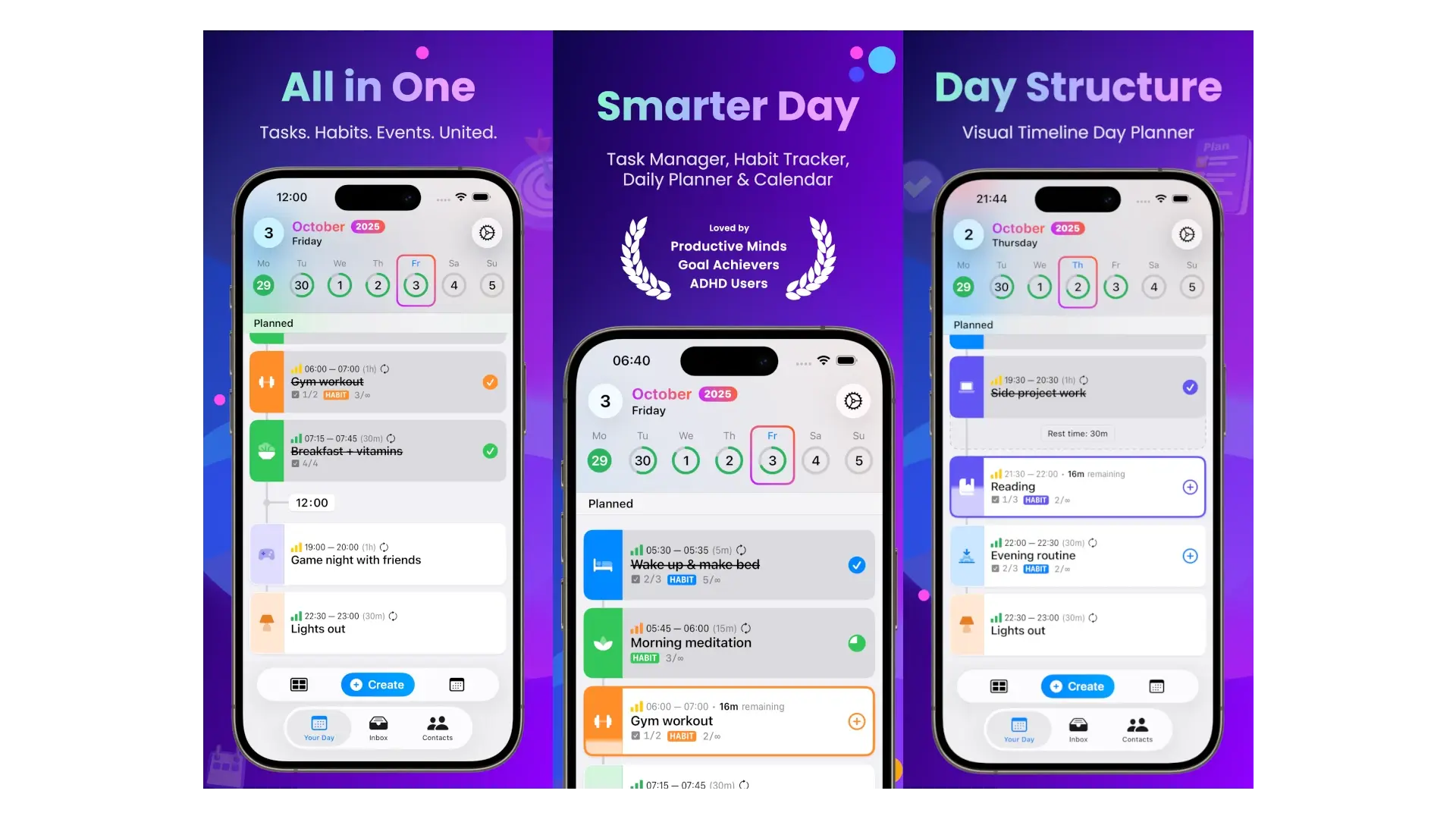
If you’re ready to operationalize these ideas with a simple, guided setup, the productivity app at Smarter.Day can help you time block, run sprints, and track momentum without fuss. It’s built to reduce overload and keep you focused on what matters next.
You May Also Like
These Related Stories
Peak Productivity: Science-Backed Focus Strategies
12 Proven Systems to Optimize Time Focus and Output
No Comments Yet
Let us know what you think