

The Advanced Productivity Playbook: Time Focus Habits

The Advanced Productivity Playbook: Time, Focus, Habits
Introduction
Let’s face it—between pinging notifications, packed calendars, and constant context switching, it’s easy to feel overwhelmed and underproductive. Have you ever noticed how a “quick check” turns into an hour of distraction? Here’s the catch: productivity isn’t only about doing more; it’s about doing the right work at the right time with a system that supports your focus and cognitive performance. In this guide, we’ll share actionable methods that improve time optimization, concentration, and workflow improvement—without requiring superhuman willpower.
You’ll learn practical strategies grounded in research from authors like Cal Newport and James Clear, and studies from cognitive science and behavioral psychology. We’ll use relatable examples, clear steps, and smart tools to help you build habits that stick. Whether you’re a creator, manager, or student, you’ll find techniques you can use today to reduce overwhelm, beat procrastination, and build a sustainable high-performance workday.
Align Your Day with Ultradian Rhythms for Natural Focus
Your brain runs in roughly 90-minute ultradian cycles—periods of high energy followed by lower-energy valleys. Psychologist Ernest Rossi and sleep researcher Nathaniel Kleitman describe how performance peaks when we respect those cycles. Two methods work well: schedule 90-minute focus sprints for cognitively demanding tasks, then take a 15–20-minute recovery break. Follow with light activity—walk, stretch, or grab water—to reset your nervous system. For energy dips, use “active rest” instead of scrolling: sunlight, a brief movement snack, or a quick journaling reset.
Example: Mark, a product designer, blocks two 90-minute morning sprints for deep design work, then shifts to meetings. He keeps afternoons for editing and email, aligning demanding work with his peak mental clarity. As Daniel Pink notes in When, timing matters—so stack complex tasks during your natural highs and use low-energy periods for administrative work. You’ll feel less friction and more sustained momentum.
When switching between cycles, protect boundaries. Use a visual timer and a clear stop ritual: close your editor, write a one-line status note, and step away. This simple cadence “contains” effort and prevents fatigue from bleeding into your next sprint. Over time, your body learns the rhythm, making deep focus easier. You’re leveraging biology, not battling it—a powerful form of performance design.
Schedule Deep Work Like an Appointment
Cal Newport’s Deep Work shows that uninterrupted concentration produces disproportionately high-quality output. The simplest method: time blocking. Reserve 1–3 blocks per day for your most valuable, cognitively demanding tasks. Make it a “hard appointment” with yourself. Second, create focus rituals—same location, same cues (noise-canceling headphones, a clean desk, a start sentence) to signal your brain it’s go time. These predictable cues reduce decision friction and lower anxiety about starting.
Illustration: Priya, a data analyst, time-blocks 8:30–10:30 for analysis, then 11–11:30 for review. Her ritual: she silences Slack, closes email, opens one dataset, writes a “north star” question, and starts a 90-minute timer. She leaves a small breadcrumb—“Next: test model B with confounders”—before stopping. This simple closing checklist reduces re-entry friction and preserves focus.
Two more tweaks build resilience. First, use a closed list: choose up to three deep tasks per day and ignore the rest. Second, implement “modem mode”—disable Wi-Fi during deep blocks unless your task requires it. Research by Gloria Mark shows knowledge workers lose up to 23 minutes regaining focus after interruptions. Protecting a tight scope and an offline environment compounds your output and reduces burnout.
Manage Cognitive Load with a “Second Brain”
Cognitive load theory (John Sweller) explains that working memory is limited. We work better when we externalize information and chunk complexity. Start by creating a second brain—a single trusted system to capture ideas, tasks, references, and templates. You can do this with simple tools: notes, folders, and tags that follow the PARA framework (Projects, Areas, Resources, Archives) popularized by Tiago Forte. Offload your brain; keep your thinking space clear for problem-solving.
Next, practice chunking: break large tasks into small, concrete steps. Name the first 1–3 actions you’ll take, e.g., “Draft intro, outline 3 sections, collect 2 citations.” This exploits the Zeigarnik effect (we remember incomplete tasks), but tames it by making progress visible. For retention-heavy tasks, add spaced repetition—review notes at increasing intervals to cement knowledge, a technique widely supported by cognitive psychology.
Example: Hannah, a software engineer, made a weekly “engineering vault” with code snippets, PR templates, and postmortem checklists. She chunks work into 30–60-minute units and logs insights after each session. Result: fewer context losses and faster ramp-ups. “Your mind is for having ideas, not holding them,” David Allen reminds us in Getting Things Done. A second brain frees bandwidth for creative thinking and execution.
Prioritize with 80/20 and the Eisenhower Matrix
Not all tasks are equal. The Pareto Principle suggests 20% of efforts drive 80% of results. Combine that with the Eisenhower Matrix—urgent vs. important—to identify what truly matters. Method one: select a Daily Top 3—the three outcomes that move your most important goals forward. Method two: write a Not-To-Do List—tasks you intentionally eliminate or delegate (meetings without agendas, redundant reports, low-impact busywork).
A practical flow:
- Sort tasks into the Eisenhower Matrix.
- Circle the top “Important, Not Urgent” items—your true leverage work.
- Eliminate or defer low-value tasks; batch the rest.
Example: Leo, a marketing lead, realized weekly deck polishing consumed hours but moved no metrics. He shifted to building a customer insights pipeline and automated the deck. Richard Koch’s The 80/20 Principle highlights that focus on high-leverage activities can multiply output. The key is courage: say no to the trivial many so you can say yes to the vital few.
To reinforce the habit, schedule a five-minute morning triage and a ten-minute Friday review. Ask: Which 20% created most progress? Which tasks can I stop or delegate next week? Over time, you’ll train your attention toward value creation, not noise. This reduces decision fatigue and aligns your day with strategic outcomes.
Build Durable Momentum with Habit Stacking and Tiny Steps
Behavior scientist BJ Fogg’s Tiny Habits shows that small, easy actions, anchored to existing routines, outlast willpower. Method one: habit stacking—attach a new behavior to a reliable anchor. “After I pour coffee, I’ll open my task list and pick my Top 3.” Method two: environment design—place friction in the path of distractions and reduce friction for desired actions. Keep your focus tools one click away; hide temptations behind extra steps.
Example: Sara wanted to read research daily. She stacked “open Kindle for 5 minutes” after lunch and moved social apps off her home screen. James Clear’s Atomic Habits reinforces this: make it obvious, attractive, easy, and satisfying. Celebrate tiny wins to reinforce identity: “I’m a person who reads.” Momentum compounds because it feels good to keep going.
To scale, add implementation details: when, where, how long, and a cue. Keep initial steps ridiculously small—two lines of code, one paragraph, five minutes of cleanup. Tiny actions bypass resistance, and once you begin, it’s easier to continue. In a week, micro-actions become a routine; in a month, a reliable system that nudges you toward consistent performance.
Defend Attention: Reduce Context Switching and Digital Clutter
Multitasking isn’t a superpower; it’s a tax. APA-cited research by Rubinstein, Meyer, and Evans shows task switching can cost up to 40% of productive time. Two methods help. First, notification batching: turn off non-essential alerts and check messages at set times (e.g., 11:30 and 4:30). Second, enforce a single-tab rule during deep work—one document, one dataset, one objective. Context purity reduces cognitive residue after interruptions.
Gloria Mark’s research indicates interruptions can take 23 minutes to recover from. Example: Jonah, a project manager, created a team “quiet hours” policy from 9–11 a.m., set Slack statuses to “focus,” and used a site blocker for social media. After two weeks, his team’s cycle time dropped measurably, and stress levels fell. “Clarity and boundaries are kindness,” he told them—kindness to your future self.
For complex projects, add mode-based batching: group similar tasks (writing, analysis, meetings) to keep your brain in the same mode longer. Use meeting-free mornings twice a week and agenda-first meetings to avoid chaos. Digital minimalism, as Cal Newport argues, isn’t about deprivation; it’s about choosing tools that serve your highest priorities and stripping out low-value noise.
Optimize Energy: Sleep, Movement, and Smart Stimulants
You can’t out-schedule fatigue. Sleep scientist Matthew Walker shows that sleep deprivation impairs attention, memory, and decision-making; after 17 hours awake, performance resembles a 0.05% BAC. Two foundational methods: aim for 7–9 hours of consistent sleep and get morning light exposure to anchor your circadian rhythm. Pair that with movement microbreaks—1–3 minutes of mobility or a brisk walk every hour—to reset alertness.
Example: Dana set a 10:30 p.m. wind-down—dim lights, no work email, and a book. She added three two-minute movement breaks before meetings. Her afternoon slumps faded, and her cognitive endurance improved. Neuroscientist Andrew Huberman recommends delaying caffeine 60–90 minutes after waking to minimize the crash and maintain stable energy—experiment to find your sweet spot.
When energy dips, choose active recovery: fresh air, hydration, a 5–10-minute nap, or a snack with protein and fiber. Protect sleep by limiting late caffeine and screens. Energy management is leverage: the same hour with high alertness produces dramatically better work. Treat energy like a strategic asset in your workflow optimization.
Beat Procrastination with If–Then Plans and WOOP
Procrastination thrives on ambiguity. Psychologist Peter Gollwitzer’s implementation intentions (If–Then plans) pre-decide your behavior. “If it’s 2 p.m., then I draft the executive summary.” Add Gabriele Oettingen’s WOOP method—Wish, Outcome, Obstacle, Plan—to confront friction head-on. Visualize the result, identify the likely obstacle, and set a concrete plan: “If I feel stuck, then I write the ugly first paragraph.”
Example: Omar struggled to start reports. He used WOOP: Wish—submit early; Outcome—stress-free Friday; Obstacle—perfectionism; Plan—start with a messy outline at 9:00. He also tried temptation bundling (Katy Milkman): listen to a favorite playlist only while drafting. The pairing made initiation easier and reduced dread.
To reinforce, lower the bar: define a Minimum Viable Start like “write 100 words” or “sketch three bullet points.” Pair with a commitment device—share a small deliverable with a colleague by 3 p.m. Deadlines and social accountability convert intentions into action. Once you begin, the activation energy drops, and momentum carries you forward.
Streamline Decisions with Templates, Defaults, and Checklists
Decision fatigue erodes performance as the day wears on. Roy Baumeister’s work suggests willpower and decision quality can degrade with overload. Two practical methods: create templates (emails, briefs, meeting agendas, code reviews) and checklists for recurring workflows. Atul Gawande’s The Checklist Manifesto shows how checklists reduce errors and free your brain for higher-level thinking.
Example: Nina built a “daily planning template” with her Top 3, deep work blocks, and a review checklist. She also set defaults: calendar time for lunch, two message check-ins, and meeting agendas required 24 hours in advance. Defaults remove micro-decisions and nudge behavior. As Thaler and Sunstein argue in Nudge, choice architecture shapes outcomes without limiting freedom.
To operationalize, run a template sprint. For one week, capture work you repeat, standardize it, and store it in your second brain. Use short automation rules (e.g., calendar auto-coloring, email filters) to route low-value tasks away from your focus. Each standardized decision gives back time and attention for what truly matters.
Plan with SMART Goals, OKRs, and Weekly Reviews
Clear goals sharpen attention. Locke and Latham’s goal-setting theory shows that specific, challenging goals drive higher performance. Two methods work well together. First, define SMART goals or OKRs (Objectives and Key Results) to anchor outcomes. Second, run a Weekly Review: reflect on wins, obstacles, and next steps. This rhythm keeps your plan connected to reality and fuels consistent progress.
Example: Jules set a quarterly objective—“Improve onboarding experience”—with key results tied to activation time and satisfaction. Each Friday, she reviewed metrics, updated next week’s Top 3, and scheduled deep work for the toughest tasks. She added If–Then contingencies: if a KR slips two weeks, then schedule a stakeholder sync. Plans stayed adaptive rather than aspirational.
During reviews, ask:
- Which activities drove measurable results?
- What obstacles kept repeating?
- What will I stop, start, or continue?
This lightweight cadence merges strategy with execution. Over time, your goals, calendar, and daily actions align, improving workflow efficiency and reducing rework.
Execute Fast with the Two-Minute Rule and Time Boxing
Speed matters. David Allen’s Two-Minute Rule clears small tasks instantly: if it takes less than two minutes, do it now. This prevents tiny to-dos from clogging your system. Pair it with time boxing—assign fixed time windows to tasks—to combat Parkinson’s Law: “work expands to fill the time available.” Use a countdown timer for urgency and fast starts.
Example: Mei, a founder, batch-processed micro-tasks at 1:30 p.m. daily and time-boxed investor emails to 25 minutes. For heavier work, she used Pomodoro intervals (25/5) to maintain pace. Francesco Cirillo’s Pomodoro Technique shows short sprints with breaks sustain focus and beat mental fatigue.
To finish strong, add a definition of done to each task and end sessions with a next-action note. This minimizes re-entry cost and builds a rhythm of consistent shipping. Small, well-defined boxes of time, combined with clear completion criteria, create visible wins and feed a positive execution loop.
Conclusion
Productivity isn’t about squeezing more from a crowded calendar—it’s an operating system for focus, energy, and deliberate choices. By aligning with ultradian rhythms, scheduling deep work, lowering cognitive load, and using behavioral science tools like habit stacking and If–Then plans, you upgrade your workflow without burnout. Start small, standardize what repeats, and protect your attention like it’s your scarcest resource—because it is.
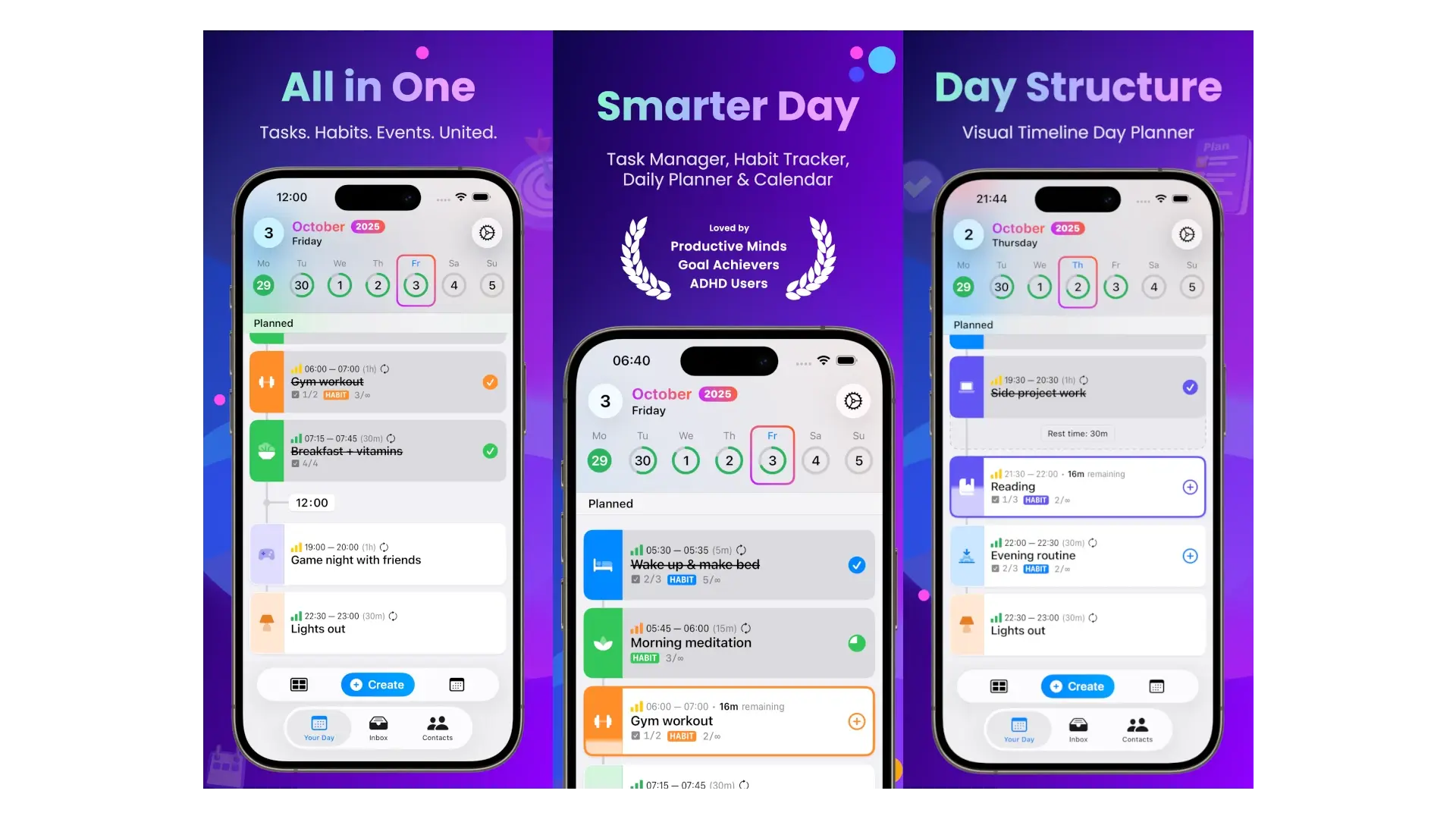
If you want a simple way to bring these strategies together, try the productivity app at Smarter.Day. Use it to time-block deep work, batch notifications, store templates, and run weekly reviews—all in one place. It’s an easy win for time optimization and sustainable performance.
You May Also Like
These Related Stories
Deep Work Playbook: Focus Faster Finish More Daily
Win Your Day: 12 Proven Focus and Productivity Moves
No Comments Yet
Let us know what you think