

Advanced Time Management: 10 Proven Productivity Tactics

Advanced Time Management: 10 Proven Productivity Tactics
Introduction
If you are unable to keep up with the increasing number of tasks assigned to you, don’t worry, you are not the only one. High performers face bottlenecks, too, as they get overburdened with constant notifications and busy schedules. The paradox is that the most successful productivity tweaking does not have to do with working more but rather with systematic time optimization and workflow improvement. This guide will provide you with various practical means you can use now to get rid of procrastination, context switching, and distraction. Thus, you will grasp how to go into deep focus, do smart planning, and protect your energy so performance becomes sustainable.
We will go through ten empirically proven methods, which are drawn from research and real-life experiences. Be ready for clear steps, mini-experiments, and tools you can use immediately. We will borrow ideas from Cal Newport, David Allen, Tony Schwartz, and credible studies to keep things realistic and oriented to results. Regardless of whether you’re a creator, manager, or founder, you’ll discover time management techniques that boost focus and lessen decision fatigue—without adding complicated daily practices you’ll abandon after a week.
1) Kickstart Action with the Two-Minute Momentum Rule
The Two-Minute Rule, which was first mentioned by David Allen in Getting Things Done, is very effective: if a task takes less than two minutes, you'd better do it instantly. Method one: scan your inbox or task list for “two-minute quick wins” two times a day (at the beginning and at the end of the day). Method two: apply a “micro-start” trick—just commit to two minutes on a bigger task to deal with the resistance; often, momentum will keep you going. Exploration of the Zeigarnik effect proposes that when one enters into a task, it increases the need mentally to finish it.
The practical flow goes as follows: you start your task manager, filter the list to see the under-two-minute items (confirm a meeting, send a status update, upload a file), and in one burst, you just clear them. After that, you can choose a complex task and run a two-minute micro-session to get started. This will help in reducing mental clutter and also in boosting cognitive performance. As Allen says, “Your head is for having ideas, not holding them”—by offloading quick items, you free attention.
Real-world example: A sales lead schedules two-minute tasks at 11:50 a.m. and 4:50 p.m. for 10 minutes. He clears up small follow-ups, logs in CRM materials, and gets tomorrow's presentations ready. What’s the outcome? There are fewer threads dangling, the afternoons are slick, and more importantly, fewer sales missed. A micro-start prompts him to write the introductory paragraph of proposals, which is usually enough of a trigger to engage himself, deeply, in work later on.
2) Time Blocking and Theme Days for Calendar Clarity
Time blocking is a technique that gathers related tasks into a short time schedule to minimize switching of the context. Cal Newport, who wrote the book Deep Work, is a strong believer in protecting focus blocks for intensive thinking tasks. Method one: book 90–120 minutes deep work sessions in your peak energy time. Method two: theme days—for example, Mondays for planning, Tuesdays for outreach—popularized by leaders like Jack Dorsey to decrease decision fatigue.
To put this into action, use tags: “Research draft,” “Client calls,” or “Admin sweep” on the blocks. Place buffer zones between and around the deep blocks to ensure that other meetings do not interfere with your focus time. When disruptions happen, use a “deflect and schedule” approach: “Of course, I am happy to help. Let's add 15 minutes on the calendar at 3 p.m.” Thus, your attention will not be affected and your workflow improvement will remain intact.
Example: A project manager reserves Tuesday/Thursday for attending stakeholder calls and Wednesday for writing product specifications. With the calendar showing a visible theme day, her peers come with the right questions at the right time. After a successful month, her draft cycles decreased by 30%, which proved Newport's point that time optimization is based on the power to control not just when you are engaged but also what activities you do.
3) Prioritize with the Eisenhower Matrix and Single-Tasking
The Eisenhower Matrix arranges tasks according to urgency and importance, which is a very handy tool to help you concentrate on only those tasks that are truly productive. The first method requires you to take 4 boxes each morning, in which your tasks will be sorted: a) Do (important/urgent), b) Plan (important/not urgent), c) Delegate (not important/urgent), d) Delete (not important/not urgent). Whilst the second method is applying the single-tasking approach to the first one “Do” or “Plan” item for an uninterrupted sprint. The research conducted by Stanford's late professor Clifford Nass showed that people who multitask a lot are worse at filtering out irrelevant information—besides that, single-tasking protects focus.
A handy routine: pick out the “One Big Thing of the day” from the Important/Not Urgent quadrant; spend 90 minutes working solely on it. Keep a “parking lot” for off-topic thoughts to prevent you from going off-track. After completing the sprint, move one “Delegate” item by handing the message to a person, and get rid of one “Delete” item entirely. You will feel much lighter and clearer.
Illustration: A marketing lead employs the matrix at 8:30 a.m., identifies the “Plan” task (campaign narrative), and single-tasks for 90 minutes. She maintains her steadfastness against Slack, logs unrelated ideas in a notebook, and delegates asset resizing. The output gets better and stress drops—this serves as a proof that prioritization + single-tasking is greater than the false efficiency of multitasking.
4) Manage Energy with Ultradian Breaks and Task-Energy Fit
The real truth is this: while time is always constant, energy fluctuates. Performance, according to Tony Schwartz (The Energy Project), increases when we alternate between work and rest. Technique number one: adhere to ultradian cycles—work for 90 minutes and then have a recovery break of 10–15 minutes (movement, hydration, and daylight). Technique number two: assign tasks based on your chronotype—put creative work in your peak window and do admin work in your dip. The findings of Anders Ericsson on deliberate practice add weight to the efficacy of concentrated efforts followed by a break.
To apply this practice, record a week of your energy levels. Arrange deep work during energy peaks, meetings in mid zones, and rote tasks in troughs. When on breaks, shun doom-scrolling; rather, actively recover: go for a brisk walk, practice breathing drills, or have a 200–300-calorie refuel. This not only maintains cognitive performance but also helps to avoid burnout.
Illustration: A designer observes that from 8:30 a.m. to 11:00 a.m., she is at her best. She then schedules concept work at this hour, takes a 12-minute walk, and afterwards pushes emails to 2 p.m. After two weeks, she states that she has had a more consistent creative flow and fewer afternoon slumps, thus, it is in accordance with the oscillation principle that Schwartz promotes.
5) Pomodoro 2.0: Focus Sprints with Buffer and Review
The well-established Pomodoro Technique (Francesco Cirillo) is based on the idea of 25/5 work/break intervals. A modern alternative combines longer focus sprints (40–50 minutes) with a 10-minute break, and a 20-minute buffer every three cycles for review. According to DeskTime's analysis of peak performance, the optimum rhythm is close to 52/17, which emphasizes the need for recovery. Method 1: Choose the sprint duration that corresponds to the task's cognitive load. Method 2: Use the buffer to clean up notes, set actions, and close loops.
Execution tip: name the sprint (“Draft section 2” instead of “Write”). In the course of breaks, stand, stretch, sip water—screens off when possible. In the buffer, capture next steps and set the entry point for the next sprint so you can restart with momentum.
To illustrate: A startup owner who is seeking investors interleaves 50-minute sprints of writing with 10-minute breaks. After three cycles, she spends a 20-minute buffer where she updates the pipeline and drafts two follow-ups. The structured sprints + deliberate buffer resulted in increased output while fatigue decreased, proving that this method works.
6) Design Your Environment to Defeat Distraction
The willpower of the environment. BJ Fogg's Tiny Habits is centered on the concept of environment design: make desired actions easy and undesired ones difficult. Step one: make a distraction barrier—full-screen apps, Do Not Disturb, and site blockers during intense focus work. Step two: arrange cue-based stations—a clutter-free workspace that has only the items related to your current task. Gloria Mark (UC Irvine) states that the interruptions we make can cost up to 20 minutes of refocusing time. Treat attention the way one deals with precious resources.
As for the practical setup: turn off notifications, leave your phone in a spot out of reach, and use sticky notes that show what you are currently doing. Try using noise-canceling headphones or simply playing a sound loop. You might have a "reset ritual" that involves stacking things on your desk, closing all browsers, and reopening just the essentials. The friction tweaks make focus a default feature of your mind.
Case in point: A copywriter sets a "Focus Desk" rule that only includes the brief, outline, and water bottle. With a site blocker on social media from 9 to 11 a.m., the writer ships the drafts 25% faster. As Fogg likes to say, "Design beats discipline"—and the statistics about communication troubles prove it.
7) Batch Work and Shift to Asynchronous Collaboration
A slow pace at work is often caused by a high frequency of context switching. HBR has repeatedly mentioned that fragmentation is a major cost to knowledge workers. The first method to do task batching is to group similar tasks (emails, invoices, reports) and process them in a single window. The second method is to prioritize pushing asynchronous communication: defining the timeframe of a response (e.g., four-hour SLA), putting in threads, and keeping synchronous time for the cases that require discussion or speed. All of this leads to steadier workflow rhythms, and the theater of urgency gets reduced.
Here’s a playbook: Set two emailing windows (11 a.m., 4 p.m.), keep Slack on "mentions only" during deep work, and use a weekly async update doc. Create a decision log to avoid rehashing old threads. When necessary, you can escalate to a call which will be quick and will have the agenda and time specified.
Example: An engineering team shifts daily status from a meeting to an async board with blockers, progress, and next steps. Meetings have thus been reduced by 30% and the team's focus time has expanded. The switch is the same as Basecamp's way of promoting calm work and is also in accordance with the research that states that fragmented attention is costly.
8) Make Meetings Count: Two-Pizza Rule and Fast Decisions
Meetings should be few and concise. Jeff Bezos introduced the Two-Pizza Rule—keep teams small enough that two pizzas can feed them. Method one: mandate agenda-first invites that include expected outcomes and prep material. Method two: use a staffing decision scheme such as RAPID (Bain) or DACI to show who is recommending, choosing, and executing the solution, thereby causing less swirl.
Before setting a meeting, ask: is it possible to fix without a meeting? If not, timebox to 25 or 50 minutes, begin with a short written brief, and conclude with decisions, owners, and dates. Lean with “disagree and commit” when consensus slows. A quote to bear in mind: “If you can’t express it in writing, then you don’t have a grasp of it yet.”
Example: A growth team substitutes their 60-minute weekly status with a 25-minute decision review utilizing RAPID. With sharp briefs and explicit owners, the meeting count drops and yield rises, following the best practices of Amazon and Bain about time optimization and speed.
9) Automate Repetition and Build a Lightweight Tool Stack
Automation is a kind of leverage. According to McKinsey's view, more than 30 percent of activities in most jobs can be automated. The first one is to automate monotonous workflows—scheduling your calendar, naming your files, generating reports, or CRM updates through tools like Zapier or native app automations. The second one is to use a lightweight stack: one task manager, one notes system, one calendar, and a few integrations to avoid an overload of tools.
Begin by listing the weekly repeats: the onboarding steps, the invoice creation, and the social posts. The first step is to automate the handoffs (form → spreadsheet → notification), afterward the transformations (template → document → email). Keep a playbook of your automations to catch drift by reviewing it monthly. The result is persistent workflow enhancement with no extra cognitive load.
Example: An advisor auto-creates client folders from a form, fills in the proposal template, and sets a follow-up email. What had previously taken 25 minutes per customer is now only 2. This is time reclaimed and attention saved for more important work.
10) Reflect Weekly: Reviews, Post-Mortems, and Progress Cues
Incremental growth is mostly in your thoughts. David Allen’s Weekly Review keeps the system adopted; Teresa Amabile’s research in The Progress Principle tells that small victories foster feelings of motivation. Method one: execute a Friday review—gather, clarify, articulate, reflect, and renew. Method two: run light post-mortems after projects: the positive things, the negative things, our changes, and one concrete improvement.
Keep this rhythm: list your successes, clean your task inbox, cut stale commitments, and plan the focus blocks for next week. Frame the success with a simple done list or burndown chart. Kaizen—continuous improvement—centers on small but regular changes.
Example: A head of customer success reserves 45 minutes each Friday to go through tickets, tagging recurrent issues, and planning proactive outreach. Satisfaction scores rise as the insights from the team turn into playbooks that prevent problems. The weekly ritual turns out to be the backbone of sustained performance.
Conclusion
We’ve spent time talking about ten research-proven approaches to optimize time, protect focus, and streamline your workflow, from the Two-Minute Rule to automation and weekly reviews. The common denominator is intentionality: you are to design your calendar, environment, and communication so that deep work turns into a routine, and recovery is built-in. Begin small, iterate weekly, and let data—not guilt—lead your changes.
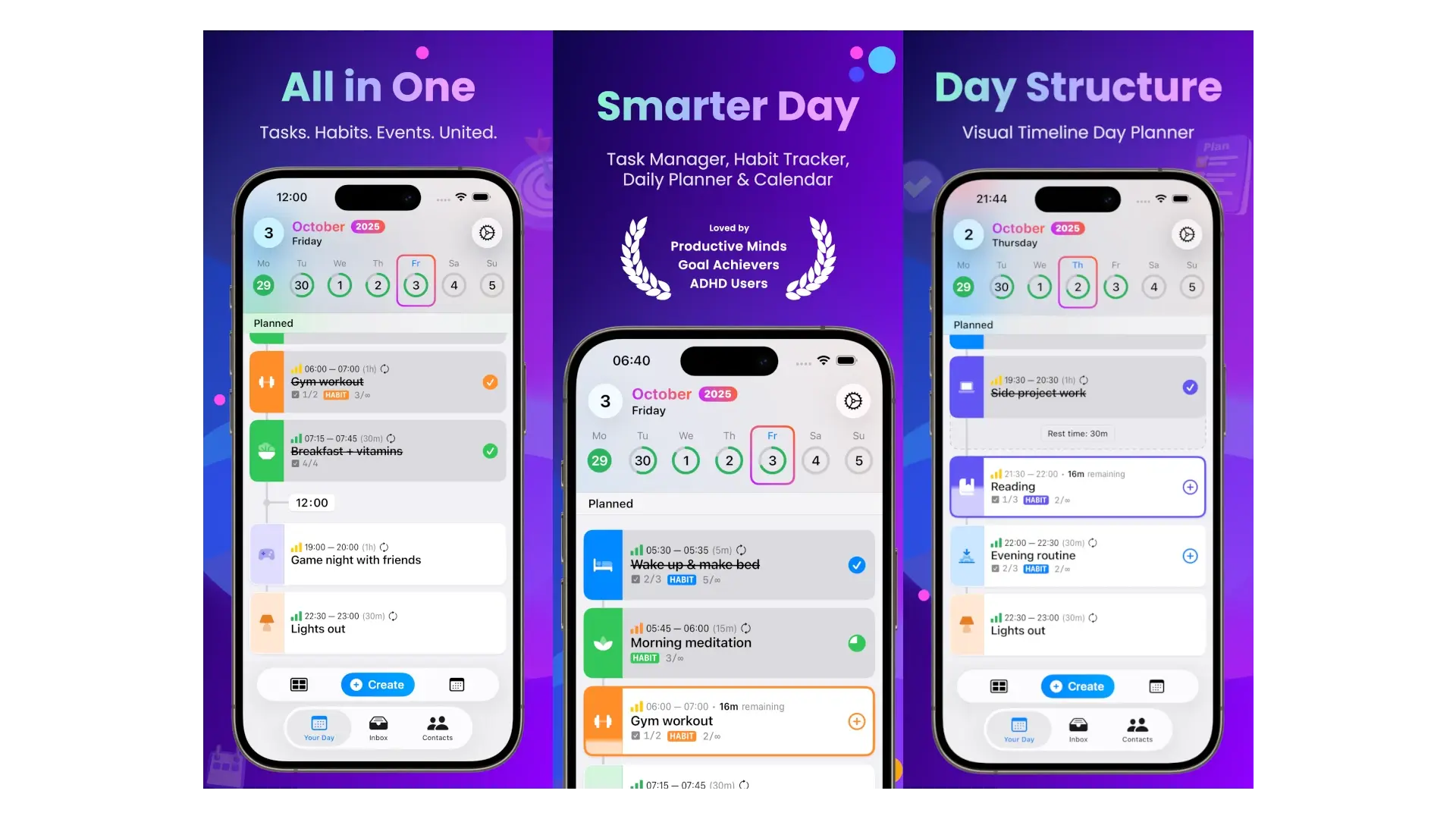
If you want help putting these habits into practice, think about consolidating your tasks, routines, and reviews in a single productivity application at Smarter.Day. By bringing plans, notes, and automations together, it makes it easier to form and measure progress.
You May Also Like
These Related Stories
12 Proven Productivity Tactics for Peak Performance
Master Time Management: 12 Proven Productivity Plays
No Comments Yet
Let us know what you think