

When your task list keeps growing, prioritizing stops feeling like planning and starts feeling like triage. You are not deciding between good and bad tasks. You are deciding between urgent requests, long-term goals, recurring habits, meetings, personal responsibilities, and the work that actually moves the needle. That is exactly where a drag-and-drop interface can change everything.
The best tools do more than let you rearrange a list. They reduce friction at the moment of decision. Instead of clicking through menus, editing priority fields, and second-guessing labels, you can move work into place and see your day take shape in seconds. For busy professionals, founders, developers, marketers, project managers, and ADHD users, that speed matters. It keeps planning from becoming its own form of procrastination.
What makes the best app for drag and drop task prioritization?
If you are searching for the best app for drag and drop task prioritization, the real question is not whether an app lets you move tasks around. Plenty of apps do that. The better question is whether drag-and-drop changes your behavior in a useful way.
A strong prioritization app should help you decide faster, spot conflicts earlier, and stay in control when plans change. That means visual structure matters as much as flexibility. A blank canvas can feel empowering for some users, but for others it creates more decision fatigue. The most effective daily task management systems methods 2025 2026 are moving toward guided structure, not endless customization.
That is where proven productivity and evidence-based productivity methods come into play. Time management research 2025 2026 continues to point to the same practical truth: people make better decisions when the next action is visible, priorities are limited, and context switching is reduced. In other words, the interface should not just look clean. It should support a real productivity system.
Drag and drop is only useful if the priorities mean something
Many apps treat prioritization like decoration. You drag a task higher on a list, but nothing else changes. Your calendar stays disconnected, your habits live somewhere else, and your urgent tasks compete with strategic work in one long column. That is movement, not prioritization.
A better system connects visual ranking to execution. If you move a task into a high-priority zone, it should become easier to act on it today. If you push something down, the app should preserve it without letting it hijack your attention. This is the difference between simple task sorting and daily task prioritization strategies that actually support smarter time.
That is also why frameworks matter. The Eisenhower Matrix remains one of the best time management methods proven to reduce reactive planning because it separates urgency from importance. When drag-and-drop works inside a framework like that, you are not just shuffling cards. You are making a clearer decision about what deserves attention now, what can wait, what can be delegated, and what should probably disappear.
The features that separate a decent tool from a great one
The best app for drag and drop task prioritization should make the first 10 minutes of your day feel lighter, not heavier. That starts with speed. You should be able to capture tasks quickly, reorder them instantly, and edit details without losing momentum.
It also needs a visual day view. Most people do not struggle because they have no task manager. They struggle because they cannot see how tasks, events, habits, and priorities fit together in the same day. A strong visual layout reduces mental clutter and supports time optimization in a practical sense, not just a theoretical one.
Integrated habit tracking is another underrated advantage. If your daily planning app ignores routines, your system breaks every morning. Habits like exercise, deep work, admin review, and meeting prep are not separate from productivity systems. They are part of them. When tasks and habits work together, you get a more realistic view of capacity.
Smart prioritization features also help. AI-based priority scoring, for example, can be useful when it stays supportive rather than controlling. For overloaded users, especially those managing multiple commitments, a smart suggestion layer can reduce friction and highlight what deserves attention first. Still, there is a trade-off. If the app over-automates decisions, users can lose trust in the system. The right balance is guidance plus manual control.
Why all-in-one usually beats stack fatigue
A lot of users build their own productivity setup over time. One app for tasks, one for notes, one for habits, one for calendar visibility, one for team coordination. It can work for a while, especially if you enjoy optimization. But eventually the system starts costing more attention than it saves.
This is one reason all-in-one platforms are becoming leading systems for identifying productivity blockers. They expose the hidden problem behind missed priorities: fragmentation. When your commitments are split across tools, drag-and-drop prioritization becomes shallow because you are only seeing part of the picture.
An all-in-one system creates a stronger time management prioritization framework for entrepreneurs with multiple commitments, and for professionals doing the same kind of balancing act inside a company. You can review incoming tasks, sort by urgency and importance, schedule what matters, and keep recurring behaviors visible without rebuilding your plan from scratch every time something changes.
That is the practical meaning of time optimization. Not squeezing every minute for maximum output. Building a system productivity loop that helps you choose faster, focus longer, and recover control when the day gets messy.
Where many popular apps fall short
Some apps are excellent at project management but weak at personal execution. They help teams organize work at a high level, yet the individual user still has to figure out what to do next. Others are great for personal task capture but too limited when your day includes meetings, dependencies, recurring habits, and shared responsibilities.
Then there are apps that look flexible but create hidden friction. Too many views. Too many clicks. Too many fields to maintain. If updating the system feels like admin, people stop using it. That is especially true for ADHD users and anyone trying to build productive systems under real pressure.
The strongest tools protect momentum. They make priority visible, editing fast, and daily planning concrete. They do not force you into rigid workflows, but they also do not leave you alone with a blank screen and a hundred choices.
A smarter standard for prioritization apps
The top 10 productivity apps 2025 conversation often focuses on features in isolation. AI. Calendar sync. Templates. Collaboration. Those matter, but the better test is simpler: does the app help you act on what matters with less hesitation?
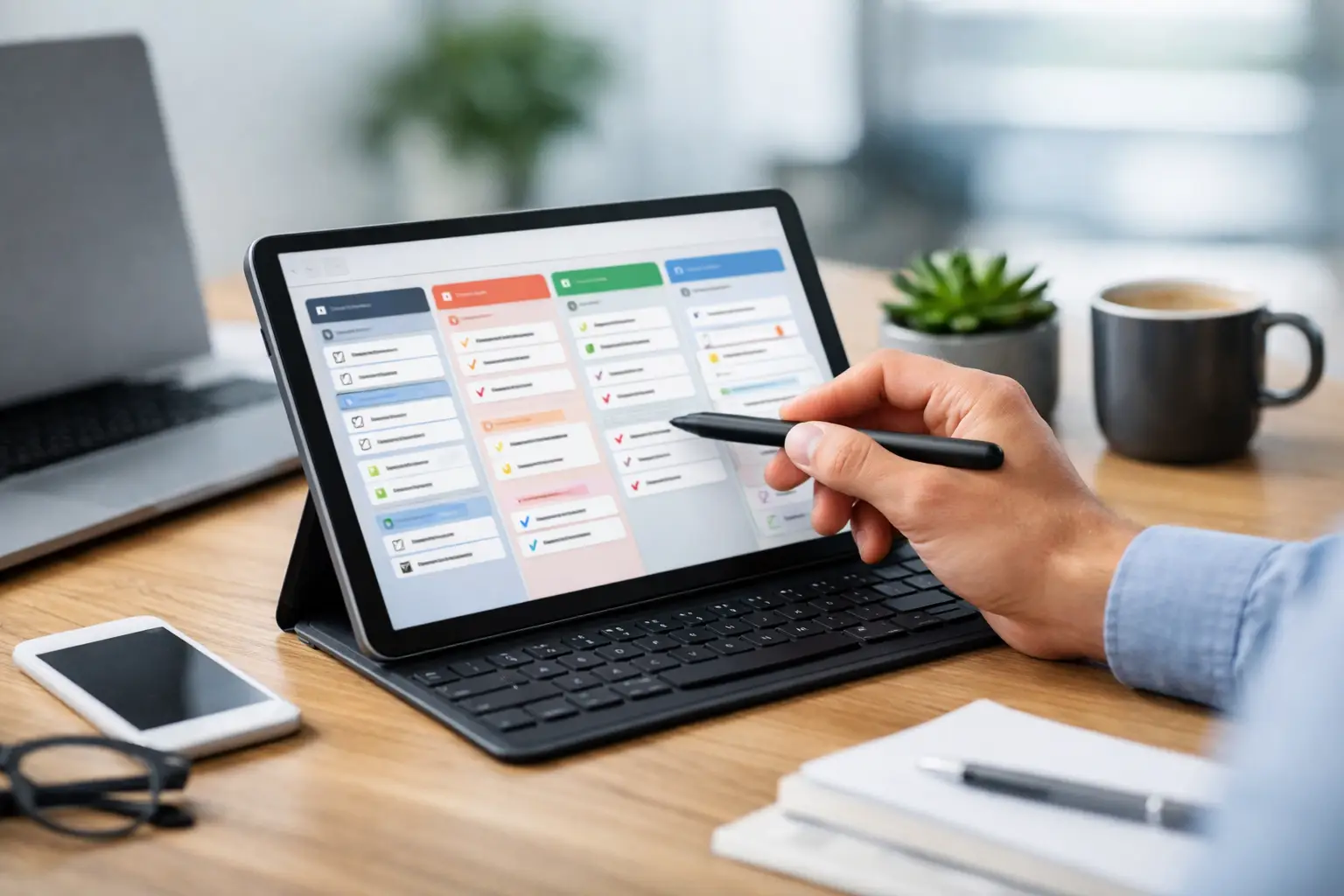
That is why a structured visual planner stands out. When you can capture tasks in an inbox, sort them with drag-and-drop, view them through an Eisenhower-style lens, break them into subtasks, and organize them alongside habits and events, prioritization becomes a living system instead of a static list.
Smarter.Day fits that model well because it brings those pieces into one place with a fast interaction design and a highly visual day view. For users who want clarity without tool sprawl, that combination is powerful. It supports evidence-based productivity techniques while staying practical enough for everyday use.
Still, the right choice depends on how you work. If you only need a simple list that you occasionally reorder, a lightweight app may be enough. If you are managing shifting priorities, recurring routines, and collaborative work, you will likely need more structure. That is where the best app for drag and drop task prioritization stops being a design preference and starts becoming an operational advantage.
How to choose without wasting another week switching apps
Start by paying attention to the moments when your current system breaks. Is it during morning planning, when everything feels equally important? Is it midday, when new tasks interrupt your original plan? Is it at night, when unfinished work rolls over without context?
Those moments tell you what kind of app you actually need. If the problem is unclear priorities, choose a tool with visible ranking and a real framework. If the problem is scattered commitments, choose an all-in-one setup. If the problem is friction, choose speed over complexity.
The best productivity methods 2025 are not about using more tools. They are about using a better system. One that helps you see the day clearly, move the right work to the top, and follow through without draining your attention in the process.
A good app organizes tasks. A great one helps you trust your plan when the day gets crowded.
You May Also Like
These Related Stories
What a Task Organizer Should Actually Do

How to Plan Your Day Without Overthinking

No Comments Yet
Let us know what you think