

The 2025 Guide to Time Mastery: Focus Flow Results

Time Mastery in 2025: Focus, Flow, and Results
We all know the feeling: a jam-packed calendar, endless pings, and a creeping sense that you’re busy but not moving the needle. Here’s the catch—productivity isn’t about doing more; it’s about doing the right work at the right time. In this guide, we’ll unpack proven strategies to manage your time, sharpen your focus, and streamline your workflow. You’ll learn how to prioritize with precision, protect deep work, and engineer routines that work with your brain, not against it.
Our intent is simple: give you actionable, research-backed tactics you can use today. We’ll blend practical methods with real-world examples, so you can see how these ideas translate into daily wins. Expect insights from credible experts, science on attention and performance, and playbooks that scale from solo contributors to team leaders. Let’s get your time, attention, and energy working together—so you can deliver results without burning out.
Architect Your Week with Time Blocking and Priority Framing
Weekly architecture beats reactive calendars. By applying time blocking and priority framing, you decide your work before it decides you. Stephen R. Covey popularized the “Big Rocks” concept—schedule your most important tasks first—while the Eisenhower Matrix helps separate urgent from important. When you combine them, you get a weekly blueprint that channels effort where it pays off. As Covey wrote in The 7 Habits of Highly Effective People, “The key is not to prioritize what’s on your schedule, but to schedule your priorities.”
Two methods make this work daily. First, use theme days (e.g., Monday: planning; Tuesday: creation; Thursday: meetings) to reduce context switching and improve workflow improvement. Second, block 90–120 minute focus windows for priority work before noon, when your cognitive performance is often strongest. Add buffer blocks for admin, and cap your day with a 15-minute review. This blend of planning and protection elevates both time optimization and output quality.
Example: A marketing manager shifted from scattered to strategic by assigning mornings to campaign creation and afternoons to collaboration. With time blocking, she started each day in a deep work block, reserved two 45-minute admin windows, and used Fridays for review. Result? Campaign cycle time fell by 30% in six weeks, and she reported less overwhelm. It wasn’t magic—just clarity, sequencing, and protecting the most valuable hours.
Protect Deep Work with Distraction Barriers
When it comes to high-impact work, distraction is the tax you pay on attention. Cal Newport’s Deep Work argues that intensive focus is a superpower in a noisy world. Meanwhile, researcher Gloria Mark (UC Irvine) has shown that knowledge workers switch screens every minutes, with average focus bursts lasting under a minute—each switch carrying hidden reorientation costs. The solution is to architect distraction-proof focus blocks that make concentration the default and interruption the exception.
Try two methods. First, implement a block schedule: 90-minute deep work, 10-minute stretch, 20-minute triage. Repeat twice for mornings. Second, install environmental barriers: status lights, do-not-disturb on chat, and website blockers like Freedom for trigger sites. Layer noise-canceling headphones and a single-tab rule. These small constraints protect attention capital and boost performance without willpower theatrics.
Example: A software developer created a “Focus AM” routine: headphones on, Slack snoozed, and a single ticket in view. He used a timer and kept a notepad to park stray thoughts. After a month, his completed story points rose 22%. Newport’s thesis proved true—when you treat attention as a scarce resource, output compounds.
Align Work with Your Energy: Circadian and Ultradian Rhythms
Not all hours are created equal. Your circadian rhythm governs alertness across the day, while ultradian rhythms produce 90–120 minute peaks and dips. Sleep researcher Nathaniel Kleitman’s work on ultradian cycles, and Daniel Pink’s book When, suggest planning analytic tasks during peak energy and creative or administrative work during recovery periods. Have you ever noticed how hard tasks feel lighter at the right time of day? That’s not luck; it’s biology.
Use two methods. First, chart a personal energy map for one week: rate energy each hour from 1–5 and identify your peak, trough, and rebound. Second, schedule priority tasks into peak blocks, batch admin for the trough, and add movement breaks every 90 minutes. Even 5-minute walks restore vigilance and fuel time optimization by minimizing productivity slumps.
Example: A content strategist found her analytics accuracy soared from 9–11 a.m., while ideation thrived mid-afternoon. She moved reporting to morning peaks and writing to her rebound hours. After a month, edit cycles decreased and drafts shipped faster. As Pink notes, “Timing isn’t everything, but it’s a big thing.” Align your clock with your calendar for sustainable performance.
Slash Context Switching with Task Batching
Switching tasks isn’t neutral—it burns time and attention. The American Psychological Association highlights that task switching can cost up to 40% of productive time, while Sophie Leroy’s landmark paper on attention residue shows that unfinished tasks leave mental traces that impair focus. The fix is task batching: grouping similar tasks to reduce reconfiguration and accelerate workflow improvement.
Two methods deliver quick wins. First, set two email windows (late morning and late afternoon) and turn off push notifications in between. Second, create batch blocks for calls, approvals, and low-complexity tasks. Pair with a capture list so you don’t break focus when a new to-do pops up. By reducing mode changes, you protect mental state and deliver deeper work more often.
Example: An operations lead moved all vendor calls to Tuesdays and Thursdays and handled invoices right after. He also adopted a strict twice-a-day email routine. The result? Fewer dropped balls and more uninterrupted hours to improve processes. As Leroy’s research implies, completing one mental context before starting another is how you regain focus and throughput.
Build Review Loops: Daily Shutdown and Weekly Retrospective
Execution without reflection leads to drift. David Allen’s Getting Things Done champions the Weekly Review, while Teresa Amabile’s research in The Progress Principle shows that recognizing small wins fuels motivation. A structured daily shutdown and weekly retrospective turn scattered effort into continuous workflow improvement, aligning plans with reality and keeping priorities fresh.
Use two methods. First, adopt a daily shutdown ritual: clear inboxes, check tomorrow’s big three, and log one win and one lesson. Second, run a 60-minute weekly review: update your project list, prune tasks, and refit your calendar to match your priorities. This cadence creates a feedback loop that strengthens prioritization and keeps procrastination in check.
Example: A project manager ended each day by closing loops and writing down tomorrow’s top tasks. On Fridays, she reviewed roadmaps and moved nonessentials off the plate. Within two sprints, predictability improved, and urgent firefighting dropped. As Allen notes, “Your mind is for having ideas, not holding them.” Offload, review, and execute with clarity.
Make Habits Tiny and Triggered
Motivation is fickle. Systems are reliable. BJ Fogg’s Tiny Habits and James Clear’s Atomic Habits converge on a practical truth: if you make habits small and tie them to clear triggers, consistency becomes easy. “You do not rise to the level of your goals,” Clear writes. “You fall to the level of your systems.” We can engineer those systems with cues, simplicity, and immediate rewards.
Two methods help you start and stick. First, write implementation intentions: “After I [current routine], I will [new habit] for [tiny duration].” Second, use environment design: lay out tools, remove friction, and create visible cues. Stack habits onto daily anchors like morning coffee or opening your laptop. Behavioral design lowers resistance and increases performance.
Example: A data analyst chained a 10-minute “first query” habit to opening his laptop. He kept a template ready and celebrated completion with a quick walk. That tiny start often stretched into 45 minutes of meaningful progress. Over a quarter, backlog dropped significantly. Fogg’s principle held: small wins, repeated, become big results.
Run Meetings with Rigor—or Not at All
Let’s face it: meetings expand to fill the time you allow. The Parkinson’s Law effect is real, and the Microsoft Work Trend Index shows meeting loads have surged since remote work scaled. The antidote is meeting hygiene: fewer, shorter, and sharper. When we insist on clarity, meetings become tools—not time sinks—for workflow improvement and decision-making.
Two methods tighten the screws. First, adopt a No Agenda, No Meeting rule: every invite needs purpose, decision, owner, and prep. Second, set defaults to 25/50 minutes and schedule no-meeting blocks for deep work. Use async updates for status, and reserve live time for debate or design. This shift returns hours to focus and trims coordination drag.
Example: A startup team cut weekly meetings by 35% by moving status to a shared doc and focusing live sessions on decisions. They added “office hours” for ad-hoc help. Within a month, sprint velocity rose, and burnout scores improved. As Peter Drucker advised, “Meetings are a symptom of organization failure or success.” Make them count—or cancel them.
Master Email and Notifications with Triage Rules
Email isn’t evil, but unchecked it devours attention. McKinsey Global Institute estimates knowledge workers spend roughly 28% of their week on email. Nir Eyal’s Indistractable underscores that internal triggers and app design can hijack attention unless we take control. The goal is to turn inboxes and notifications into pull systems, not constant push.
Two methods cut the noise. First, run a three-pass triage during your two inbox windows: scan and delete, delegate/forward, then respond to the rest—using a 2-minute rule for quick replies. Second, set VIP notifications and silence the rest; move newsletters to a separate folder via filters. You’ll preserve time optimization while staying responsive where it matters.
Example: A consultant implemented filters for clients, created templates for common responses, and scheduled inbox windows at 11 a.m. and 4 p.m. Within two weeks, she reclaimed 90 minutes per day and reported less mental fatigue. The trick wasn’t working harder; it was reducing unsolicited demands on attention and acting with intention.
Automate Repetition: Templates, Shortcuts, and Workflows
Repetition is a signal: automate it. The Zapier State of Business Automation report found that a majority of SMBs credit automation for time savings and resilience. Whether it’s canned responses, text expanders, or workflow automation, small systems can compound into big time wins. Automation is not about robots replacing you; it’s about freeing your cognitive performance for higher-value work.
Try two methods. First, create a template stack: briefs, agendas, proposals, and recaps with 80% pre-filled. Second, link tools using no-code automations: send form submissions to your project board, tag files, and notify stakeholders. Add keyboard shortcuts and snippets for common phrases. Each removes micro-frictions and accelerates workflow improvement.
Example: A freelancer built a library of proposal templates and used automation to generate invoices when a contract was signed. She also adopted a text expander for outreach and status updates. Result: proposal time dropped from 90 to 25 minutes, and monthly admin shrank by hours. Automation didn’t just save time; it preserved creative energy for client work.
Choose Constraints That Create Momentum
Counterintuitive but true: constraints create freedom. Locke and Latham’s goal-setting research shows that specific, challenging goals increase performance—especially with feedback. Pair that with Peter Gollwitzer’s work on implementation intentions, and you get a system where clear commitments trigger consistent action. When you narrow scope and set deadlines, you ship more.
Two methods help. First, institute a public commitment: share a weekly deliverable with your team or an accountability partner. Second, use time-boxed sprints: define a 2-hour window to produce a first draft, no editing allowed. “Done, then refined” beats “perfect, never.” Constraints focus attention, reduce perfectionism, and build momentum.
Example: A product designer started “Demo Fridays,” promising to show progress weekly. She used two 90-minute sprints to produce drafts, then gathered feedback. Shipping cadence improved, and so did quality. As the saying goes, “You can’t improve what you don’t release.” Constraint is the engine of creative throughput.
Make Decisions Faster with Simple Frameworks
Decision fatigue drains cognitive performance and slows projects. Daniel Kahneman’s Thinking, Fast and Slow explains how our brains default to quick heuristics, sometimes wisely and sometimes not. We can steer effort with simple frameworks that reduce uncertainty and speed time optimization without sacrificing quality.
Use two methods. First, apply the 80/20 rule (Pareto Principle): identify the 20% of inputs that yield 80% of outcomes and prioritize those first. Second, set reversible vs. irreversible decision rules (per Jeff Bezos’s “Type 1/Type 2” framing): decide fast on reversible choices, slow on one-way doors. Add a “decision deadline” to prevent analysis paralysis and keep workflow improvement moving.
Example: A sales leader used a one-page decision brief: problem, options, impact, reversibility, and a due date. Most choices were made in 24 hours, freeing time for coaching and pipeline reviews. The faster loop didn’t lower quality—it eliminated wheel-spinning and clarified ownership.
Design Your Environment for Effortless Focus
The path of least resistance is powerful. Environment design—arranging cues, tools, and friction—can nudge behavior more effectively than motivation alone. Behavioral economists and habit researchers like Richard Thaler have long shown how choice architecture shapes outcomes. Translate that into work by making your desired actions obvious and your distractions invisible.
Two methods stand out. First, create a single-task workspace: one monitor/app visible during deep work, no visual clutter, and a physical cue like a “focus card.” Second, deploy friction fences: log out of social apps, move your phone to another room, and keep distracting tabs behind a separate browser profile. Fewer temptations, more focus.
Example: A UX lead reorganized her desk so the sketchbook and tablet were always ready, while phone and chat lived in a drawer during design sprints. She finished wireframes faster and entered flow more often. As Csikszentmihalyi’s Flow suggests, when challenge meets focus in a conducive environment, time stretches and quality soars.
Conclusion
Time mastery isn’t about squeezing more tasks into your day; it’s about aligning priorities, focus, and energy to produce meaningful results. From time blocking and attention barriers to habit triggers, meeting hygiene, and automation, these strategies convert scattered effort into consistent performance. Start small, stack wins, and let your systems carry the load when motivation dips.
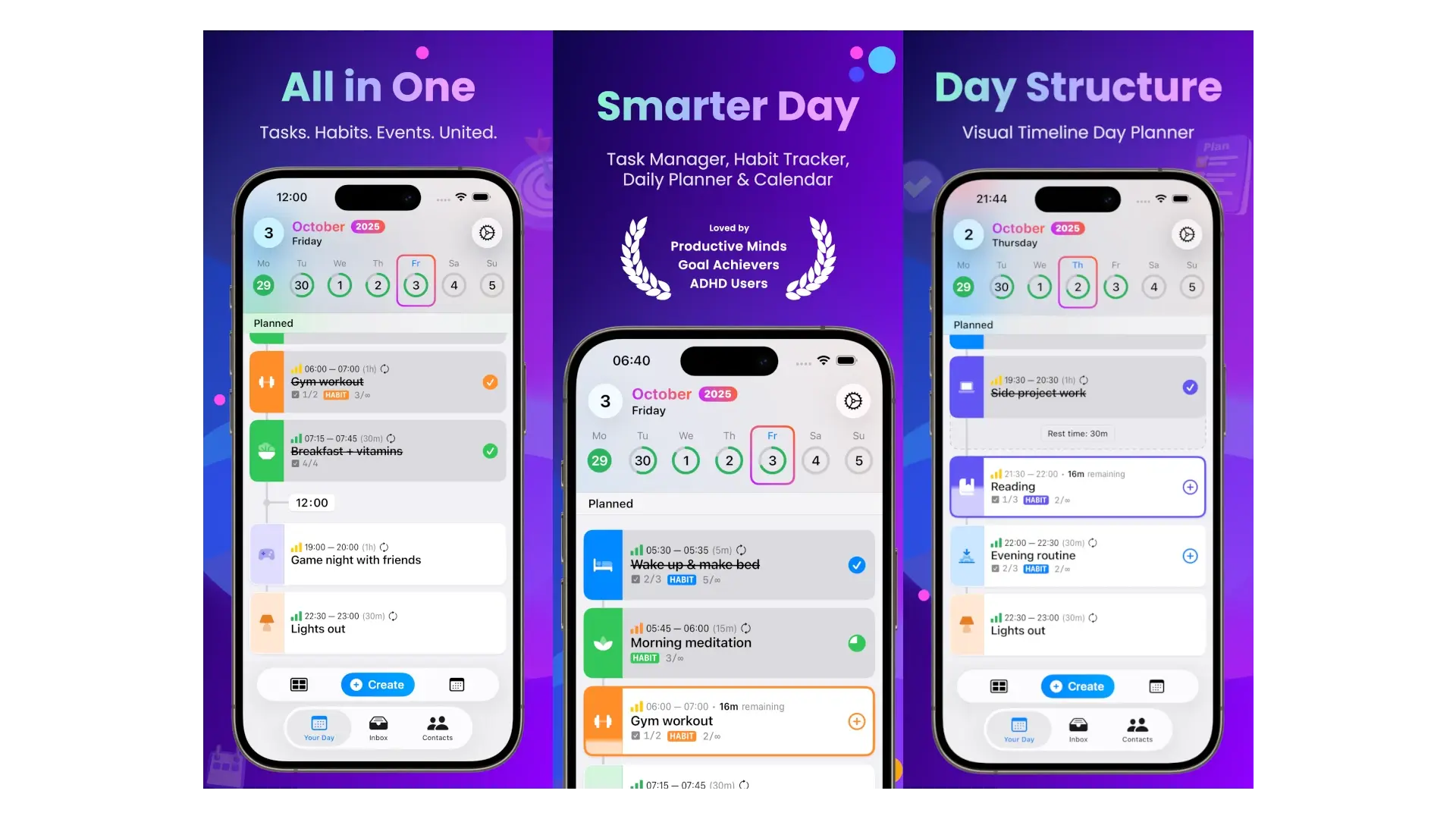
If you want a streamlined way to plan, focus, and track progress, try the productivity app at Smarter.Day. It centralizes your priorities, protects deep work, and helps you optimize your schedule around your best hours—without adding complexity.
You May Also Like
These Related Stories
The 2025 Guide to Time Mastery: Focus Flow Results
The 2025 Guide to Time Mastery: Focus Flow Results
No Comments Yet
Let us know what you think