

Time Management Systems That Actually Work in 2025

Time Management Systems That Actually Work in 2025
Have you ever noticed how your day disappears into email pings, status meetings, and “quick questions”? Here’s the catch: most of us aren’t short on ambition—we’re short on systems. When we rely on willpower instead of strategy, procrastination and overwhelm take the wheel. In this guide, we’ll pull together research-backed time optimization methods for real workflow improvement. You’ll get practical playbooks for focus, prioritization, and energy that you can implement today, not someday.
Our aim is simple: help you build a sustainable productivity stack. We’ll combine deep work, timeboxing, habit stacking, and automation into an adaptable framework. Each section includes at least two actionable methods and a real-life example. We’ll lean on experts like Cal Newport, BJ Fogg, David Allen, and Daniel Kahneman, plus studies on attention, decision fatigue, and meetings. Ready to upgrade performance without burning out? Let’s get to work.
Prioritize by Impact, Effort, and Energy
Most prioritization frameworks miss a variable that matters daily: your energy. Pair an Impact/Effort matrix with an Energy map to choose what to do when. First, score tasks by expected impact and effort. Then tag them as High, Medium, or Low energy. High-impact/high-energy items earn your morning prime time; low-energy admin goes to late afternoon. The classic Eisenhower Matrix remains a helpful lens for urgency versus importance, but layering energy makes it realistic. McKinsey’s research on peak performance shows energy management correlates strongly with output quality.
Two practical methods:
- Create a weekly “Impact-First Backlog” and sort by impact, then effort.
- Assign time-of-day windows to energy levels you track over two weeks.
For example, a marketing lead realized brainstorming ads was best at 9–11 a.m., while reporting fit 3–4 p.m.—a simple switch boosted campaign results without extra hours.
The tactic becomes stickier when made visible. Build a simple color-coded board (Green = High energy, Yellow = Medium, Red = Low) and slot tasks accordingly. Include a “Nope” list for tasks that are low impact but habitually grab your attention. As James Clear notes in Atomic Habits, environment design beats motivation; when your board highlights high-leverage work, you reduce decision friction. “What matters most should never be at the mercy of what matters least,” echoes the Eisenhower ethos—but we’re applying it to the reality of daily energy.
Timeboxing with Buffers Beats Endless To-Do Lists
Endless to-do lists feel productive but rarely create forward motion. Try timeboxing: assign tasks to specific calendar blocks with 15–20% buffers to absorb reality. Parkinson’s Law—“work expands to fill the time available”—suggests constraints guard us from drift. Start with 90-minute blocks for complex work and 25–50 minutes for admin. Use short buffer slots between blocks to prevent spillover and to reset before the next task. Compared to Pomodoro’s strict cycles (Francesco Cirillo), flexible timeboxing aligns better with varied task complexity.
Two practical methods:
- Use “Scheduling Sprint Fridays” to box next week’s priorities into the calendar.
- Add a daily 30-minute “Catch Spillover” block at day’s end.
An engineer I coached moved from an ever-growing task list to three focused timeboxes per day. Within two weeks, code quality improved, and “after-hours finish-ups” vanished. The key wasn’t doing more—it was protecting the plan with intentional slack.
Timeboxing also reframes interruptions. Instead of derailing a day, they shift to the buffer. Gloria Mark’s research (UCI) shows that returning to a task after interruption often takes over 20 minutes. When you budget buffers around critical blocks, you reduce cognitive switching costs. Keep the schedule dynamic—move boxes when priorities change, but always reschedule immediately, never “later.” The calendar becomes a commitment device rather than a wish list.
Deep Work Sprints and Attention Resets
Cal Newport’s Deep Work argues that distraction-free concentration is a rare and valuable skill. Build 1–2 daily deep work sprints of 60–90 minutes for tasks that demand reasoning and creativity. Silence notifications, use a full-screen app, and set a “no chat, no meetings” status. Pair sprints with attention resets every 90–120 minutes: stand, breathe, hydrate, and take a quick walk. Gloria Mark’s book Attention Span emphasizes that deliberate breaks preserve attention quality and prevent the “attention residue” that lingers after switching contexts.
Two practical methods:
- Use a physical “Focus Light” or desk sign to signal do-not-disturb.
- Keep a “Distraction Capture” notepad to park stray thoughts mid-sprint.
A financial analyst blocked 9:00–10:30 a.m. and 1:30–2:30 p.m. for deep work. By moving status updates to late afternoon and adopting a parked-thoughts page, she reduced rework and hit deadlines earlier. “If it’s important, schedule it; if it’s scheduled, protect it.” That’s the deep work contract.
One caveat: sprint length depends on task complexity and your current cognitive fitness. Build up. Start with one 45-minute block, then extend as focus strengthens. Anchor these blocks to consistent times to train a context cue; over time, your mind will slip into flow faster. Studies by Mihaly Csikszentmihalyi highlight that clear goals and immediate feedback help trigger flow—so define “done” before each sprint.
Batch Work to Crush Context Switching
Context switching is productivity kryptonite. Stanford research led by Clifford Nass showed heavy media multitaskers perform worse on attention tasks. Combat this with task batching and communication windows. Batch similar tasks—emails, invoices, code reviews, or content drafts—so your brain stays in the same cognitive mode. Then set predictable windows (e.g., 11 a.m. and 4 p.m.) for Slack/email. Outside those windows, pause inboxes. This reduces the mental tax of constant switching and preserves momentum.
Two practical methods:
- Create “Batch Blocks” labeled by mode: Comms, Admin, Creative, Analysis.
- Use inbox rules to funnel low-priority emails into a daily digest.
A startup founder grouped all vendor calls on Tuesdays and finance tasks on Thursdays. The result? Fewer mental resets, faster decisions, and fewer errors. When he slipped and let meetings scatter again, his week felt immediately noisier. Batching isn’t about rigidity; it’s about reducing cognitive friction so you glide through work rather than grinding gears.
To reinforce batching, employ meeting corridors—fixed windows when meetings are allowed. Pair that with an agenda-first rule to block vague meetings. Harvard Business Review regularly highlights that lack of clear agendas is a top meeting inefficiency. With corridors and agendas, you increase throughput and regain swaths of meaningful focus time.
The Two-Speed Day: Maker and Manager Modes
Paul Graham’s essay on Maker vs. Manager schedules explains why long stretches are vital for creative work. Design your day with two speeds: a Maker AM and a Manager PM (or vice versa based on chronotype). Use mornings for writing, strategy, and design, and afternoons for one-on-ones, emails, and quick decisions. Daniel Pink’s research in When suggests many people hit analytical peaks in the morning and insight peaks later—use that rhythm rather than fight it.
Two practical methods:
- Reserve 8:30–11:00 a.m. as “Maker Mornings” on your shared calendar.
- Shift recurring meetings to afternoon corridors.
A product manager I worked with moved her roadmap planning to early mornings and scheduled stakeholder syncs after lunch. Within a month, she cut revision cycles because her strategy work stopped getting chopped into fragments. “Protect the morning, harvest the afternoon” became her mantra. If you’re an evening chronotype, flip it—evidence-based productivity means customizing for your biological prime time.
A key refinement: during Maker time, reduce decisions by having a pre-start checklist—open only required tabs, pull reference docs, and define “what good looks like.” That small ritual reduces startup friction. Over time, the two-speed structure becomes a default environment that supports high-quality output without constant willpower.
Habit Stacking with Tiny Starts
Consistency beats intensity. BJ Fogg’s Tiny Habits and Peter Gollwitzer’s implementation intentions show that small, anchored actions scale into sustained behavior. Use habit stacking: “After I pour coffee, I plan my top three tasks.” Start with a tiny version—write one crisp sentence for a report, open the design file and add one layer, or draft one email outline. That “gateway habit” lowers resistance and often snowballs. James Clear echoes this: identity-based habits start small and compound.
Two practical methods:
- Create “After I [existing habit], I will [tiny action]” formulas.
- Use temptation bundling: pair an enjoyable cue (favorite playlist) with a tough task.
A content writer who dreaded outlines stacked a tiny start: after sitting down, she wrote one headline. Momentum kicked in; within 15 minutes, she usually had the skeleton ready. The trick isn’t motivation—it’s designing low-friction starts that your brain doesn’t resist.
Embed feedback loops. Track streaks and celebrate small wins weekly. Behavioral science shows that immediate, visible progress strengthens habits. Keep rewrites tiny when you lapse: return to just one sentence or five minutes. Over time, your daily routines become autopilot, making productivity a system, not a struggle.
Review Rituals: Daily Shutdown and Weekly Preview
David Allen’s Getting Things Done popularized the weekly review—a ritual to clear, clarify, and prioritize. Combine it with Cal Newport’s Daily Shutdown to end each day with intention. In your weekly preview, capture new inputs, update projects, and set priorities for the next seven days. In the shutdown, define tomorrow’s top three tasks, park open loops on a list, and say a verbal “shutdown complete.” These rituals prevent the Zeigarnik effect—unfinished tasks looping in your mind—from hijacking your evening.
Two practical methods:
- Use a Friday 60-minute Weekly Preview with these steps: Capture → Clarify → Calendar → Commit.
- Do a 10-minute Shutdown Checklist: log wins, set tomorrow’s big three, close inboxes.
A sales director used to spend Sunday nights worrying. After adopting both rituals, her evenings felt calmer because decisions shifted to scheduled reviews. She quotes David Allen: “Your mind is for having ideas, not holding them.” By externalizing commitments, you regain focus and sleep better—boosting next-day performance.
To power up the preview, create a “Stop Doing” list: commitments to drop or delegate. As you reduce clutter, you improve time optimization. That makes Monday mornings lighter and boosts confidence when the week gets messy.
Cognitive Fuel: Sleep, Movement, and Light
Let’s face it: no system works if your brain is running on fumes. Matthew Walker’s Why We Sleep highlights that under-slept brains degrade memory, decision-making, and emotional regulation. Aim for a consistent sleep window and treat it as a performance protocol. Pair it with movement snacks—2–5 minute walking or mobility breaks every 60–90 minutes. A Stanford study by Oppezzo and Schwartz found walking boosts creative output by up to 60%. Finally, get morning light exposure to set your circadian rhythm and stabilize energy.
Two practical methods:
- Delay caffeine 60–90 minutes after waking to avoid the cortisol crash.
- Use a “Movement Trigger”: start a timer after each deep work block and walk for 3 minutes.
A designer introduced 10 a.m. walks to review mockups on paper. The fresh air plus movement improved her visual decisions and reduced screen fatigue. As energy steadied, she needed fewer late-night pushes. Small physiological upgrades translate directly into better cognitive performance, higher quality work, and a calmer pace.
Make it practical: keep sneakers by your desk, schedule light breaks on your calendar, and move the phone charger away from the bed. These simple changes reinforce that your brain is your primary tool—your rituals should sharpen it daily.
Automation and Delegation: Build Repeatable Systems
You don’t rise to the level of your goals; you fall to the level of your systems. Create SOPs (standard operating procedures) for recurring tasks and automate routine work with no-code tools. Tim Ferriss’s The 4-Hour Workweek popularized this approach, but it’s even more accessible now. Use tools like Zapier or Make to move data, auto-tag files, or trigger notifications. Then delegate using clear checklists and definitions of done. Harvard Business Review notes that effective delegation increases capacity and engagement across teams.
Two practical methods:
- Record your next run-through of a task with Loom and turn it into an SOP.
- Build a “Delegation Packet”: context, checklists, examples, and acceptance criteria.
A recruiter automated candidate intake: forms flowed to a spreadsheet, auto-notified hiring managers, and tagged resumes. She then delegated initial screening using a rubric. Result: hours saved weekly and faster time-to-hire. Automation isn’t about removing judgment; it frees your judgment for where it matters. The goal is workflow improvement—let systems handle the repetitive, and let you handle the nuanced.
Revisit automations monthly. Kill the ones that no longer serve. Systems are living: if your process evolves, your automations should too. That’s how you keep the stack lean and effective.
Decision Hygiene: Defaults Reduce Friction
Decision fatigue is real. Daniel Kahneman’s work on System 1 and System 2 thinking shows we need to protect slow, deliberate thinking for high-stakes choices. Build defaults for routine decisions: standard breakfast, workout schedule, clothing rotation, and task triage rules. Barry Schwartz’s Paradox of Choice argues that fewer choices can increase satisfaction. Use constraint rules like “Only check social media after 4 p.m.” or “No meetings without an agenda and goal.” Constraints create freedom by conserving cognitive bandwidth.
Two practical methods:
- Pre-decide daily “starter tasks” for each context (home, office, travel).
- Create mini-menus: three go-to lunches, three workout options, three evening routines.
A senior engineer set a default “Morning Startup”: review metrics, scan incident tickets, and pick one deep task. By removing morning dithering, he entered flow faster. He also adopted a decision journal for big calls—writing his reasoning clarified trade-offs and improved learning loops. Over time, defaults turn into an invisible support system that keeps focus where it matters.
Review defaults quarterly and swap those that feel stale. The objective isn’t rigidity; it’s reducing noise so your best decisions get the attention they deserve.
Meeting Hygiene and Asynchronous First
Meetings can be value engines—or time sinks. Adopt an asynchronous-first policy for status updates and information sharing. Use short Loom videos, written memos, or dashboards before calling a live meeting. When meetings are necessary, require an agenda, pre-reading, and clear outcomes. Amazon’s memo culture is a famous example: written narratives sharpen thinking before discussion. Atlassian’s research on meeting overload shows that poorly structured meetings drain focus and morale; structure alleviates both.
Two practical methods:
- Create “Meeting Decision Trees”: If informational, go async; if collaborative and high-stakes, meet live.
- Start with the “Decision Question” as the first agenda item.
A customer success lead replaced a weekly 60-minute status meeting with a 15-minute async update and a monthly decision-focused session. Attendees arrived informed; discussions were shorter and sharper. She tracked the saved hours and reinvested them into proactive customer outreach—a direct efficiency dividend.
Add a “Meeting Cost” note to invites (attendees x duration). This tiny nudge raises awareness and curbs zombie meetings. Then leave 10 minutes for action assignment and owners. Without clear owners, you’ve only had a conversation, not a decision.
Metrics that Matter: Personal OKRs and Lead Measures
What gets measured improves—if you choose the right metrics. Use OKRs (Objectives and Key Results) to define outcomes, not activity. John Doerr’s Measure What Matters outlines how clear KRs drive focus. Pair OKRs with lead measures from The 4 Disciplines of Execution—actions that predict results (e.g., outreach volume leading to sales). Keep the set small: one to three objectives per quarter with two to three KRs each. Review weekly and adjust tactics while preserving outcomes.
Two practical methods:
- Write OKRs in plain language: “Increase qualified leads by 25%.”
- Identify two lead measures: “Publish two SEO articles/week” and “Run three partner webinars.”
A solo consultant set an objective to stabilize monthly revenue. Her KRs: 10 discovery calls/month and a 20% proposal-to-close rate. Lead measures: daily outreach and weekly content. Within a quarter, she hit targets consistently. By making performance visible and adjustable, she replaced hope with a working system.
To avoid metric myopia, include a quality guardrail (e.g., customer NPS or error rate). That ensures speed doesn’t erode standards. Combine weekly previews with OKR check-ins, and you’ll close the loop between planning and execution.
Build an Anti-Overwhelm Workflow
Overwhelm is often a sign of too many open loops and unclear next steps. Implement a single capture system for ideas and tasks, whether digital or analog. Then ruthlessly define Next Actions—David Allen’s term for the smallest visible step. Use a Today, Next, Later board to triage incoming tasks and protect today’s plan. When anxiety spikes, do a 10-minute brain dump and sort using your board. You’ll reduce mental clutter and regain control quickly.
Two practical methods:
- Keep a “30-Minute Wins” list for momentum on low-energy days.
- Use a “Two-Minute Rule”: if it takes less than two minutes, do it now.
A team lead overwhelmed by cross-functional asks started logging everything into one inbox. Twice daily, he clarified next actions and slotted them. Within a week, he felt steadier and more responsive. The cheat code is clarity: turning ambiguity into doable steps restores confidence and keeps your workflow flowing.
If you’re frequently overloaded, revisit intake rules. Say “no” with options: decline, defer, or delegate. Boundaries are productivity’s best friend.
Conclusion
Sustainable productivity isn’t a single hack; it’s a stack: prioritize by impact and energy, protect deep work with timeboxing and buffers, batch tasks, and formalize review rituals. Strengthen the engine—sleep, movement, light—then leverage automation, decision defaults, and meeting hygiene. Finally, track what matters with OKRs and lead measures. Start small, build consistently, and let systems do the heavy lifting.
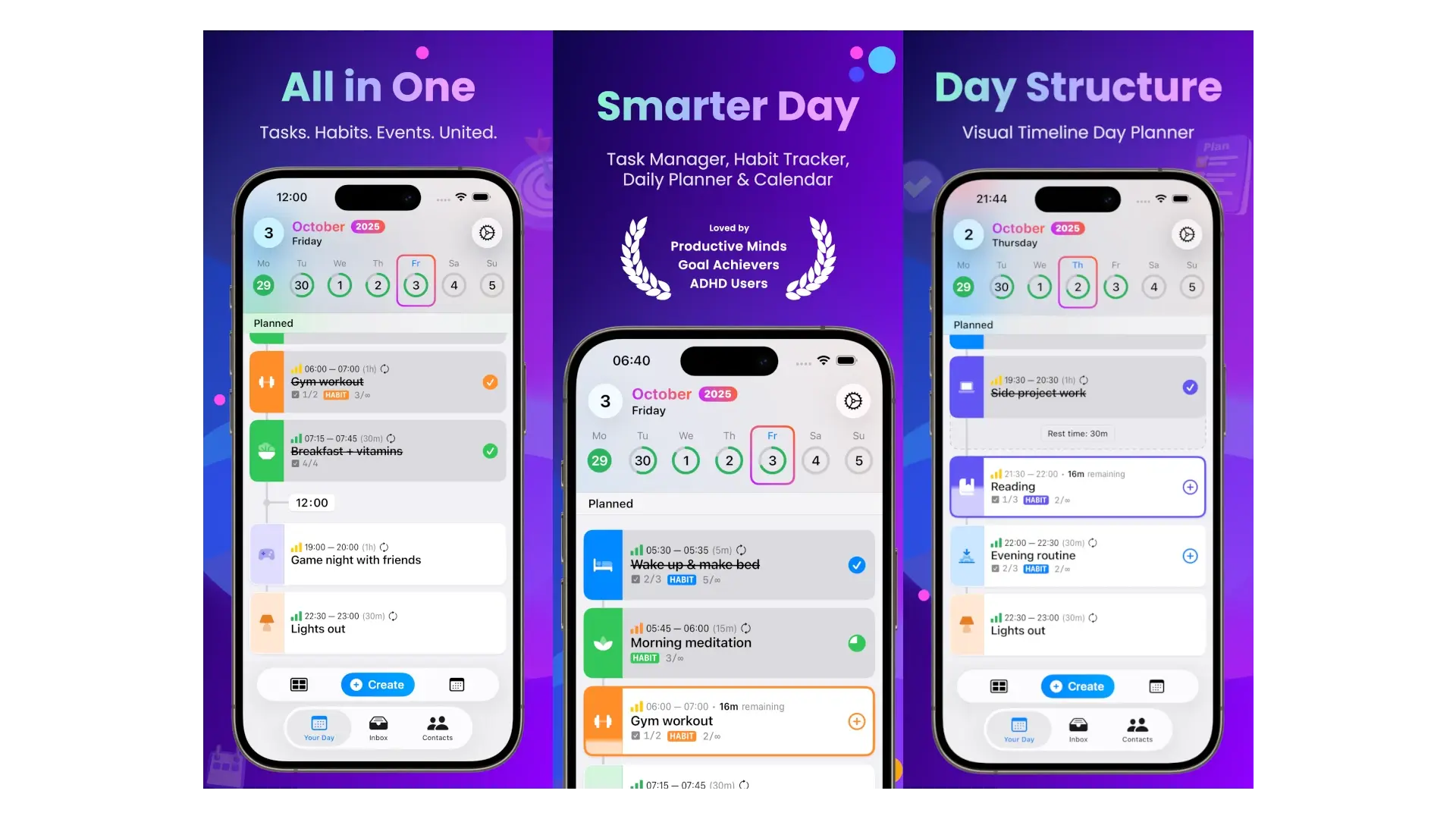
To make this even easier, consider a tool that centralizes your capture, planning, and review rituals. The productivity app at Smarter.Day brings tasks, timeboxing, and metrics together so your workflow improvement is built-in, not bolted on.
You May Also Like
These Related Stories
Time Management Systems That Actually Work in 2025
Time Management Systems That Actually Work in 2025
No Comments Yet
Let us know what you think