
10 Proven Methods to Optimize Time Focus and Energy

10 Proven Methods to Optimize Your Time, Focus, and Energy
We’re all racing the clock. Your to-do list grows faster than your ability to work through it, and distraction feels like the default. The good news? You don’t need more hours—you need better time optimization and workflow improvement. In this guide, we’ll break down practical, research-backed methods to help you prioritize what matters, protect your attention, and work with your energy, not against it. Expect actionable steps, relatable examples, and sources you can trust.
Our goal is simple: turn productivity into a repeatable system you can adjust, scale, and sustain. We’ll blend strategies from behavioral science, cognitive performance research, and operations best practices to help you improve focus, streamline routines, and reduce stress. You’ll learn techniques for prioritization, deep work, automation, and review, with real-life applications to help you take action today. Let’s replace busyness with meaningful progress.
Define What Matters: The Top 3 and OPA Combo
Start your day by defining your Top 3 outcomes—the results that, if achieved, would make the day a win. Pair this with OPA (Outcome–Purpose–Actions): clarify the outcome you want, the purpose behind it, and the actions needed. This links motivation to execution. Stephen R. Covey’s principle “begin with the end in mind” reinforces why outcome clarity beats task accumulation. By declaring your three most valuable outcomes, you focus effort where it moves the needle instead of reacting to low-impact work.
To implement this, write your Top 3 and OPA on an index card or in your task app before checking email. This mirrors the classic Ivy Lee Method, which drove performance for executives at Bethlehem Steel in the early 1900s—choose the most important tasks, rank them, and work down the list. Keep your Top 3 public on your desk to nudge attention. When new tasks surface, compare them to your outcomes and defer or delegate if they don’t advance your goals.
Consider a product manager facing a feature deadline, stakeholder feedback, and bug backlogs. Their Top 3 might be: finalize requirements (Outcome: approved spec; Purpose: unblock dev), host a 30-minute decision meeting (Outcome: clear scope; Purpose: prevent drift), and prioritize bugs affecting conversions (Outcome: top 10 fixed; Purpose: revenue protection). As Covey noted, “The key is not to prioritize what’s on your schedule, but to schedule your priorities.” The result is less thrash and more consistent progress.
Own Your Calendar with Time Blocking and Day Themes
Use time blocking to assign specific time windows to focused work, admin, and recovery. This minimizes context switching and combats Parkinson’s Law, which states that work expands to fill the time available. Create day themes—for example, Monday strategy, Tuesday delivery, Wednesday meetings—to cluster similar tasks. Cal Newport’s research on Deep Work shows that uninterrupted blocks significantly improve cognitive performance and output quality.
To start, audit your last two weeks for recurring patterns. Reserve two 90-minute deep work blocks daily for high-value tasks. Carve out one block for communication and one for operational chores. Then apply themes: batch external calls on one day, creative work on another. Protect these blocks by setting calendar guards and sharing availability rules with your team. When conflicts arise, reschedule the block instead of deleting it to preserve consistency.
A marketer preparing a campaign might block 9:00–10:30 for copywriting, 11:00–11:30 for stakeholder updates, and 2:00–3:30 for analytics. They theme Thursdays for long-form strategy. Over a month, this approach reduces reactive scheduling and increases output. Newport argues that intensity of focus beats hours spent; time blocking builds that intensity into your calendar so you control your day rather than your day controlling you.
Work with Your Energy: Ultradian Cycles and Sleep Wins
We’re not machines. Align work with your ultradian rhythms—roughly 90-minute cycles of heightened focus followed by 15–20 minutes of recovery, documented by sleep researcher Nathaniel Kleitman. Plan 90/20 sprints for intensive tasks and use breaks for movement, hydration, and sunlight. Pair this with consistent sleep and light exposure; Matthew Walker’s “Why We Sleep” explains how sleep quality directly impacts memory, decision-making, and learning.
Two practical methods: schedule your toughest work during your personal peak (morning for many, afternoon for others) and take real breaks—no doom scrolling. Use a timer to punctuate cycles. Also, standardize your sleep: same wake time daily, morning light within an hour, and avoid late caffeine. These small shifts compound into sustainable energy and improved cognitive performance over weeks.
Imagine a designer tackling a complex Figma prototype. They plan two 90-minute focus sprints before lunch and a lighter coordination block later. Between sprints, they take a 15-minute walk and stretch, then grab water. Over time, their clarity improves during challenging tasks, and revisions drop. The secret isn’t longer hours; it’s syncing work with biology to get more from the hours you already have.
Start Small: Two-Minute Rule and Micro-Commitments
Procrastination thrives on friction. The Two-Minute Rule—popularized by David Allen in Getting Things Done—says if a task takes under two minutes, do it now. Combine this with micro-commitments: break daunting tasks into tiny, non-threatening steps. James Clear’s “Atomic Habits” and BJ Fogg’s behavior model show that smaller actions reduce resistance and build momentum. Add implementation intentions (Peter Gollwitzer): “If it’s 9 a.m., then I write the first paragraph.”
Two methods to put to work: define the smallest next action and time-box it. For writing, that could be “open the doc and outline three bullet points.” For outreach, “draft a three-sentence email template.” When the timer ends, you can stop guilt-free or continue if momentum kicks in. This approach converts avoidance into progress through manageable starts.
A freelance writer dreads a 1,500-word article. They set a 10-minute timer to write the hook and subheads, then take a short break. Next, they draft the intro and first section outline. Within an hour, the structure is in place. The task feels lighter, the fear fades, and consistent output becomes normal. As Clear notes, identity shifts follow repeated action: you become the type of person who starts.
Defend Attention: Notification Audits and Focus Modes
According to informatics researcher Gloria Mark in “Attention Span,” it can take over 20 minutes to fully refocus after an interruption. The fix isn’t willpower alone; it’s environment design. Start with a notification audit: turn off nonessential alerts on phone and desktop. Create focus modes during deep work blocks—silence apps, set do-not-disturb, and use site blockers for high-distraction sites. Adam Gazzaley’s “The Distracted Mind” underscores how technological interference degrades performance.
Two practical moves: batch-check communication at set times and keep your phone out of reach during focus blocks. Set up a “focus profile” that disables badges and banners except for critical contacts. Use white noise or brown noise to mask ambient distractions. If needed, physically relocate for deep work—library, conference room, or a dedicated home desk—to signal a different mode.
A data analyst was losing hours to chat pings and email. After a notification audit, they allowed alerts only for urgent stakeholder channels and checked email at 10:30 and 3:30. They ran 60-minute focus modes with site blockers for social media and news. Their output improved and stress dropped. The takeaway: build systems that protect your attention before it leaks, not after.
Automate Repetition: Templates, Shortcuts, and AI
A McKinsey analysis found that about a third of tasks in many roles are automatable, unlocking significant time optimization. Start with templates for recurring emails, reports, and briefs. Add text expansion for common phrases and keyboard shortcuts to speed navigation. Then connect tools with automation platforms like Zapier or native integrations. Zapier’s surveys show knowledge workers save hours weekly by eliminating repetitive handoffs.
Two methods: map your top five repetitive workflows and automate one per week, and create an “automation pantry” of templates (emails, meeting notes, briefs, checklists). Layer in AI drafting to create first drafts of summaries, agendas, and outlines you edit for quality. This keeps quality control with you while offloading grunt work to systems.
A recruiter built templates for outreach, interview scheduling, and candidate feedback. They automated resume intake to a spreadsheet and triggered calendar invites when candidates advanced. With AI, they generated first-pass summaries after interviews for quick stakeholder reviews. The result: less copying and pasting, faster throughput, and more time for high-value conversations. Automation is workflow improvement that pays dividends daily.
Fix Meetings: Asynchronous Updates and Agenda Discipline
Meetings balloon without guardrails. Shift status updates to asynchronous channels—written updates, dashboards, or recorded demos. Amazon’s memo-first culture shows the power of well-structured writing to replace many meetings. Atlassian’s teamwork research consistently finds that fewer, clearer meetings improve performance. Make remaining meetings smaller, shorter, and objective-driven with tight agendas and decision owners.
Two methods: require a written brief for any meeting longer than 30 minutes and default to 25- or 50-minute time boxes to force clarity. Implement a “no agenda, no meeting” rule and track decisions using a shared document with RACI ownership. Record decisions and action items in the same place, then share async to avoid repeat gatherings.
A startup team reduced weekly meetings by half by moving updates to a single-source-of-truth doc and a Friday demo video. Strategy sessions required a two-page memo circulated 24 hours ahead. Attendance dropped to essential stakeholders and decisions sped up. The shift from talk-first to write-first created a calmer calendar and faster outcomes.
Boost Cognitive Performance: Pomodoros, Breaks, and Breath
Use structured sprints such as Pomodoro (25/5) or the evidence-informed 52/17 rhythm highlighted by DeskTime’s productivity study. For tasks requiring flow, many prefer 50/10 or 75/15 intervals—experiment to find your sweet spot. Add physiological sighs or box breathing to reset stress; short breathing exercises can reduce arousal and sharpen attention. Time caffeine 60–90 minutes after waking to prevent an energy crash later, as suggested by neuroscience educators like Andrew Huberman.
Two practical methods: pick a sprint ratio and run three cycles before lunch; then schedule a walk or light stretch. Use a breathing protocol at the start and end of each cycle. For fatigue-prone afternoons, a 10–20 minute nap (NASA research supports short naps for alertness) can significantly lift performance—avoid longer naps to prevent grogginess.
An engineer debugging complex code used 50/10 cycles, starting each with a 30-second breathing reset. They delayed caffeine until 9:30 a.m., which stabilized alertness. Afternoon micro-naps and a short walk brought back clarity. Over two weeks, error rates fell and throughput improved. The blend of rhythm, breath, and smart stimulant timing preserves attention for when it matters.
Reflect to Improve: Weekly Reviews and AARs
Improvement demands reflection. Adopt a Weekly Review to close loops, plan next actions, and recalibrate priorities. David Allen’s GTD framework popularized this ritual: capture, clarify, organize, reflect, and engage. Add After-Action Reviews (AARs)—borrowed from the U.S. Army—to dissect projects: What was supposed to happen? What actually happened? Why? What will we sustain or change? Teresa Amabile’s research on the progress principle shows that visible small wins boost motivation.
Two methods: every Friday, review your calendar, tasks, and outcomes; clean your inbox, update your plan, and confirm your next Top 3. After significant work, run a 15-minute AAR with your team or solo. Keep insights in a running log to build a personal playbook of what works for you.
A freelancer who struggled with scope creep began Friday reviews and brief AARs after large client deliveries. They noticed recurring delays at handoff points and created a preflight checklist. Next project: smoother approvals, fewer revisions, and a calmer week. Reflection is the throttle—you can’t optimize what you don’t examine.
Design Your Space: Lighting, Ergonomics, and Sound
Your environment shapes your output. Optimize ergonomics—neutral wrist positions, feet flat on the floor, and elbows at about 90 degrees—to reduce fatigue. Research from Cornell University’s ergonomics lab highlights how proper setup and good chairs lower discomfort and increase sustained performance. Adjust lighting: bright, cooler light can enhance alertness for analytical work, while warmer tones suit evening tasks. Harvard Business Review has reported on how lighting quality affects mood and productivity.
Two methods: position your screen at eye level about an arm’s length away and invest in an external keyboard and mouse to improve posture. For sound, use noise-canceling headphones or consistent ambient audio to reduce cognitive strain. Create a visual boundary for work if you’re remote—plants, a partition, or a dedicated desk—to cue your brain into focus mode.
A remote worker swapped a kitchen chair for an adjustable task chair, raised their monitor, and added a desk lamp with adjustable color temperature. They also used a brown-noise track during writing blocks. The changes were small but cumulative: less shoulder tension, more consistent focus, and less end-of-day exhaustion. Environment design is a one-time decision that pays you back daily.
Build Execution Speed with Decision Defaults and Checklists
Decision fatigue drains focus. Reduce it with decision defaults—pre-made rules that handle common scenarios automatically—and checklists for complex but routine workflows. Daniel Kahneman’s work on cognitive load explains how too many choices degrade performance. Richard Thaler and Cass Sunstein’s “Nudge” shows how smart defaults produce better outcomes without extra effort. Checklists, per Atul Gawande’s research in The Checklist Manifesto, prevent errors in high-stakes environments.
Two methods: create “if-then” rules for frequent choices (e.g., “If a request is <15 minutes, do it now; otherwise schedule”). Build checklists for onboarding, publishing, or closing projects. Store them where you work so they’re impossible to miss. Review and refine quarterly to keep them lean and relevant.
A customer success lead used a success-plan checklist and a default escalation path. When issues arose, they followed the steps instead of starting from scratch. Time-to-resolution dropped, customers felt heard, and fewer details slipped through cracks. With defaults and checklists, you save attention for uniquely human judgment, not repetitive decision-making.
Conclusion
Productivity isn’t about squeezing more tasks into a day; it’s about allocating attention to the right work at the right time with the least friction. By aligning priorities, blocking time, protecting focus, and optimizing energy, you create a system that compounds. Layer in automation, clearer meetings, and regular reviews, and you’ll transform performance without burning out.
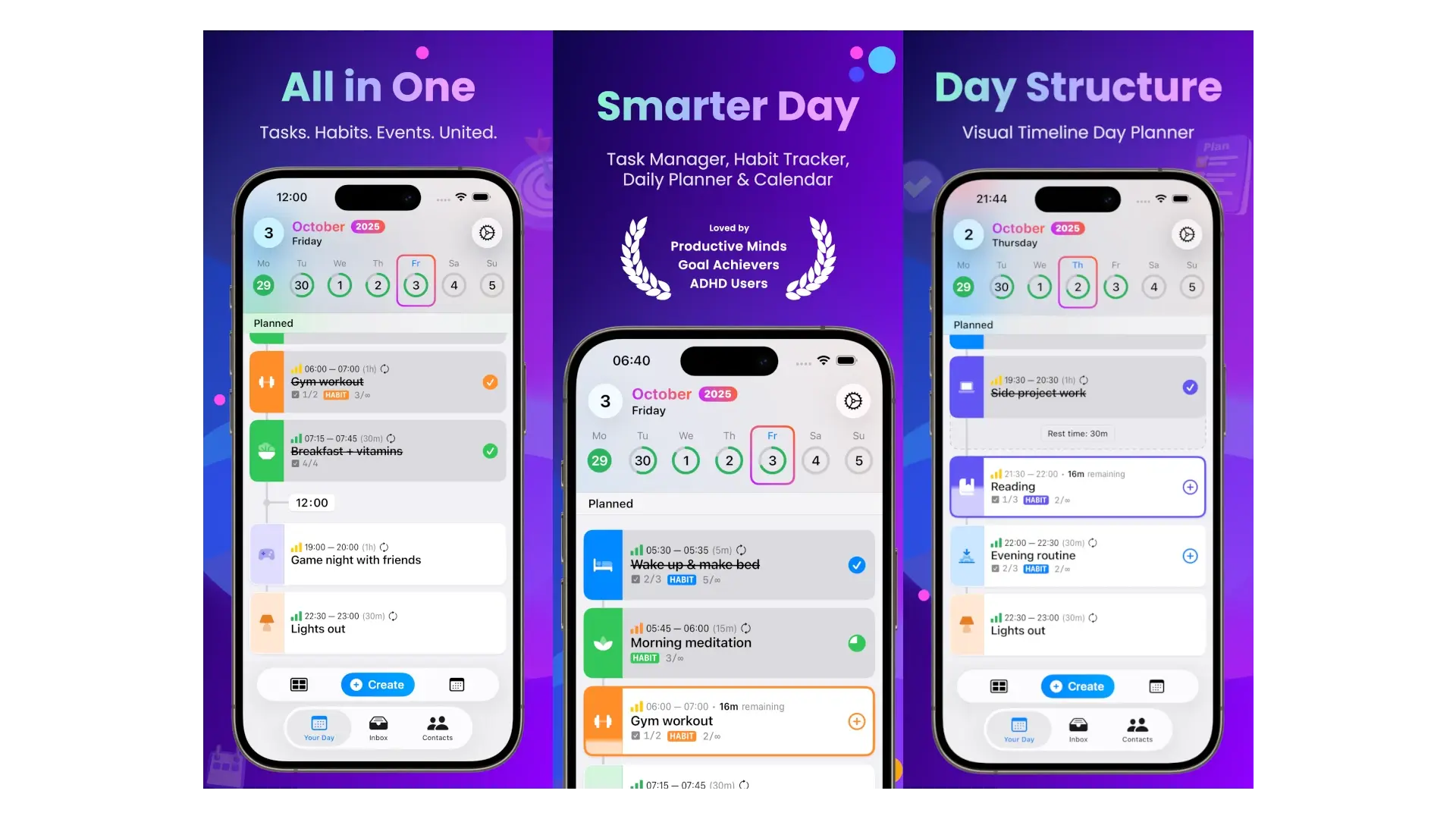
If you want an all-in-one place to plan Top 3 outcomes, run time blocks, and automate routines, try the productivity app at Smarter.Day. It supports focus modes, templates, and weekly reviews—exactly the scaffolding these methods need to stick.
Call to Action: Ready to upgrade your workflow and protect your focus? Explore Smarter.Day to turn these strategies into a reliable, sustainable system starting today.
You May Also Like
These Related Stories
10 Proven Methods to Optimize Time Focus and Energy
10 Proven Methods to Optimize Time Focus and Energy
No Comments Yet
Let us know what you think