

Master Your Focus: Systems for Peak Productivity Now

Master Your Focus: Systems for Peak Productivity Now
Imagine your to-do list growing like a plant, your inbox alarming nonstop, and "urgent" tasks stealing your attention. What I mean is that most of us just push through it with sheer, transparent will, like entering a sword fight with a butter knife. Hence, you need focus systems. So, you take the attention pattern out of the equation, skip decisions, and reduce friction with stripped-down systems. In this handbook, we will go over very effective, experimentally tested mechanisms to fight procrastination, stress, and distractions so that you succeed with consistent performance without fatigue.
Our mission is uncomplicated: put practical playbooks into your hands that you can act on starting today. You will get to know how to arrange deep work, short context switches, take advantage of natural energy peaks, and create solid habits. Theoretical examples and the fruits of scientific research will be the body of our dialogue between practical methods and useful tips, from Cal Newport to Atul Gawande, which you will be able to transform into workflow improvements. This is the way for time optimization, cognitive performance, and sustainable focus.
Imagine Your Day: Time Blocking + Energy Mapping
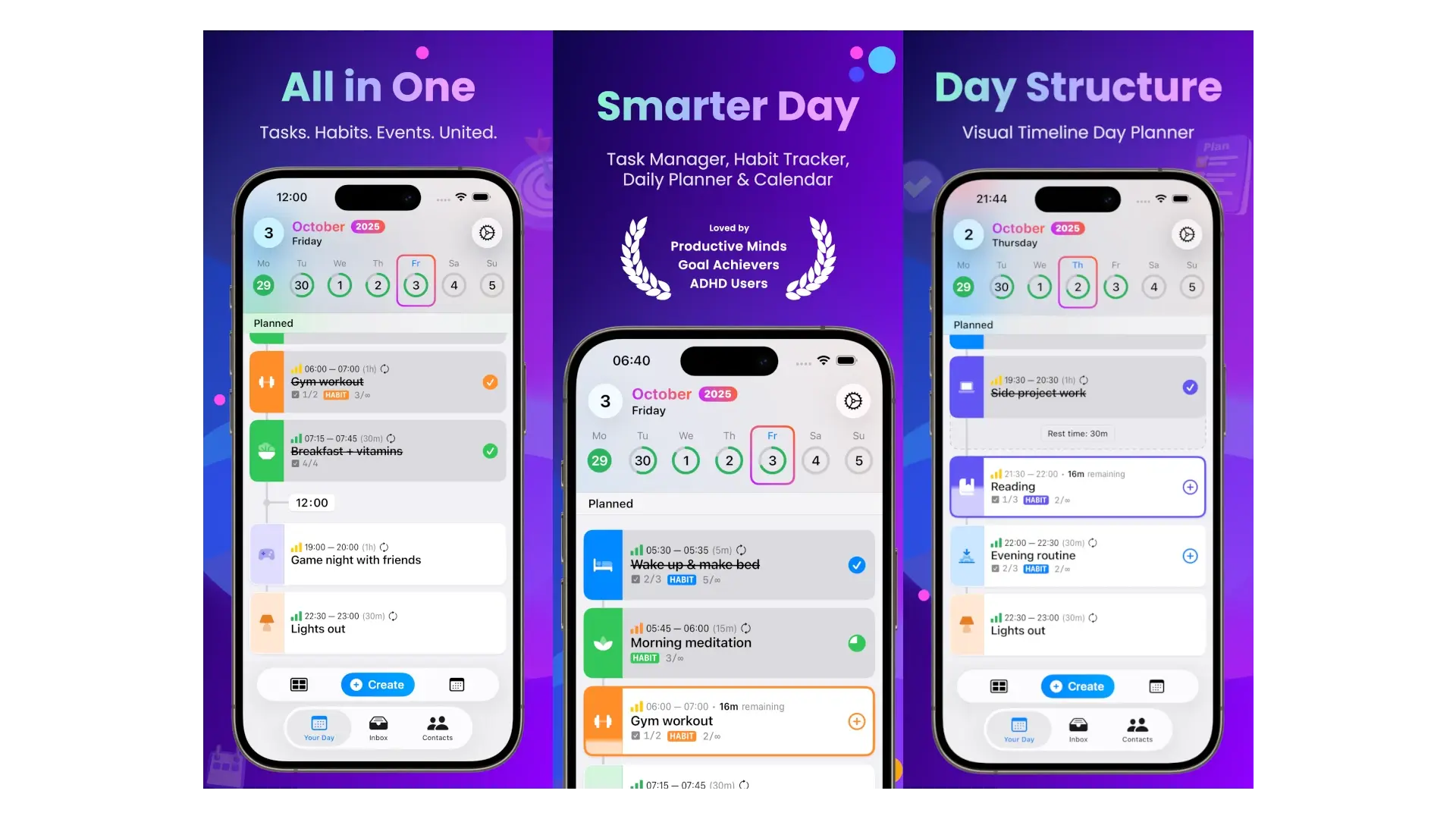
The best way to seize back the power is time blocking, the method that Cal Newport popularized in Deep Work. Rather than being disrupted, you allocate your blocks for deep work, admin tasks, and recovery proactively. Add this to energy mapping—arranging breaks in the calendar when your energy is at its highest or planning tasks that require demanding input when you are in your chronotype. Daniel Pink notes in his book When that, just as the weather shapes your mood and the time of the year affects animals, so too does timing shape our performance; people seem to have the most analytical skills in the morning and creativity in the late afternoon. For example, Sarah, a product manager, allocates the hardest type of work, coding complex features, from 9–11 a.m., schedules meetings during her post-lunch slump, and saves light emails for late afternoon.
To execute it, set down three "core blocks" for your high-leverage activities and defend them with calendar protection and status messages. After that, add two shorter blocks for shallow tasks and buffer time for surprises. A "golden guardrail" will help you: if a block is compromised, you should shift it instead of skipping it that day. This carries on with automation and compounding focus. Newport argues that protecting attention in advance reduces decision fatigue and accelerates outputs with less stress.
To boost this, color-code your calendar (e.g., blue for deep work, yellow for meetings, green for recovery) and review weekly. Metrics should include: "hours in deep work," "tasks completed," and "interruptions resisted." You will detect trends over time, such as energy dips in the middle of the week, and adjust accordingly. This is workflow improvement at its finest: you fine-tune your plan with clear data, not gut feelings, to generate predictable outcomes.
Prioritize with Two-List + Eisenhower Matrix
Prioritization is not so much about the work you put into it as it is about selective neglect. Use a marriage between the Two-List Method (often credited to Warren Buffett’s advice) and the Eisenhower Matrix (urgent vs. important). First, enlist your top 25 goals; circle the five most important; the rest go to a "not now" list. After this, take your weekly tasks and categorize them into another list: urgent/important (do), important/not urgent (schedule), urgent/not important (delegate), not urgent/not important (delete). This idea expounds on Stephen Covey’s First Things First: “Prioritizing what’s on your schedule is not the key, but instead, scheduling your priorities.”
In practice, each day choose three MITs (Most Important Tasks) that resonate the most with your circled goals and schedule these tasks for your energy peaks. Add a "kill list" for the wrong tasks—items that do not have high value—that you want to delete or defer. For example, Deon, a team lead, moved recurring reporting tweaks to "delegate," cut two vanity dashboards (delete), and scheduled a stakeholder roadmap review (important/not urgent). He freed five hours per week and paved the way to clearer messaging to the whole team.
Reducing choices also helps to fight decision fatigue. Roy Baumeister did a study that proved too many small decisions sap self-control. By creating pre-bucketed tasks and stating what you won’t do, you reduce mental energy and get back to deep thinking. This structure not only reduces the cognitive tax associated with constant reprioritization but also helps to foster execution without adding complexity.
Deep Work Sprints + Attention Residue Shields
Context switching is a killer of focus. Cal Newport describes deep work as concentration without any distractions. Zero in on two 60–90 minute deep work sprints for the most important problems to solve them. Each of these sprints should have a single, clear target (e.g., "complete Section 2 draft" vs. "work on report"). In research conducted by Sophie Leroy titled "attention residue," findings indicate that unfinished tasks hurt performance on new activities; therefore, make sure you end things properly.
Form attention residue shields: at the end of each sprint, write "end-of-task notes," which will remind you of next steps, to close open tabs, and where to start next time. Use a "shutdown ritual" at the end of every sprint—review outcomes, park next actions, and clear visual clutter. Think of tools like website blockers and full-screen modes to eliminate digital noise. Bianca, a designer, started capturing a two-bullet summary at the end of each sprint; her ramp-up time for the next session dropped by 30%, and her creative output improved.
Keep track of your work using a simple scoring mechanism: the number of sprints you have done, the time you spent engaging with the task, and your perceived depth. After a few weeks, you will improve the quality of your sprints without necessarily extending durations. This approach takes advantage of time optimization and contributes to cognitive performance by creating alignment between effort and clarity of goals and reduced switching costs.
Pomodoro 2.0 + Ultradian Rhythm Sprints
The Pomodoro Technique—25 minutes on, 5 off—works, but it’s not one-size-fits-all. Francesco Cirillo’s method shines when learning or executing small, repeatable tasks. For deeper creative or analytical work, upgrade to Pomodoro 2.0: try 50/10 or 75/15 intervals. Pair this with ultradian rhythm sprints—research by Nathaniel Kleitman suggests our brain cycles through 90-minute peaks and dips. When energy naturally crests, lean into longer focus; when it dips, take restorative breaks.
Two practical tweaks: use a timer ladder (start at 25/5, then 50/10, then 75/15 as focus strengthens) and prescribe movement breaks—stand, stretch, or walk to reset. For example, Jonah, a data analyst, moved from 25/5 to 50/10 for SQL work, adding a quick stair climb each break. He reported less mental fatigue and shipped reports sooner. When tackling dense modeling, he switches to a single 90-minute ultradian sprint.
Track what works using a "focus journal." Log interval type, task type, perceived effort, and output. After two weeks, patterns emerge: you’ll spot which intervals match specific work. This tailored approach aligns intervals with task complexity, supporting workflow improvement without forcing arbitrary cycles.
Habit Stacking + Implementation Intentions
Habits reduce friction. James Clear's habit stacking ("After I [current habit], I will [new habit]") pairs new behaviors with existing cues, while Peter Gollwitzer's implementation intentions use if-then plans to automate action. Combine them: "After I open my laptop (cue), I’ll review my MITs; if Slack opens, I’ll snooze for 25 minutes." This makes starts automatic and protects your attention from early derailment.
Use two methods: cue bundling (attach a new micro-habit to an existing one) and temptation bundling (Katherine Milkman), where you pair something you enjoy with something you avoid—e.g., listen to a favorite playlist only while documenting code. Maria, a marketer, stacked "open brief → write first headline draft" and used an if-then: "If I get stuck, I’ll write three bad options." Her time-to-first-draft fell by 40%.
Keep a habit tracker and grade consistency, not perfection. When you miss twice, restart with a smaller version (e.g., review one MIT rather than three). Clear notes that identity-based habits ("I am the kind of person who plans my day") last longer. This method is about the building of resilience and the lack of the need for constant motivation.
Reduce Cognitive Load with Templates + Checklists
The productivity of most tasks hides under cognitive load: the overload of things to juggle or the absence of the right structure. The cognitive load theory (John Sweller) tells us that cutting back on extraneous thinking will free resources for problem-solving. Enter templates and checklists. In The Checklist Manifesto, his book, Atul Gawande considered the possible small sum of errors that a simple list can mitigate during tasks like surgery, even creating lists of errors before beginning a task. In knowledge work, templates perfect thinking and standardize work quality.
Build templates for recurring deliverables: project kickoffs, design briefs, status updates, and code review checklists. Set a "definition of done" for each one. For your email, create canned replies for common responses. Lucas, a customer success lead, templated onboarding plans and cut ramp time from two weeks to five days. The checklist prevented missed steps and ensured consistent client experiences.
Use a two-tier checklist: a short "pre-flight" (setup tasks) and a detailed "process" (execution steps). This reduces decision fatigue and accelerates starts. Over time, iterate templates based on feedback and outcomes. The result is workflow improvement that compounds—less mental clutter, faster throughput, better results.
Automate & Batch: Email, Meetings, and Repetitive Work
According to the McKinsey Global Institute, the average professional spends about 28% of the workweek on email. That’s a lot of cognitive drag. Adopt email triage windows (e.g., 11:30 a.m. and 4:30 p.m.) and create inbox rules to auto-label newsletters and CCs. Use the two-minute rule (David Allen): if it takes under two minutes, do it now; otherwise, create a task and archive. This keeps your inbox from becoming a to-do list you didn’t write.
Batch similar tasks to minimize switching: group calls, approvals, and admin. Implement no-meeting mornings two days a week and require agenda-first meetings capped at 25 minutes. Harvard Business Review reports that structured agendas and shorter meetings improve decision quality and reduce burnout. Priya, an engineering manager, batched code reviews daily at 3 p.m. and set Tuesdays as meeting-light; her team’s cycle time dropped measurably.
Automate where possible: use text expanders for repeated replies, keyboard shortcuts, and lightweight workflows via integrations (e.g., form → task in your project tool). Establish "automation audits" monthly to identify repetitive tasks. These changes free time for deep work and improve time optimization across your week.
Kanban Flow + WIP Limits for Sustainable Throughput
Visualizing work reveals bottlenecks. A Kanban board (To Do → Doing → Review → Done) and WIP limits (work-in-progress caps) create flow. David J. Anderson’s Kanban shows how WIP limits reduce cycle time per Little’s Law: when throughput is constant, less WIP equals faster delivery. Instead of starting everything, you finish more by limiting how much you juggle.
Set a WIP limit of 1–3 per column per person and add policies: "No new task pulled until one is moved forward." Include a "Blocked" lane with explicit rules for escalation. For example, Omar’s team set a WIP limit of two per developer; they discovered review was the bottleneck and added a daily 20-minute review huddle. Throughput rose without overtime. The visual board made hidden queues obvious.
Track lead time, cycle time, and throughput weekly. When metrics worsen, resist adding capacity—reduce WIP first. This enables sustainable performance and less stress, preventing the spiral of overcommitment and burnout. Kanban’s strength is simple: less juggling, more finishing.
Goals That Guide Action: OKRs + Weekly Reviews
Set goals that govern your calendar. OKRs (Objectives and Key Results), popularized by Andy Grove and John Doerr’s Measure What Matters, translate business objectives into quantifiable metrics and thereby guide all hero resources to achieve them. Setting the right goals is fundamental for using your time for the things that matter most as well as to better visualize your work reality.
You May Also Like
These Related Stories
Advanced Focus Systems for Consistent Productivity Daily
12 Proven Productivity Systems for Peak Performance
No Comments Yet
Let us know what you think