

A packed calendar is not proof of progress. Neither is crossing off twenty small tasks while the one project that matters stays untouched. What is evidence based productivity? It is a practical way to manage work using methods supported by behavioral science and real-world results, rather than relying on hustle, guilt, or whatever productivity trend is loudest this week.
For professionals managing deadlines, meetings, habits, and personal responsibilities, the goal is not to squeeze more activity into every hour. It is to build a productivity system that helps you make better decisions with limited time and attention. That means identifying what matters, protecting focus, and creating routines you can repeat even on a demanding day.
What is evidence based productivity?
Evidence based productivity is the use of research-informed principles to improve how you plan, prioritize, focus, and recover. It combines findings from psychology, behavioral economics, cognitive science, and time management research with your own results.
The phrase matters because productivity advice is full of confident claims that do not fit real life. A five-hour morning routine may work for one founder and fail for a parent with an unpredictable schedule. Checking email only twice a day may help a writer but create problems for a project manager supporting a team. Evidence gives you a stronger starting point. Your constraints determine how you apply it.
This approach asks better questions: What causes you to delay important work? When is your attention strongest? Which commitments create the most value? What makes a habit easy enough to sustain? Instead of copying someone else's ideal day, you create smarter time around the work and life you actually have.
The science behind proven productivity
Evidence-based productivity methods tend to work because they respect a simple truth: attention, energy, and working memory are limited. Every unfinished task, unclear priority, and unnecessary decision pulls from the same mental resources you need to do meaningful work.
Clear daily task prioritization strategies reduce that load. When you decide what deserves attention before the day becomes noisy, you are less likely to default to the easiest task or the most recent notification. The Eisenhower Matrix is useful here because it separates urgency from importance. It gives you a fast way to see whether a task needs action now, scheduling, delegation, or removal.
Focus also improves when the next action is visible and specific. “Prepare presentation” is mentally heavy because it hides multiple decisions. “Outline three customer findings for slide one” is easier to begin. This is why subtasks and micro actions are more than a tidy organizational habit. They lower the friction between intention and action.
Research-backed methods also account for recovery. Constant task switching can make work feel busy while reducing the quality of thought. Short breaks, realistic workload limits, and a defined stopping point are not rewards for finishing everything. They are part of a sustainable system productivity practice.
The core evidence-based productivity techniques
No single technique is best for every role. Still, several principles appear again and again in proven productivity and time optimization strategies.
Prioritize by impact, not by pressure
The loudest task is not always the most valuable one. Start by identifying one to three outcomes that would make today meaningfully successful. Then organize the remaining work around them.
For entrepreneurs with multiple commitments, this is a time management prioritization framework, not a motivational exercise. A customer issue may be urgent. A strategy decision may be important but not urgent. Administrative tasks may feel satisfying because they are quick, yet they should not consume the time reserved for revenue, delivery, or key decisions.
Plan when your brain is calm
Planning in the middle of a stressful day often turns into reactive reshuffling. A short planning session at the end of the workday or before your first meeting gives you a clearer view of time, dependencies, and trade-offs.
Assign tasks to realistic windows rather than creating a wish list. A full schedule has no room for surprises, and surprises are guaranteed. Leave buffer time for transitions, messages, and work that takes longer than expected. This is the real time optimization meaning: using time with intention, not scheduling every minute until the plan breaks.
Protect focused work in blocks
Time blocking and focused intervals can be highly effective when your work requires concentration. A 25-minute sprint may be enough to start a resisted task. A 60- to 90-minute block may better support analysis, coding, writing, or strategic planning.
The ideal length depends on the work and your attention span. The important part is reducing interruption. Silence nonessential alerts, define the task you will work on, and keep an inbox capture space nearby for thoughts that appear mid-session. Capture them, then return to the work instead of following every mental detour.
Use habits to reduce decision fatigue
Habits turn repeated choices into defaults. A daily review, a first-focus block, a walk after lunch, or a five-minute inbox reset can create stability without requiring heroic willpower.
Start smaller than your ambition. If you want to build a planning habit, opening your day view and choosing one priority is a better first step than promising a 30-minute ritual every morning. Consistency creates evidence. Once a small action is reliable, expand it.
Why measurement beats productivity theater
Evidence-based does not mean turning your life into a spreadsheet. It means paying attention to useful signals. You might track whether your highest-priority task was completed, how often meetings disrupted focus time, or which type of work repeatedly gets postponed.
Those patterns help you identify productivity blockers. If a task moves forward every time it is broken into subtasks, the blocker was probably ambiguity. If deep work fails on meeting-heavy days, the problem may be schedule design rather than discipline. If you avoid a task even when time is available, fear of a difficult decision or unclear success criteria may be involved.
This is where productivity systems become personal. Time management research for 2025 and 2026 may introduce new tools, including AI-assisted planning and priority scoring, but no tool can accurately run your day without your feedback. Review what happened, adjust the system, and keep the parts that create measurable progress.
A practical evidence-based workflow for your day
Start with one trusted place for tasks, habits, events, and incoming requests. Splitting your obligations across sticky notes, chat messages, email flags, and memory creates clutter before the work even begins.
First, capture everything quickly. Next, clarify the next action for important tasks and break large projects into smaller steps. Then prioritize with an impact-and-urgency lens, placing your most valuable work into protected time blocks. Finally, review at the end of the day: move unfinished work deliberately, acknowledge what progressed, and set up tomorrow's first move.
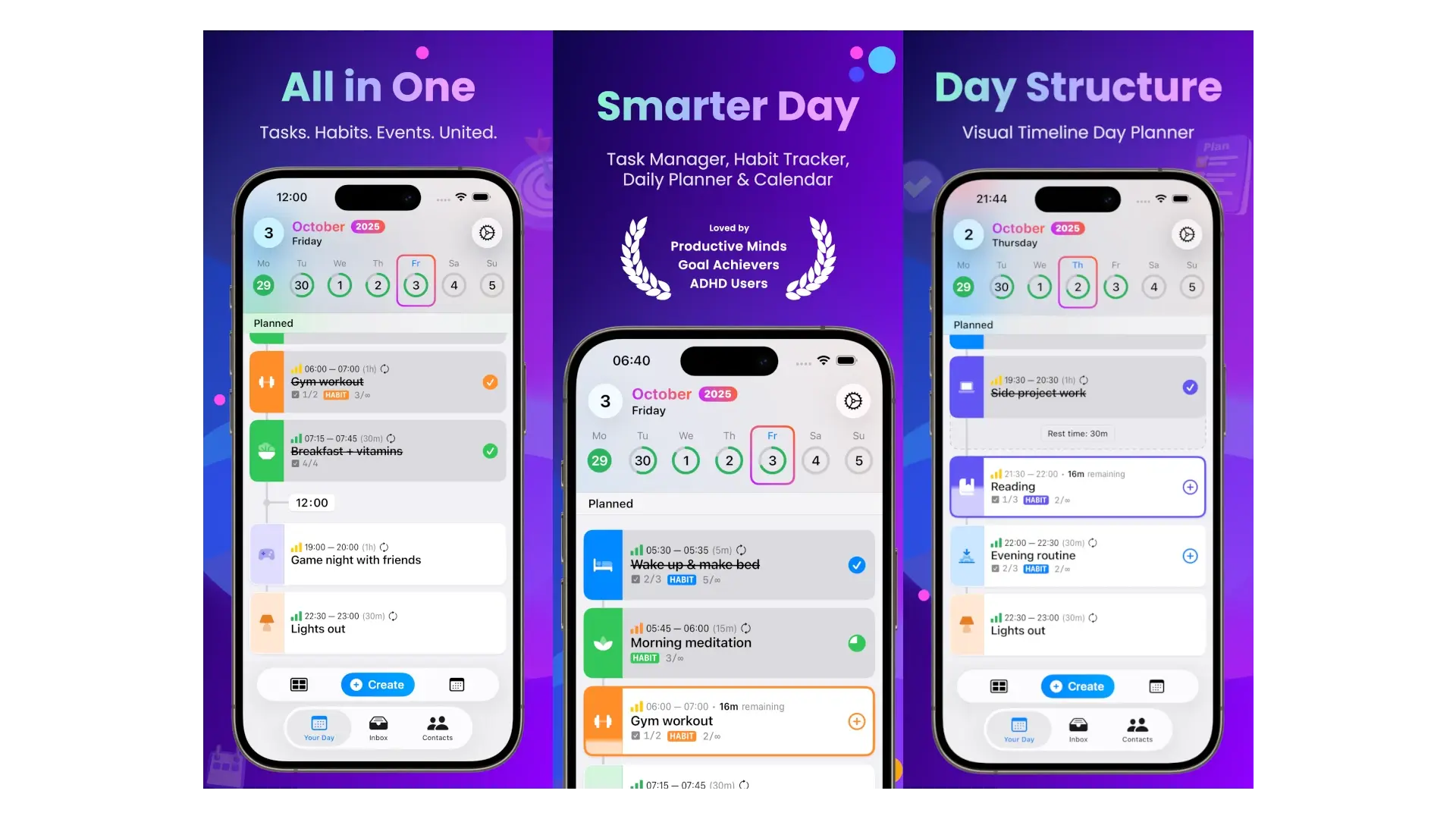
Smarter.Day supports this workflow by bringing tasks, habits, scheduling, and Eisenhower Matrix prioritization into one visual day view. The benefit is not simply having more features. It is seeing what matters without jumping between systems, so you can make a decision and act on it quickly.
Where evidence-based productivity can go wrong
A research-informed system can still become another source of pressure. Tracking every minute, optimizing every break, or forcing yourself into rigid routines may increase stress rather than improve performance. More data is only useful when it leads to a better decision.
Be especially careful with comparisons. Your productive systems should fit your energy, role, health, and responsibilities. ADHD users, for example, may benefit from visual priorities, shorter focus windows, visible cues, and immediate next actions, while a rigid, complicated setup can create more friction. The right system is the one you can return to after an imperfect day.
Use evidence as a compass, not a command. Choose one improvement, test it for two weeks, and notice whether it helps you finish meaningful work with more clarity and less strain. The best productivity system does not make you feel constantly busy. It helps you stay in control of what deserves your attention next.
You May Also Like
These Related Stories
Time Management Systems That Actually Work in 2025
Time Management Systems That Actually Work in 2025
No Comments Yet
Let us know what you think