
Time Management That Works: 12 Evidence-Based Tactics

Style: Conversational, evidence-driven, and approachable
Category: Time Management & Prioritization
Title: Time Management That Works: 12 Evidence-Based Tactics
Description: Beat overwhelm with proven time management strategies. Prioritize smartly, block focus time, and optimize energy to work better in less time.
H1: Time Management That Works: 12 Evidence-Based Tactics
Introduction
Let’s face it: modern work can feel like a never-ending sprint through notifications, meetings, and shifting priorities. You sit down to do one thing, but your brain says, “What about email?” Here’s the catch—your productivity isn’t just about working harder; it’s about working with intention. This guide brings you evidence-based time optimization methods that tame distractions and turn your day into a series of deliberate, focused wins. If procrastination, overload, or context switching have been draining your momentum, you’re in the right place.
We’ll walk through practical, repeatable strategies grounded in research and real-life examples. Expect proven frameworks like time blocking, task batching, and weekly reviews, along with science-backed tips for energy management and cognitive performance. You’ll learn how to prioritize with confidence, protect your focus, and streamline your workflow. By the end, you’ll have a system you can put into action today—one that’s flexible enough to adapt and robust enough to deliver results consistently.
H2: Time Blocking + Deep Work for Focus That Sticks
Cal Newport’s book Deep Work argues that cognitively demanding tasks require long, uninterrupted stretches to reach peak performance. That’s why time blocking—scheduling tasks into specific calendar slots—pairs perfectly with deep work. Method one: dedicate 60–120 minutes for “focus sprints,” with notifications off and a single objective. Method two: add a pre-commitment ritual—set your desk, define your output, and write down the first action—so there’s no decision friction. A designer I coached blocked 9–11 a.m. daily for mockups. Within two weeks, their throughput doubled and rework dropped.
To make this stick, create theme days. For instance, Tuesday mornings for analysis, Fridays for writing, and afternoons for shallow tasks. This aligns with the maker vs. manager schedule principle and reduces context-switching. If you struggle to start, use the “two-sentence plan”: write what you’ll do and what “done” looks like in two lines. As Newport puts it, “Clarity about what matters provides clarity about what does not.” Results improve when your calendar reflects your priorities.
H3: Practical methods to try
- Block 90-minute deep work sessions 3–4 times weekly.
- Use a physical “Focus Card” listing one output you’ll finish.
H2: Prioritize with the Eisenhower Matrix and Ivy Lee Method
When everything feels important, nothing gets done. The Eisenhower Matrix helps you separate urgency from importance. Method one: make four quadrants—Do (urgent/important), Decide (important/not urgent), Delegate (urgent/not important), Delete (neither). Method two: schedule “Decide” items before they become urgent. Pair this with the Ivy Lee Method: list your top six tasks the night before, then tackle them in order. Dwight D. Eisenhower’s framework and Ivy Lee’s century-old technique still work because they remove guesswork.
A marketing manager I worked with started each evening by writing six tasks, ranked by impact. The next day, she completed three high-value items before noon—no fire drills. This aligns with research on decision fatigue by Roy Baumeister: fewer choices early leads to better outcomes later. Protect your cognitive bandwidth by deciding once—then executing. Pro tip: put “Matrix review” on your calendar weekly so “important, not urgent” tasks (like training or system improvements) get real time.
H3: Practical methods to try
- Nightly top-six list; star the must-do one.
- Weekly 20-minute Eisenhower review to schedule “Decide” items.
H2: Task Batching to Beat Attention Residue
Frequent switching shatters momentum. Organizational scholar Sophie Leroy labeled this carryover effect attention residue—part of your brain stays stuck on the last task. Method one: batch similar tasks—all email replies, all design reviews, all calls—in dedicated blocks. Method two: create a “Context Checklist” for each batch (e.g., files open, notes ready), so you enter quickly and exit cleanly. I helped a startup COO move from all-day Slack to two 30-minute comms blocks. They gained an extra hour of deep work daily, consistently.
To reduce switching further, use templates. Build email templates, code snippets, or meeting agendas so each batch is faster and more consistent. Keep a “parking lot” doc to dump stray thoughts without derailing focus. As Leroy’s work suggests, preventing half-finished mental loops increases throughput. “Finish to free focus” becomes your motto.
H3: Practical methods to try
- Batch email at 11:30 a.m. and 4:30 p.m.
- Use a parking-lot note to capture off-topic ideas mid-sprint.
H2: Work With Ultradian Rhythms, Not Against Them
Your brain doesn’t run on a flat battery. Sleep scientist Nathaniel Kleitman popularized ultradian rhythms—90–120 minute cycles of energy and recovery. Method one: schedule hard tasks during your natural peaks (often late morning) and follow with a 10–20 minute break. Method two: align meetings or admin in dips. A data analyst mapped energy for a week and shifted SQL modeling to 10 a.m. Their error rate dropped, and reviews sped up.
Pair this with strategic micro-recovery: a quick walk, hydration, or box breathing (inhale 4, hold 4, exhale 4, hold 4). Neuroscientist Wendy Suzuki notes that even short movement boosts mood and memory—compounding your focus. If you’re remote, try a “break trigger” like leaving your phone in another room and stepping outside after each deep block. Respect your cycles, and productivity becomes sustainable, not sprint-and-crash.
H3: Practical methods to try
- 90-minute focus, 15-minute recovery cycles.
- Schedule movement snacks: 3 x 5-minute walks daily.
H2: Weekly Review + Daily Plan = Reliable Execution
David Allen’s Getting Things Done (GTD) popularized the weekly review: step back, clean up, and recommit. Method one: every Friday, review projects, next actions, and calendars for the next two weeks. Method two: identify three Most Important Tasks (MITs) for each upcoming day. A product lead I coached started a 45-minute Friday review. Their incoming-week chaos dropped by half because conflicts were resolved before Monday.
For daily execution, use the one-page plan: top three MITs, supporting tasks, and time blocks. Avoid a bloated to-do list—Allen warns that unclarified stuff creates “open loops” that sap energy. Keep projects separate from tasks. Your brain wants clarity; your calendar demands commitment. Combine review (zoom out) with daily planning (zoom in), and your workflow improvement becomes predictable.
H3: Practical methods to try
- Friday review: projects, next actions, calendar check.
- Daily one-page plan with three MITs and time blocks.
H2: Pomodoro 2.0: Flexible Focus Sprints
The classic Pomodoro Technique by Francesco Cirillo recommends 25 minutes on, 5 off. But complex work sometimes needs longer. Method one: adaptive pomodoros—50/10 or 75/15 for deep tasks; keep 25/5 for admin. Method two: track “first meaningful progress” (FMP) within the first 15 minutes to overcome inertia. A developer shifted to 50/10 cycles for refactoring and reported fewer bugs because they could hold a larger mental model.
Build a distraction protocol: put your phone in another room, full-screen your app, and keep a notecard for urges (“check Slack,” “Google this”). Behavioral research shows that labeling urges reduces their power. As Cirillo notes, “Small, steady wins compound.” Use a timer only as a guardrail, not a cage. The goal is sustained attention, not rigid rules.
H3: Practical methods to try
- 50/10 cycles for deep tasks; 25/5 for shallow tasks.
- Log FMP: What micro-output did you ship in the first 15 minutes?
H2: Taming Email and Async Communication
McKinsey’s analysis suggests knowledge workers spend about 28% of their time on email—a massive drain on focus. Method one: switch to asynchronous updates for status reporting (shared doc or project board). Method two: set communication windows twice daily and turn off push notifications. A customer success lead moved updates to a daily team doc; email volume dropped 35% and response quality improved.
Borrow from Cal Newport’s “A World Without Email” thesis: create protocols for requests (clear subject lines, deadlines, required info). Use filters and labels so your inbox is a workspace, not a landfill. “Your inbox is a to-do list where anyone can add tasks,” so put guardrails in place. You’ll protect attention while improving throughput and clarity.
H3: Practical methods to try
- Two email windows and strict batching.
- Team protocol: subject tags like [Decision], [FYI], [Blocker].
H2: Defaults, Templates, and Reducing Decision Fatigue
Researchers like Roy Baumeister and studies such as Danziger et al. (2011) highlight how decision quality degrades with volume. Method one: create defaults—standard lunch, default gym time, default meeting-free blocks—so you save willpower for high-impact work. Method two: build templates for recurring deliverables—slide decks, proposals, sprint docs—so you start at 60%, not 0. A sales director templated proposals and cut prep time by 40% without hurting close rates.
Automate tiny choices: same parking spot, same morning playlist, same first work task (review plan). Each micro-decision removed reduces cognitive load. Think of it as cognitive offloading—keep your brain for strategy, let systems handle repetition. You’ll notice smoother starts, fewer stalls, and faster finish rates.
H3: Practical methods to try
- Create three “always” defaults: lunch, exercise, deep work.
- Build a template library for recurring work.
H2: Habit Stacking and Implementation Intentions
James Clear’s Atomic Habits popularized habit stacking: attach a new behavior to an existing routine (“After I brew coffee, I review my MITs”). Method one: define a precise trigger—time, place, or preceding action. Method two: use implementation intentions (Peter Gollwitzer’s research): “If situation X arises, then I will do Y.” A new manager stacked “calendar review” onto their morning login; within a month, missed deadlines vanished.
Make habits friction-friendly: keep tools visible, reduce steps, and celebrate small wins. BJ Fogg’s Tiny Habits shows that emotion wires habits—so acknowledge the win, even if small. Build “anti-habits” too: if you open social media in work hours, you must close it and stand up for 30 seconds. Over time, your identity shifts: “I’m someone who starts the day planned.”
H3: Practical methods to try
- Write two implementation intentions for common derailers.
- Stack a planning habit onto your morning beverage.
H2: Sleep, Movement, and Cognitive Performance
Productivity is a biological game as much as a calendar one. Matthew Walker’s “Why We Sleep” shows how 7–9 hours of sleep enhances memory, creativity, and decision-making. Method one: protect a consistent bedtime and pre-sleep wind-down (dim lights, no screens 60 minutes prior). Method two: use movement to fuel focus—Wendy Suzuki’s research links moderate exercise with improved mood and attention. A content writer added a 20-minute midday walk and reported clearer thinking for afternoon edits.
Nutrition matters, too. Stabilize glucose with protein-rich breakfasts and steady hydration to avoid energy cliffs. Think “body-first productivity”: if your energy is low, your output is a fraction of your potential. By aligning sleep, movement, and nutrition, your cognitive performance becomes a competitive advantage, not a coin toss.
H3: Practical methods to try
- Same bedtime and 60-minute pre-sleep routine.
- Three movement snacks daily to reset attention.
H2: Meetings That Don’t Derail Momentum
Meetings often expand to fill the time you give them. Paul Graham distinguishes between maker and manager schedules; makers need long blocks. Method one: create meeting-free focus zones (e.g., 9–12 a.m., Tue–Thu). Method two: enforce agenda-driven, decision-focused meetings with clear owners and timeboxes. Organizational psychologist Steven Rogelberg, in “The Surprising Science of Meetings,” shows that shorter, well-structured meetings improve outcomes and morale.
A product team moved to 25-minute standups and 45-minute decisions meetings with pre-reads. Their weekly time-in-meetings dropped 20%, and cycle time improved. Keep a “meeting ROI” log—why it existed, what was decided, and what changed. If nothing changes, it becomes an email. Protect your maker time, and your output will show it.
H3: Practical methods to try
- Two half-days weekly with no meetings.
- Default meeting lengths: 25 or 45 minutes, never 60 by habit.
H2: Planning with Constraints: Parkinson’s Law, Safeguards, Buffers
Parkinson’s Law says work expands to fill the time available. Method one: set ambitious but realistic timeboxes with hard stops—schedule the next task so you must move on. Method two: add buffers around deep work to absorb overruns without wrecking your day. A startup engineer used a 75-minute build window with a 15-minute buffer; estimates improved within two sprints.
Use safeguards: pre-mortems (Gary Klein’s method) to anticipate blockers, and checklists to avoid repeated mistakes (inspired by Atul Gawande’s The Checklist Manifesto). Constraints sharpen focus by forcing choice. As an old adage goes, “If you want something done, give it to a busy person”—not because they rush, but because they use constraints to drive clarity and pace.
H3: Practical methods to try
- Timebox tasks and schedule hard stops.
- Run a pre-mortem on complex projects to surface risks.
H2: Kanban, Visible Workflows, and Flow Efficiency
Visualizing work reduces hidden bottlenecks. Kanban (see David J. Anderson’s work) maps tasks across stages—To Do, Doing, Done—so you manage flow, not just backlog. Method one: limit work in progress (WIP) to cut multitasking. Method two: track lead time (request to completion) to spot process waste. A marketing team capped WIP at two per person; cycle time dropped 30% in a month.
Pair Kanban with clear policies: definition of ready, definition of done, and explicit pull rules. You’ll avoid half-started tasks and surprises. This approach creates workflow improvement through visibility and shared norms. Quote to remember: “Stop starting, start finishing.” The goal is a steady, fast flow of valuable work—not a full board.
H3: Practical methods to try
- WIP limit of two items per person.
- Weekly review of lead times to remove bottlenecks.
H2: Personal Dashboards and Honest Time Tracking
What gets measured gets managed. Use lightweight time tracking to see where your hours actually go. RescueTime’s reports (and similar tools) often show how much time leaks to communication and low-value browsing. Method one: track for one week, then adjust your calendar to reflect desired vs. actual time. Method two: create a personal dashboard with three metrics: deep work hours, completed MITs, and context switches. A strategist who did this increased deep hours from 6 to 12 weekly in a month.
Make it low-friction: auto-track when possible, and review once weekly. Avoid judgment; use the data for feedback loops that steer behavior. You’re not aiming for perfection—just steady gains in focus time and reduced variance. Over time, you’ll prove (to yourself and your team) that your system produces reliable results.
H3: Practical methods to try
- Track one week to set a baseline; iterate monthly.
- Dashboard: deep hours, MITs completed, average cycle time.
Conclusion
We’ve covered a toolbox of time management strategies—from deep work and batching to energy alignment, decision simplification, and visible workflows. The theme that ties them together is simple: design beats willpower. When your days are structured around priority, focus, and flow, performance rises and stress falls. Start with two or three methods, measure the impact, and iterate. Small, consistent changes compound into big workflow wins.
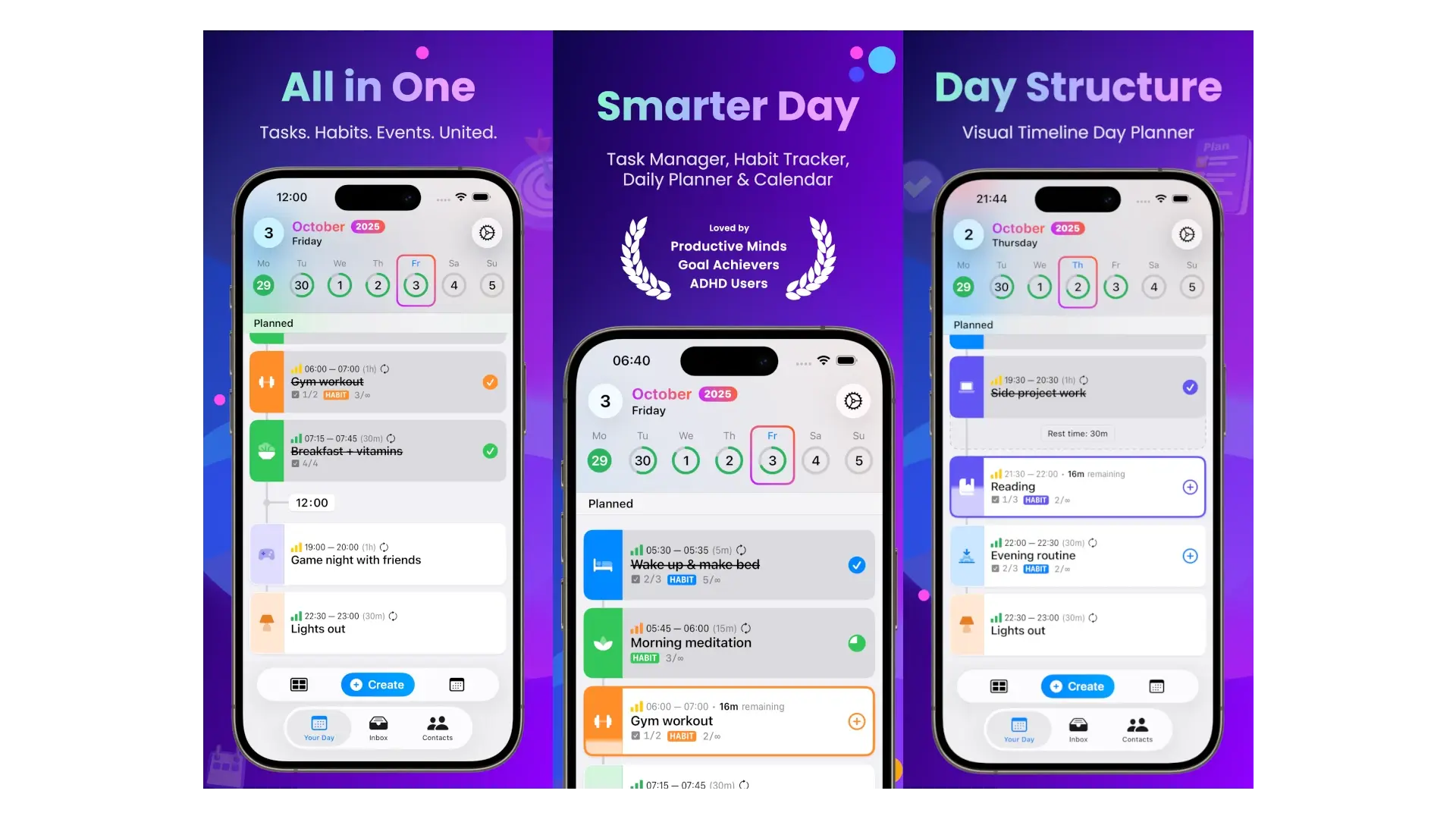
If you want an all-in-one way to plan blocks, track habits, and measure deep work, try the productivity app at Smarter.Day. It can centralize your planning cadence, templates, and dashboards so your playbook lives in one place.
You May Also Like
These Related Stories
Time Management That Works: 12 Evidence-Based Tactics
Time Management That Works: 12 Evidence-Based Tactics
No Comments Yet
Let us know what you think